
Should I Wear a Jacket Today? Temperature Chart + 5 Checks
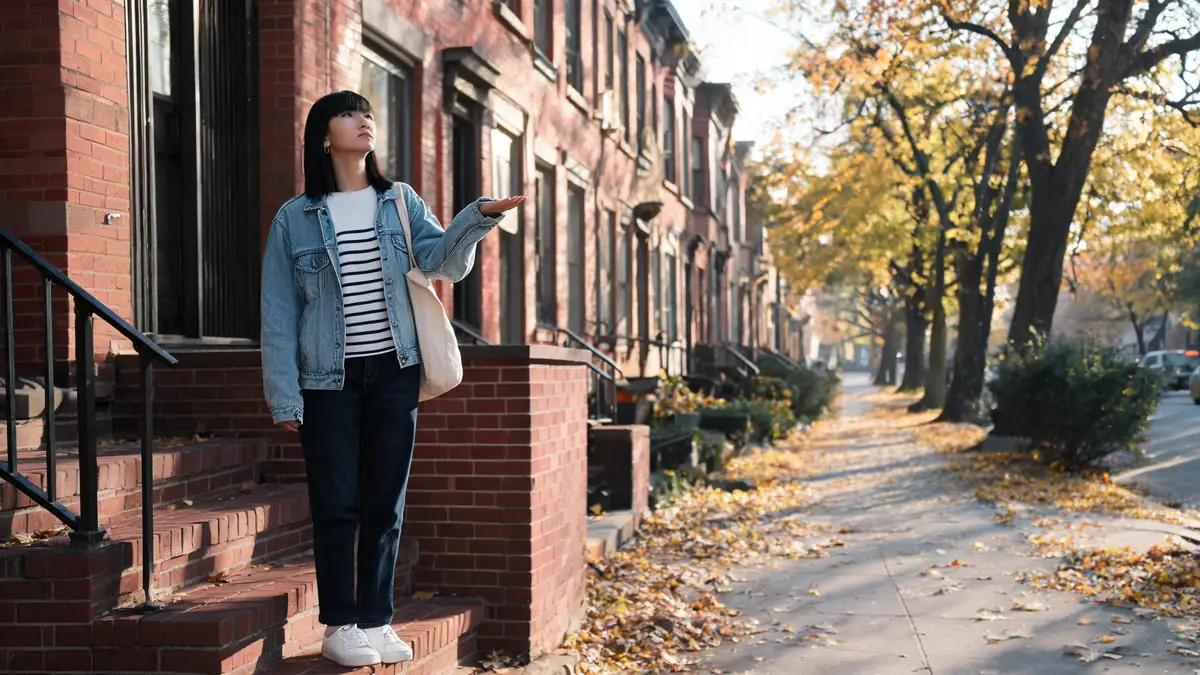
Yes, if it's below about 65°F (18°C) during the hours you'll actually be outside. In the high 50s and low 60s that means a light jacket, in the low 50s a warmer one that blocks wind, and by the 40s you've moved on to a coat. Then check the wind, rain, shade and how long you'll be standing still, because any one of them can push you a row colder on the chart below.
Jacket Weather by Temperature, From 70°F to Freezing
| Outside | Jacket? | What to grab | Underneath |
|---|---|---|---|
| 70°F and up (21°C+) | No | Nothing, or an overshirt for a chilly office or a late night | Tee, blouse, short sleeves |
| 65-70°F (18-21°C) | Usually not | A denim jacket or cardigan in your bag for after sunset | Tee or thin knit |
| 58-65°F (14-18°C) | Light jacket | Denim jacket, shacket, unlined bomber, cotton trench, blazer | Tee or long sleeve |
| 50-58°F (10-14°C) | Warmer jacket | Leather jacket, lined trench, quilted or field jacket | Sweater or long sleeve |
| 40-50°F (4-10°C) | Coat | Wool coat, light puffer, lined parka | Sweater, plus a scarf |
| 32-40°F (0-4°C) | Warm coat | Down puffer or heavy wool coat | Thick knit, hat, gloves |
| Below 32°F (0°C) | Winter coat | Long down parka | Thermal base, hat, scarf, gloves |
Jacket weather, the way most people use the phrase, is the two middle rows: the 50s and the low 60s. Sweater weather overlaps the top of that range, since on a calm, sunny 60°F afternoon a knit on its own is plenty. Coat weather starts in the 40s, and puffer weather, the full down-filled kind, is the 30s and below.
Above 65, a jacket is mostly insurance for the evening, and the 70 degree weather guide covers that end of the scale. Below freezing the question stops being "jacket or not" and becomes what to layer under the coat, which our winter wear guide walks through.
One personal adjustment before you pick a row: if you always run cold, subtract five degrees from the forecast. If you're the one who's warm in every room, add five.
Five Checks That Move You a Row Colder or Warmer
The number on your weather app is where you start, not where you finish.
- When you'll be out. A forecast high is an afternoon number. Open the hourly view and find the hours you'll actually spend outdoors: the 8 a.m. walk to the train and the 7 p.m. walk home can easily be ten degrees colder than the 3 p.m. peak, especially in fall when the sun sets early. Dress for the coldest of those hours and take the jacket off for the rest.
- Wind. Moving air pulls warmth off you much faster than still air. The National Weather Service only defines wind chill at 50°F or below with wind over 3 mph, and plugging 40°F and a 10 mph breeze into its formula gives about 34°F. Above 50 there's no official number, but a steady wind still makes 60 feel like the next row down. On a windy day, go one row colder and pick a jacket that actually stops air, like leather, a trench or a nylon shell. A chunky open knit lets the wind straight through.
- Rain or damp. Wet fabric loses its warmth fast, so a drizzly 58°F needs more than a dry one. Swap the denim jacket for something water-resistant with a hood, or a trench and an umbrella, and leave suede at home.
- Sun or shade. Full sun on a still day can make 55 feel like the 60s, so you can drop a row. Overcast skies, a downtown street shaded by tall buildings or a walk that stays on the shady side do the opposite.
- Moving or standing still. A brisk 20-minute walk, a bike commute or hauling groceries warms you up. Waiting at a bus stop, watching a game from the sidelines or eating on a patio cools you down. Going door to door by car? You can usually skip the jacket into the low 50s and keep one on the back seat.
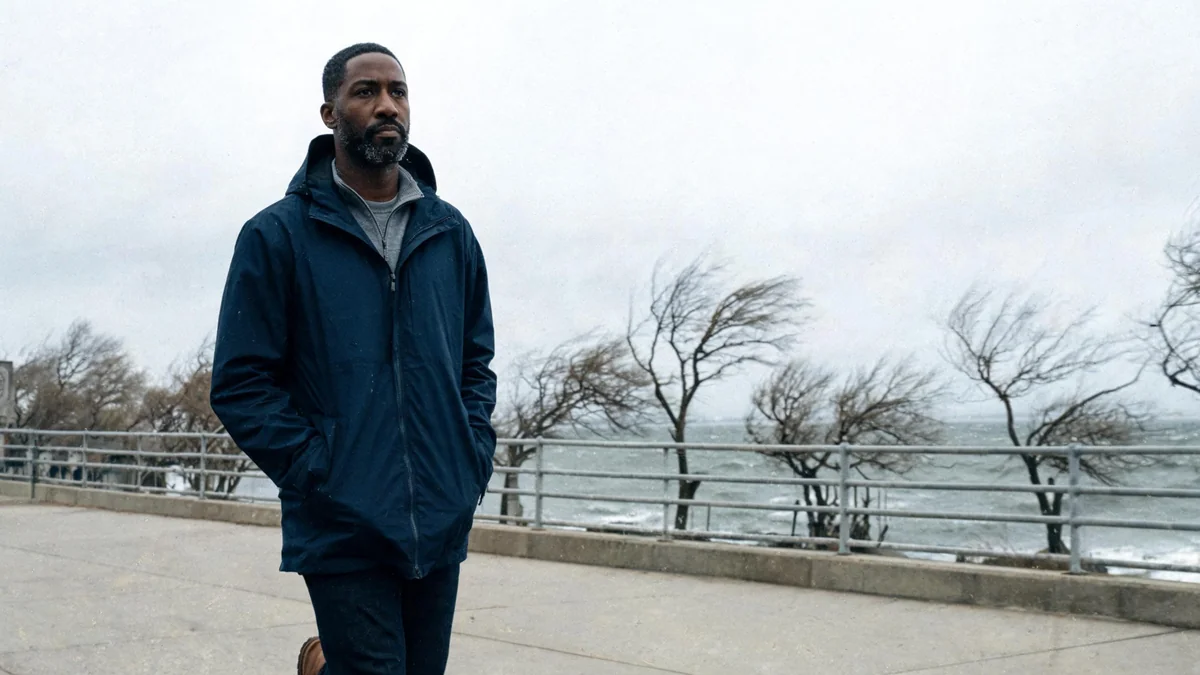
The rule: if two checks point colder, say wind plus a walk home after dark, take the jacket even when the chart says you could skip it. A jacket you end up carrying costs you nothing. One you left at home costs you the evening.
Which Jacket Covers Which Temperature
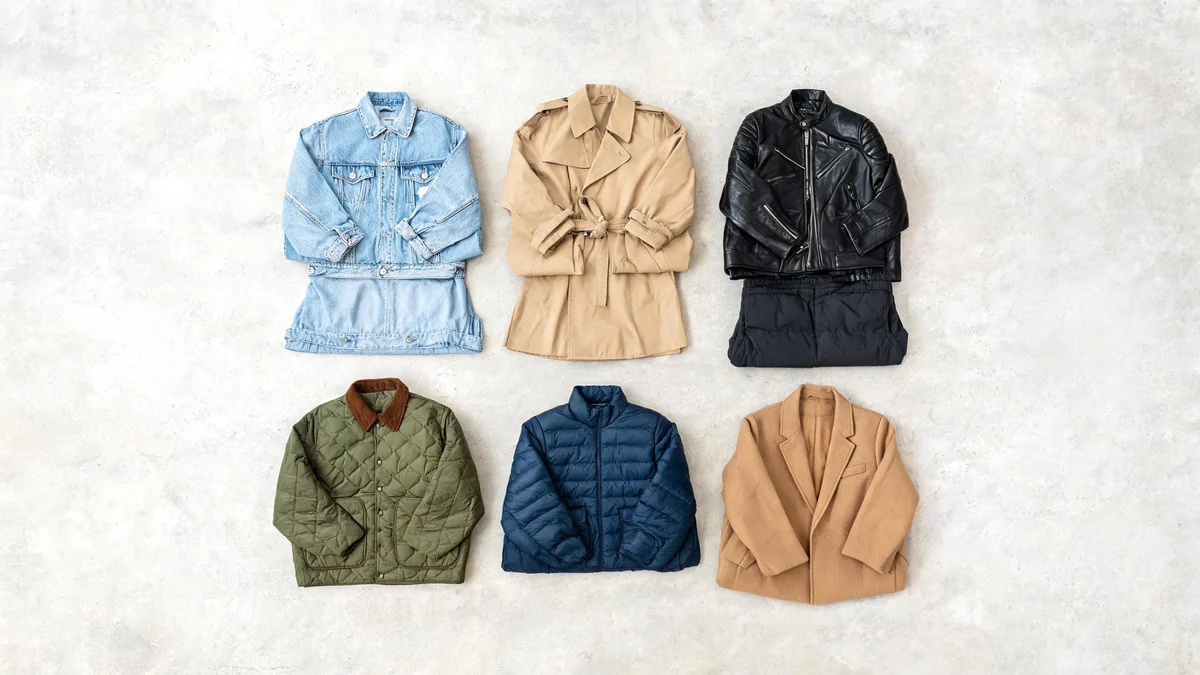
Every jacket has a comfortable window, and what you wear under it stretches that window roughly ten degrees colder. Here's where each common type sits on its own, over a tee or thin layer:
- Denim jacket: 60 to 68°F. It cuts some wind and no rain. With a hoodie or sweatshirt underneath it gets you into the mid 50s.
- Shacket or overshirt: 60 to 70°F. The easiest layer to carry, because it folds flat into a bag. A wool-blend one over a thin knit handles about 55.
- Bomber: an unlined nylon bomber suits 58 to 65°F. A padded or fleece-lined one covers the low 50s.
- Leather jacket: 50 to 65°F. Leather blocks wind better than almost any light jacket, which is why it feels warmer than it looks. Below the mid 40s, wear it under a wool coat instead of as the outer layer, the way our leather jacket outfits show it.
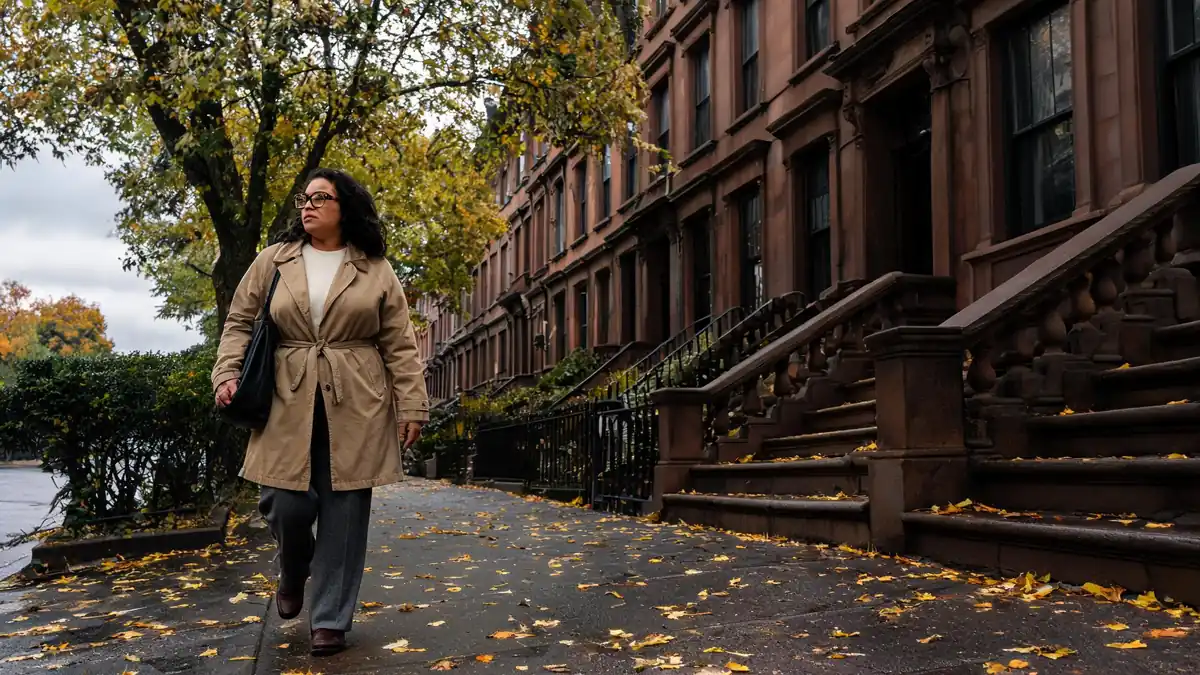
- Trench coat: an unlined cotton trench is a 55 to 65°F piece. Add a sweater or a zip-in liner and it reaches the upper 40s. It's also the one to grab when the forecast says showers.
- Quilted or field jacket: 45 to 58°F. Padded but thin, so it fits over a sweater and under a backpack without bulk.
- Packable puffer: 42 to 52°F, or under a rain shell on a cold wet day. It packs more warmth than its weight suggests, so it gets hot fast on a sunny 60°F afternoon.
- Wool coat: 35 to 50°F. A long one covers your legs too, which matters at a bus stop. In the low 50s it isn't too much if it's windy or you'll be out past dark; on a sunny 56°F afternoon it is. The 40 degree weather guide shows what to wear under it once it's truly cold.
- Down puffer or parka: below about 38°F. Above the mid 40s most people overheat in one the moment they step onto a train or into a store.
Today's Jacket, Matched to What You're Doing
Five common days, each placed on its row after the checks. If you'd rather see the whole outfit before you get dressed, you can plan it in Klodsy from the clothes you already own.
Work commute: 52°F, cloudy, a ten-minute walk
The warmer-jacket row, and the cloud cover keeps you there. For women, a lined khaki trench over a fine merino crewneck, wide-leg wool trousers and loafers or low ankle boots. For men, an olive field jacket or a navy mac over an oxford shirt and a thin V-neck, chinos and leather sneakers. The jacket comes off at your desk, so the sweater has to look finished by itself. The 50 degree weather guide has more outfits for exactly this temperature.
School run at 45°F, pickup at 63°F
The biggest swing of the week calls for a jacket you're happy to leave on the passenger seat.
- 7:45 a.m., 45°F: long-sleeve tee, cardigan or quarter-zip, jeans, sneakers, and a quilted jacket or packable puffer on top.
- 3:15 p.m., 63°F: the same outfit minus the jacket. The cardigan is the light layer now.
Saturday errands: 61°F and sunny
Light-jacket row, and full sun nudges it warmer. A denim jacket or check shacket over a striped long-sleeve tee, straight jeans or cords, white sneakers. If you'll still be out at 5 p.m. in late October, tuck a thin crewneck into your tote for when the sun drops. For more ways to dress this range, see what to wear in 60 degree weather.
Dinner out: 58°F at 7 p.m., 50°F when you leave
Dress for the walk back to the car, not the walk in. A leather jacket works over a knit midi dress with tights and ankle boots, or over a fine turtleneck and dark jeans. For men, a suede jacket or wool overshirt over a knit polo, dark trousers and chelsea boots. Sitting on the patio? Bring a scarf as well.
Rainy and windy: 55°F
Two checks point colder, so dress a row down and keep the rain out. A hooded rain jacket or a trench goes over a sweater, with dark jeans or trousers that hide splashes and leather boots or waterproof sneakers. In a strong wind the hood beats an umbrella, which tends to flip inside out at the first gust anyway.
What to Skip, and the Small Extras That Replace a Heavier Coat
On a borderline day the fix is often a small add-on, not a heavier jacket. A scarf closes the gap at your neck where wind gets in under a light jacket, and it can carry that jacket a few degrees further down the chart. Thin knit gloves and a beanie are worth it on 40s mornings and fit in a pocket by noon. A tote or crossbody big enough for a folded jacket means you'll actually bring the jacket instead of debating it at the door.
Leave these out of the rotation:
- A hoodie as your only layer on a windy day. It's warm in still air and does little once the breeze picks up.
- A winter parka above about 45°F. You'll be fine for five minutes outside and overheating for thirty on the train.
- Suede, unwaxed canvas and dry-clean-only wool coats in steady rain.
- Dressing for the afternoon high when you'll be outside at 8 a.m. and 8 p.m.
Find your row, run the five checks, and the jacket question takes about as long as opening the forecast. For the rest of the outfit, what to wear today has ready-made formulas, or try Klodsy and let it suggest what goes under the jacket for today's weather.
Related Articles
Grunge Outfits: 12 Ideas From 90s Flannel to Soft Grunge
Grunge outfits with photos: 12 looks from 90s flannel and slip dresses to soft grunge for fall, three for men, and what keeps grunge from looking messy.
Business Casual Outfits for Women: 12 Fall and Winter Looks
Twelve business casual outfits for women for fall and winter workdays, built from trousers, knits and boots you likely own, so you stop guessing at 7 a.m.
What to Wear to a Fall Wedding: Every Dress Code, Solved
What to wear to a fall wedding as a guest, by dress code: colors that photograph well in October, layers so you won't freeze at the ceremony, men's looks.
Frequently Asked Questions
Everything you need to know about this topic
For most people, jacket weather starts below about 65°F (18°C). A light jacket covers the high 50s and low 60s, and you'll want a proper coat once it drops into the 40s.