
What to Wear in 50 Degree Weather: 3 Layers, 8 Outfits
Why 50 Degree Weather Is the Hardest Temperature to Dress For
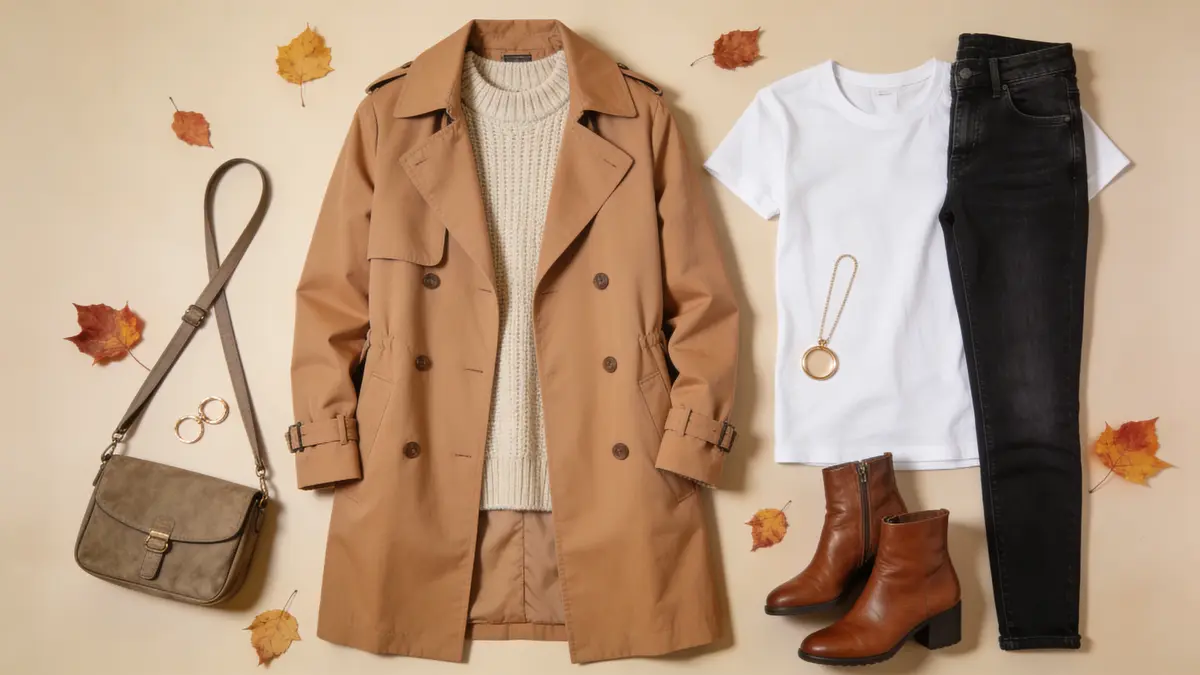
Fifty degrees (10°C) is too warm for a winter coat and too cold for a single shirt, and a chilly morning can turn into a mild afternoon. The answer is three light layers you can peel off: a breathable long-sleeve base, a cardigan or thin sweater, and a light jacket like a trench or denim jacket, with closed-toe shoes.
Below: the 3-layer formula, the best jackets for 50 degrees, 8 outfits for work, weekends, date night and outdoor plans, and the fabrics that keep you comfortable all day.
The 3-Layer Formula for 50 Degree Weather
The single most reliable strategy for dressing in 50 degree weather is a structured 3-layer system. Each layer serves a distinct function: temperature regulation, insulation, and weather protection. The system works because you can add or remove layers as conditions change throughout the day — solving the core problem of transitional weather dressing.
Layer 1 — The Breathable Base
Your base layer stays on all day and manages moisture. At 50 degrees, you will not sweat heavily, but temperature shifts can trigger mild perspiration — especially during a brisk walk or commute.
Best base layer options for 50 degree weather:
- Cotton long-sleeve tee — breathable, affordable, and the most practical choice for moderate temperatures
- Merino wool blend — naturally temperature-regulating and odor-resistant, ideal if you run cold or will be active outdoors
- Modal or Tencel tops — moisture-wicking with a silky feel, excellent for anyone who tends to overheat easily
Choose a fitted (not tight) long-sleeve shirt in a neutral color like white, navy, gray, or black. This becomes the foundation every other layer builds on. Avoid thick thermal base layers — those are designed for temperatures well below 40 degrees and will make you sweat at 50.
Layer 2 — The Insulating Mid Layer
The mid layer is the workhorse of your 50 degree outfit. It provides warmth in the morning, comes off when temperatures climb, and goes back on when the sun sets. The best mid layers for 50 degree weather look intentional when worn and compact enough to carry when removed.
Top mid layer picks:
- Lightweight fleece pullover — warm without weight, easy to fold into a bag
- Cotton or cashmere cardigan — adds a polished touch for work or dinner
- Quarter-zip sweater — adjustable neckline lets you regulate temperature on the fly
- Thin crewneck knit — versatile enough for casual and dressed-up occasions
The mid layer is where personal style comes through. A patterned cardigan, a colorful fleece, or a textured knit adds visual interest while solving a practical problem.
Layer 3 — The Light Outer Layer
Your outer layer protects against wind and light rain, the two biggest comfort threats at 50 degrees. According to the National Weather Service, wind chill calculations begin at 50 degrees Fahrenheit, meaning even moderate wind makes 50 degrees feel noticeably colder.
Choose an outer layer that blocks wind and can be removed easily:
- A water-resistant shell for rainy climates
- A structured jacket for commuting and work
- A breathable windbreaker for outdoor activities
The next section covers the best jacket options in detail.
Best Jackets for 50 Degree Weather
Choosing the right jacket is the single decision that makes or breaks a 50 degree outfit. Too heavy, and you are sweating on the train. Too light, and you are freezing during the walk from the parking lot. Here are the five best jacket types ranked by versatility and occasion.
| Jacket Type | Best For | Wind Protection | Rain Protection | Style Level |
|---|---|---|---|---|
| Denim jacket | Casual outings, weekends | Moderate | None | Relaxed |
| Trench coat | Work, dinner, errands | Strong | Good | Polished |
| Lightweight puffer | Outdoor activities, commuting | Strong | Moderate | Sporty-casual |
| Unstructured blazer | Office, date night, smart casual | Low | None | Elevated |
| Shacket (shirt jacket) | Casual, brunch, travel | Moderate | None | Trend-forward |
The denim jacket is the workhorse of 50 degree dressing. It pairs with nearly everything from jeans to dresses and strikes the right weight for this exact temperature range. For styling ideas on pairing denim with the rest of your wardrobe, see our complete jeans styling guide.
The trench coat is the most versatile choice if you dress up for work or plan evening outings. A mid-length trench in khaki, navy, or black works across all body types and bridges the gap between casual and formal seamlessly.
The lightweight puffer is ideal for anyone spending extended time outdoors. Modern packable puffers compress to the size of a water bottle, making them easy to stash when afternoon temperatures climb.
50 Degree Outfit Ideas by Occasion
The best 50 degree weather outfit depends entirely on where you are going. A morning commute demands different layers than a weekend hike or a Saturday evening dinner. Here are ready-to-wear outfit formulas for four common scenarios.
Work and Office Outfits for 50 Degree Weather
For professional settings, the goal is looking polished while managing the temperature swing between outdoor commute and climate-controlled office.
Women: Tailored trousers + fitted turtleneck or blouse + unstructured blazer + ankle boots + trench coat for the commute. Remove the trench at the office and the blazer reads as your outfit's outer layer.
Men: Chinos or dress trousers + button-down shirt + lightweight merino sweater + leather shoes + structured jacket. The sweater serves as insulation on the commute and stays polished at your desk.
Key tip: Offices typically maintain 68 to 72 degrees Fahrenheit regardless of outdoor weather. Dress your base and mid layers for indoor comfort, then add the outer layer strictly for the commute. For more professional outfit formulas, see our guide on office outfit ideas.
Casual Weekend Outfits for 50 Degree Weather
Weekend casual at 50 degrees means comfortable layers you can peel on and off without thinking twice.
Women: Well-fitted jeans + cotton long-sleeve tee + oversized cardigan or shacket + clean white sneakers. Add a lightweight scarf if the morning is chilly.
Men: Dark jeans or chinos + henley or crewneck sweatshirt + denim jacket + clean sneakers or suede desert boots.
This is the outfit formula where the one-swap rule from our casual outfit ideas guide shines. Swap the sneakers for ankle boots or the cardigan for a blazer, and the same base outfit shifts from errand-running to brunch-ready.
Date Night Outfits for 50 Degree Weather
Fifty degrees is actually the ideal date night temperature — cool enough for polished layers without the bulk of heavy winter wear.
Women: Midi skirt or tailored trousers + fitted knit top in a rich color + structured blazer + pointed-toe ankle boots + leather crossbody bag.
Men: Dark slim-fit jeans + quality button-down or turtleneck + sport coat or blazer + leather Chelsea boots. Keep layers removable in case the restaurant is warm.
For more date outfit formulas and color psychology tips, check out our date night outfit ideas guide.
Outdoor and Active Outfits for 50 Degree Weather
Running, hiking, or spending extended time outdoors at 50 degrees requires moisture-wicking fabrics over insulation.
Running or walking: Moisture-wicking long-sleeve base + light running vest or windbreaker + running tights or joggers + running shoes. Start your run feeling slightly cool — your core body temperature rises quickly once you begin moving, so dressing as if it is 10 to 15 degrees warmer than the actual reading helps prevent overheating mid-run.
Hiking or outdoor activities: Merino wool base layer + fleece mid layer + packable windbreaker + hiking pants + trail shoes. Carry the windbreaker in your pack for exposed ridgelines or afternoon wind.
Dressing for the 40-60 Degree Range — Adjustments by Temperature
Fifty degrees is the midpoint of the transitional weather range, but every five-degree shift changes what you need. This table expands the 3-layer formula across the full 40 to 60 degree Fahrenheit range so you can adapt on any given day.
| Temperature Range | Base Layer | Mid Layer | Outer Layer | Accessories |
|---|---|---|---|---|
| 40-45°F (4-7°C) | Long-sleeve tee or thermal | Fleece or wool sweater | Insulated jacket or heavier coat | Scarf, light gloves, beanie |
| 45-50°F (7-10°C) | Long-sleeve tee | Cardigan or quarter-zip | Trench coat or light puffer | Scarf optional |
| 50-55°F (10-13°C) | Long-sleeve tee or fitted layer | Light cardigan or vest | Denim jacket or blazer | Sunglasses |
| 55-60°F (13-16°C) | Short- or long-sleeve tee | Optional — vest or open button-down | Optional — carry a light layer | Sunglasses, hat for sun |
The critical insight: below 45 degrees, you need genuine insulation. Above 55 degrees, the mid layer becomes optional and the outer layer is just-in-case. At 50 degrees, you need all three layers — which is precisely why this temperature is the trickiest to dress for. For detailed outfit ideas in the upper end of this range, our 60 degree weather outfit guide covers the specific layering adjustments needed when temperatures climb above 55°F.
For full cold-weather dressing strategies below 40 degrees, see our winter wear guide.
Best Fabrics for 50 Degree Weather
Fabric choice matters as much as layer structure at 50 degrees. The wrong material traps heat on a warm afternoon or fails to retain it on a chilly morning.
Best fabrics for 50 degree transitional weather:
- Cotton — the default base layer. Breathable, comfortable, and widely available. Best for mild days with low wind. Drawback: absorbs moisture and dries slowly.
- Merino wool — the premium choice. Naturally temperature-regulating, moisture-wicking, and odor-resistant. The International Wool Textile Organisation notes that wool helps maintain a more stable microclimate between the garment and the body than other common apparel fibres, making it especially comfortable across shifting temperatures.
- Fleece (polyester) — excellent mid-layer insulation. Lightweight, quick-drying, and retains warmth even when damp.
- Light wool blends — ideal for sweaters and cardigans. Provides warmth without the weight of heavy knits.
- Moisture-wicking synthetics (nylon, polyester blends) — best for exercise and outdoor activities. Moves sweat away from the body quickly, preventing clamminess during temperature shifts.
Fabrics to avoid at 50 degrees:
- Heavy wool cable knits (too warm, too bulky)
- Pure polyester base layers (trap heat indoors)
- Silk (too delicate for layering, not warm enough alone)
- Linen (designed for heat, offers no insulation)
Spring vs Fall at 50 Degrees — Why the Same Temperature Feels Different
A 50-degree day in April and a 50-degree day in October are not the same experience — even though the thermometer reads identically. Understanding why helps you dress more accurately for each season.
Key differences between spring and fall 50-degree dressing:
| Factor | Spring (March-May) | Fall (September-November) |
|---|---|---|
| Wind patterns | Gusty, unpredictable | Calmer, more consistent |
| Humidity | Lower (feels crisper) | Higher (feels damper) |
| Sun angle | Rising — stronger afternoon warmth | Declining — weaker afternoon warmth |
| Morning vs afternoon | Bigger swing (40s to 60s) | Smaller swing (45s to 55s) |
| Layering strategy | Dress for cold mornings, prepare to shed layers | Dress for consistent cool, keep layers on longer |
| Color palette | Lighter neutrals, pastels, fresh tones | Deeper tones, earth colors, warm neutrals |
Spring at 50 degrees calls for lighter fabrics and brighter colors. The afternoon sun often pushes actual warmth well above 50, so packable layers matter most. For complete spring dressing strategies, see our spring outfit ideas 2026 guide.
Fall at 50 degrees benefits from slightly heavier mid layers and darker color palettes. The shorter daylight hours mean less afternoon warmth, so plan to keep your jacket on longer than you would in spring.
What NOT to Wear in 50 Degree Weather
Knowing what to avoid saves as much discomfort as knowing what to wear. These are the most common 50 degree outfit mistakes.
- Heavy winter coats or thick parkas — designed for sub-freezing temperatures, these cause overheating and sweating within minutes at 50 degrees. You end up carrying a bulky coat all afternoon.
- Shorts — unless you are exercising, bare legs at 50 degrees feel cold, especially in wind. Even athletic shorts during a run can feel uncomfortably cool until your body warms up.
- Open-toe shoes or sandals — your extremities lose heat faster than your core. Exposed toes at 50 degrees feel much colder than the ambient temperature suggests. As Cleveland Clinic explains, the body constricts blood vessels in the hands and feet to redirect blood toward vital organs, which is why fingers and toes go cold first.
- Single heavy sweaters without a jacket — a thick knit might feel warm initially, but it offers zero wind protection. A lighter sweater plus a windproof outer layer provides better comfort.
- Light summer dresses without layers — a dress works at 50 degrees only when paired with tights, ankle boots, and a proper jacket. Without layers, you will be cold within 20 minutes outdoors.
Accessories That Complete a 50 Degree Outfit
The right accessories close the comfort gaps that layers alone leave open. At 50 degrees, accessories are about fine-tuning warmth — not bundling up.
Essential accessories for 50 degree weather:
- Lightweight scarf — a cotton or thin wool scarf protects your neck from wind without adding bulk. Drape it loosely for style or wrap it once for warmth.
- Sunglasses — spring and fall sun sits lower on the horizon, creating more direct glare. Polarized lenses reduce eye strain during commutes and outdoor time.
- Crossbody bag or tote — you will remove layers as the day warms. A bag large enough to hold a folded jacket keeps your hands free.
- Light gloves (optional) — thin knit gloves add warmth on early morning commutes. Skip them once temperatures climb above 50.
- Beanie (optional) — helpful in the low 40s or on windy days. At 50 degrees on a calm day, a beanie may cause overheating.
What to skip: heavy wool scarves, insulated gloves, ear warmers, and thick winter beanies. These are designed for temperatures well below 50 and will be uncomfortable.
Plan Your 50 Degree Outfit Before You Step Outside
Dressing for 50 degree weather comes down to one principle: layer smart, not heavy. A breathable base, an insulating mid layer, and a light outer shell handle everything from a 42-degree morning commute to a 58-degree afternoon walk.
The trickiest part is visualizing how your specific clothes layer together before you commit. Klodsy's AI outfit planner lets you build layered outfits from your own wardrobe, see how pieces look together with virtual try-on, and save go-to combinations for 50 degree days so you never stand in front of your closet wondering again.
Whether spring is arriving or fall is settling in, the 3-layer formula adapts to any 50 degree day. Start with one reliable outfit from this guide, test it on your next transitional weather day, and adjust from there. The goal is not perfection — it is comfort and confidence from morning to night.
Related Articles
Black Boots Outfits: Ankle, Knee-High and Over the Knee
Black boots outfits by height: ankle, knee-high and over the knee. The hem, trouser and heel that work with each, plus the mistakes that shorten your leg.
Leather Jacket Outfits: 20 Looks Beyond the Biker Cliché
Leather jacket outfits that don't read as costume: 20 looks for dinner, errands, concerts and work, plus fit rules, colors past black and faux vs real.
Jumpsuit Outfits: 20 Looks From Work to Wedding Guest
Jumpsuit outfits for every occasion: 20 ways to style one for work, weekends and weddings, plus how to fix the fit, the length and the bathroom problem.
Frequently Asked Questions
Everything you need to know about this topic
No. A heavy winter coat is overkill at 50°F and will cause overheating. Opt for a lightweight jacket like a denim jacket, trench coat, or light puffer instead. Save the winter coat for temperatures below 40°F.