
What to Wear to University: Campus Outfit Guide
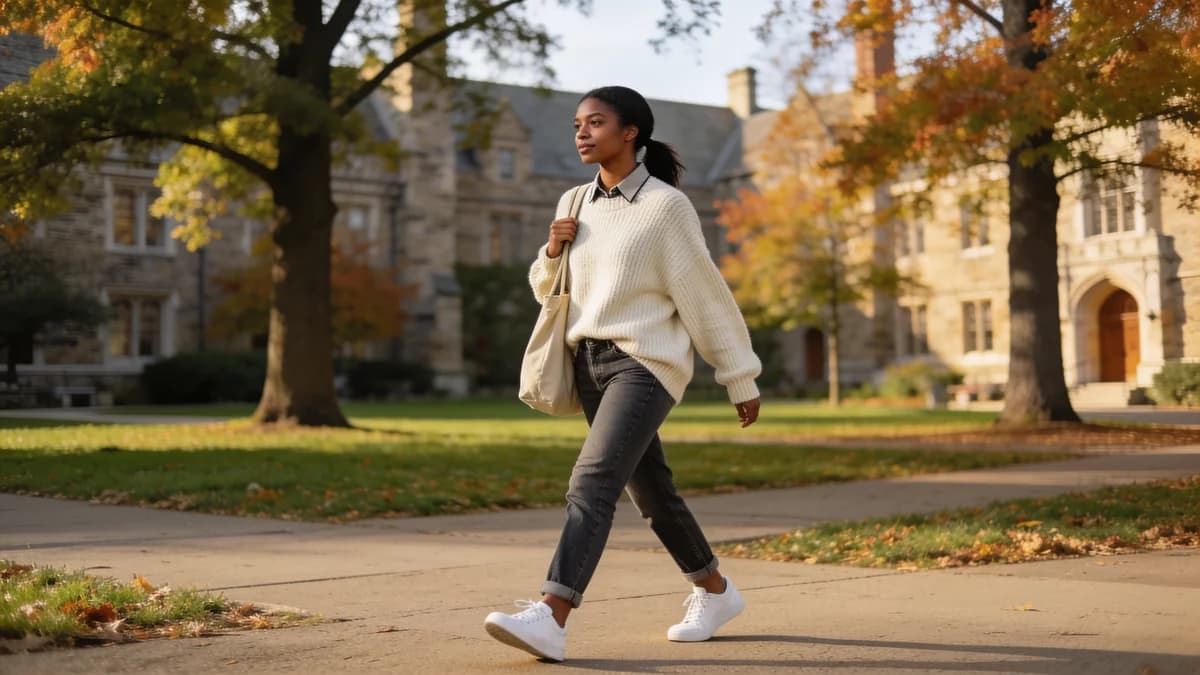
Building a Campus Capsule That Actually Works
A small rotation of pieces beats a closet you never touch.
College days are long and unpredictable. An 8am lecture, a walk across campus in the wind, a library stretch that runs three hours, then maybe a group project meeting or a friend's birthday dinner. One outfit has to survive all of it, and rethinking that outfit every single morning gets old by week two. The fix isn't more clothes. It's a smaller set of pieces that already work together, so getting dressed takes under five minutes even on a day you slept through your alarm.
Here's the mnemonic worth keeping in your head all semester: Comfort, Layers, Repeat. Comfort because you're sitting, walking, and sitting again for six to eight hours. Layers because lecture halls, outdoor quads, and late-night libraries all sit at different temperatures. Repeat because nobody at college is tracking your outfit history, and a rotation of good basics will outperform a closet full of one-time pieces.
A workable starter capsule looks something like this:
| Category | Pieces | Notes |
|---|---|---|
| Bottoms | 2 jeans, 1 jogger or legging | One relaxed fit, one slim, one for gym days |
| Tops | 4-5 tees or basic tops | Solid colors mix with everything |
| Mid layer | 2 sweaters or hoodies | One neutral, one with color |
| Outer layer | 1 jacket, 1 heavier coat | Denim or bomber, plus something warm for winter |
| Shoes | 2 pairs | Clean sneakers for walking, loafers or boots for variety |
| Bag | 1 backpack | Big enough for a laptop and a water bottle |
That's roughly fifteen pieces producing over twenty outfit combinations without ever repeating the exact same look two days straight. If you want to see how far a small closet can stretch, the capsule wardrobe planner walks through the math in more detail.
The rule: if you can't sit in it for three hours and walk fifteen minutes in it, it doesn't belong in your weekday rotation.
Mix and Match Table: One Week, Five Outfits
Same pieces, different combinations, zero decision fatigue.
This is the actual point of a capsule. You're not buying five new outfits, you're combining the same six or seven pieces in ways that feel different enough. Here's a sample week built from the capsule above.
| Day | Top | Bottom | Layer | Shoes |
|---|---|---|---|---|
| Monday | White tee | Straight jeans | Denim jacket | White sneakers |
| Tuesday | Grey sweater | Black leggings | None needed | Loafers |
| Wednesday | Graphic tee | Relaxed joggers | Hoodie | Sneakers |
| Thursday | Striped long sleeve | Dark jeans | Bomber jacket | Boots |
| Friday | Solid tee | Wide leg jeans | Cardigan | Loafers |
Notice that only one or two pieces change per day. That's intentional. Nobody actually needs a new outfit concept daily, they need enough small variation that the week doesn't feel monotonous. If you're staring at a pile of clothes with no idea how to turn it into outfits like this, building outfits from what you already own is a good next stop.
First Day of University vs. Everyday Outfits
The pressure to impress on day one fades fast, don't overdress for it.
First-day energy makes people want to wear their best outfit, the one that requires ironing or a specific bra or shoes that pinch after an hour. Resist that instinct. You don't know your building layout yet, you don't know if the lecture hall runs cold, and you're going to be walking more than usual while you figure out where everything is.
A smart first-day outfit looks like your normal outfit, just slightly more put together. Clean sneakers instead of the beat-up pair. A top without a stain history. Jeans that fit well rather than the ones with the hole in the knee you've been meaning to retire. That's the whole adjustment. Save the outfit that photographs well but pinches at the waist for a day with less walking involved.
By week two, most students have settled into something close to their real rotation, which usually looks more like comfortable basics than anything from the first-day photos. That's normal, and it's actually the smarter long-term approach.
Pro tip: lay out your first week of outfits on a Sunday. It removes the morning decision entirely during the week you're also memorizing building names and bus schedules.
Dressing for Cold Lecture Halls and Unpredictable Weather
Layers solve the AC-versus-outdoor-heat problem better than any single jacket.
Lecture halls run cold, almost universally, regardless of the actual outdoor temperature. Meanwhile the walk between buildings might be warm, especially in early fall or late spring. This mismatch is the single biggest wardrobe headache in college, and layers are the actual fix, not a heavier jacket.
A base layer, a mid layer, and an outer layer that comes off easily solves most of it. Think a tee under a sweater under a jacket you can tie around your bag once you're inside. Cardigans work well for this too since they open and close without the hassle of a full zip-up.
For the genuinely unpredictable months, October and March especially, check the weather the night before rather than guessing. A scarf takes up almost no space in a backpack and adds real warmth to an otherwise light outfit if the temperature drops mid-day. If you want a broader rundown of everyday layering logic outside the campus context, the casual outfit ideas guide covers a lot of the same territory.
| Weather scenario | What to wear | Why |
|---|---|---|
| Freezing lecture hall, warm outside | Tee, cardigan, jacket removed once inside | Adjustable without overheating |
| Rainy walk between buildings | Water resistant jacket, backpack rain cover | Keeps laptop and notes dry |
| Sudden temperature drop | Scarf, extra hoodie in backpack | Small items, big warmth payoff |
| Hot early fall days | Lightweight tee, shorts or light pants | Save the sweater for indoors |
Walkable Shoes That Survive an Entire Semester
Your feet do more work in college than almost any other environment.
Between class buildings, the library, dining halls, and dorms or off-campus housing, most students walk far more than they expect to on a normal day. New shoes that haven't been broken in are a real liability here, not a minor inconvenience. A blister on day three of the semester follows you into every class after it.
Clean sneakers are the safest daily default. They handle rain, uneven sidewalks, and long hallway sprints when you're late equally well. Loafers with a cushioned insole work for days you want something slightly dressier without sacrificing comfort, and they slip on fast during a rushed morning. Boots earn their spot in colder months but skip anything with a completely stiff sole if you're walking more than ten minutes at a stretch.
Whatever you choose, break new shoes in around your dorm or apartment before wearing them to a full day of classes. A weekend of light wear beats discovering the problem three buildings from your next lecture.
Bottom line: buy shoes for the walk you'll actually do, not the outfit photo you're imagining.
Lecture, Library, Then a Night Out: One Outfit, Three Settings
A few smart swaps turn a daytime outfit into an evening one.
Plenty of college days don't end when class does. You go from a morning lecture to an afternoon in the library to dinner or a night out with friends, often without time to go back to your room and change. The solution isn't packing a second full outfit, it's building the first one with small swap potential.
Start with a base outfit that already looks decent: jeans, a top you like, clean shoes. Throw a going-out top or a statement piece of jewelry in your bag if you know the night includes something more social. Swapping a hoodie for a leather jacket, or adding a bold lip and earrings in a bathroom mirror, takes two minutes and changes the entire read of the outfit without requiring a wardrobe change.
Bottoms rarely need to change at all. Dark jeans work from a 9am class through a dinner reservation. It's usually the top layer and the accessories doing the transformation, which is exactly why a flexible capsule matters more than a huge closet.
Budget-Friendly Basics Every Student Needs
Cost per wear matters more than price tag on a student budget.
Nobody needs a designer wardrobe for college, and most people figuring out their style at eighteen or nineteen shouldn't be spending like they have a full salary yet. The math that actually matters is cost divided by number of wears. A twenty dollar tee worn sixty times over a semester costs far less per wear than a seventy dollar going-out top worn twice.
Prioritize a good pair of jeans, a warm layer, and shoes you can walk in. These get worn constantly and are worth spending slightly more on if your budget allows it. Basic tees, graphic shirts, and trendier pieces are the right place to shop secondhand, thrift, or wait for sales, since they matter less individually and get replaced more often anyway.
Campus thrift stores, clothing swaps with friends, and end-of-season sales at chain stores all stretch a student budget further than buying everything new and full price. Building a rotation slowly across a semester, rather than trying to buy a full wardrobe in one trip, also spreads the cost out in a way that's easier on a student income.
When You Need to Look a Little More Put Together
Internships, presentations, and career fairs call for a different rule set.
Most of college calls for comfort first. But a career fair, a class presentation, or an internship interview needs a slightly different approach, and it helps to have that outfit sorted before the morning it's due. If you have an internship interview or a formal presentation on the calendar, the rules shift closer to what you'd wear to any professional interview, and it's worth reading through what to wear to an interview so you're not scrambling the night before.
The good news is you don't need a full separate wardrobe for this. One blazer, one pair of dress pants or a simple dress, and shoes that aren't sneakers usually covers every formal moment a semester throws at you. Keep that small set separate from your daily rotation so it stays wrinkle-free and ready.
Putting It Together
Comfort, Layers, Repeat isn't complicated advice, and that's the point. A small capsule that mixes and matches, shoes that have already been broken in, layers that adjust to a cold lecture hall and a warm walk outside, and the acceptance that repeating outfits is completely normal. That's most of what actually matters for dressing well through a full semester.
The rest is just execution on busy mornings, which gets easier once the pieces themselves stop requiring thought.
Related Articles
Black Jeans Outfit Ideas: 12 Looks You Can Copy Tonight
12 black jeans outfit ideas with photos for women and men, office to night out, plus the fade rule nobody tells you: jet black dresses up, faded dresses down.
Teacher Outfits: 25 Looks That Survive a School Day
Teacher outfits built for real classrooms: 25 comfortable, washable looks that handle bending, standing and glue sticks. Plus a 12-piece capsule.
Fall Outfit Ideas 2026: What to Wear This Autumn
Fall outfit ideas for 2026, from warm September days to cold November mornings. Layering formulas, a small autumn capsule, and the fabrics that make it work.
Frequently Asked Questions
Everything you need to know about this topic
Something comfortable that still feels like you, not a costume. Jeans or joggers, a top you like, and shoes you can walk across campus in. Save the outfit that requires effort to sit still in for a day when you actually know your class layout. Most people overdress on day one and regret it by the second building.