
What to Wear to an Interview: 2026 Outfit Guide

The One-Notch-Above Rule
Interviewing tomorrow with three blazers laid across the bed? Skip the spiral. Dress one step above what the company wears every day. Jeans-and-hoodies office? Show up in chinos and a blazer. Business casual office? Show up in a tailored suit. That single filter handles most dress code decisions before you check the careers page. Below: how to read a company's culture from LinkedIn photos, outfit formulas by industry, the color question, remote interview specifics, and the night-before outfit check.
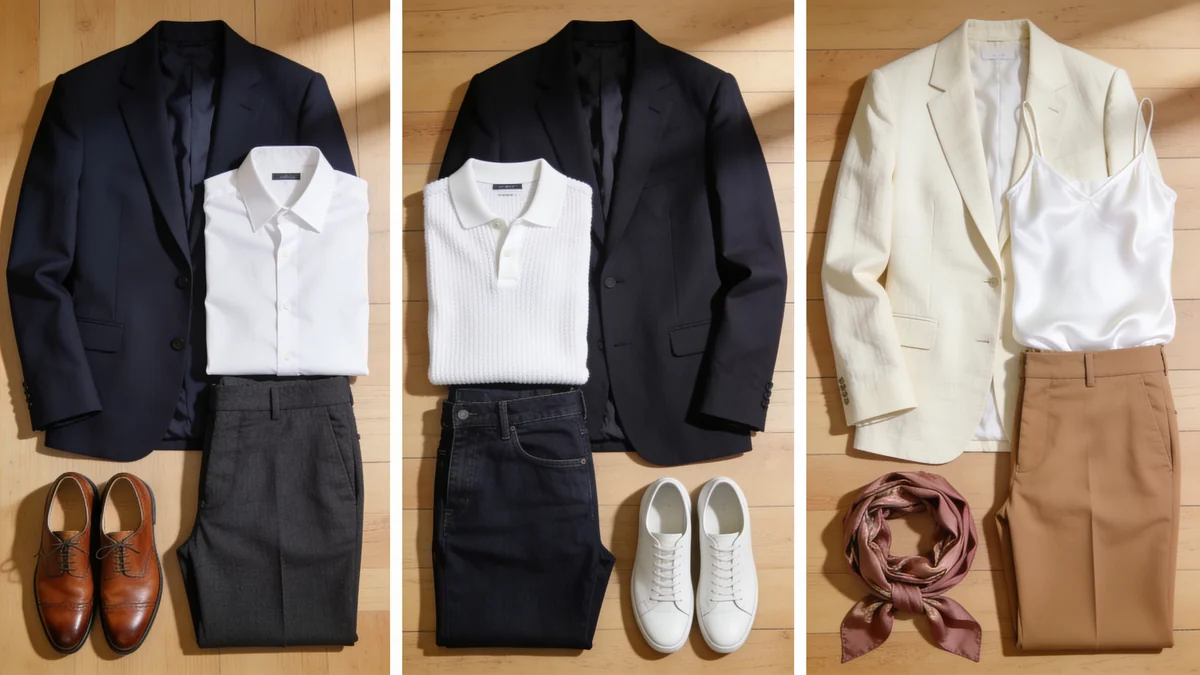
Three starter formulas cover most situations:
- Corporate: Navy or charcoal suit, white or light blue dress shirt, brown leather oxfords (men) or low-heeled pumps in black or nude (women)
- Tech/Startup: Navy unstructured blazer, white or pale grey shirt, dark slim chinos, clean white leather sneakers or plain leather loafers
- Creative: Tailored separates in a solid muted color (cream, slate, burgundy), one quality accessory (silk scarf, leather belt, or fine-knit crew neck), no tie required
Fit matters more than brand. A well-tailored $80 blazer from J.Crew beats a loose $400 blazer every time. Start there.
How to Read the Company's Dress Code Before You Arrive
The careers page is a starting point, not a complete answer. Look at photos of real employees, not the staged shots of models in conference rooms. LinkedIn employee photos, particularly from events or office settings, show what people actually wear.
Glassdoor reviews sometimes mention dress code directly, and a search for "[company name] what to wear interview" will surface candid takes from past candidates.
If you're working with a recruiter, ask outright: "I want to dress appropriately for the team culture. Is the office business casual or more formal?" Recruiters field this question regularly. It's not a strange ask.
Pro tip: If you do ask a recruiter, frame it as wanting to respect team culture, not as uncertainty about your own wardrobe. That framing signals self-awareness rather than anxiety, and the recruiter will give you a more candid answer.
Many offices have relaxed their dress codes, so a full suit at a mid-size tech company can now read as out of step, the same way showing up in jeans to a law firm would.
When in doubt after all of that research, the one-notch-above rule applies. You will never lose a job for looking more prepared than required.
Interview Outfit Formulas by Industry
| Industry | Default | Step Down (very casual culture) | Step Up (very formal) |
|---|---|---|---|
| Finance / Law / Consulting | Full suit | Tailored separates | Three-piece suit |
| Corporate (general) | Suit or separates | Smart casual | Suit with tie |
| Tech / Startup | Blazer with dress pants | Quality knit with chinos | Tailored separates |
| Creative (design, marketing) | Tailored separates in color | Smart casual with one statement piece | Statement suit |
| Healthcare / Education | Conservative dress or suit | Modest separates | Suit with closed-toe shoes |
Finance, Law, and Consulting
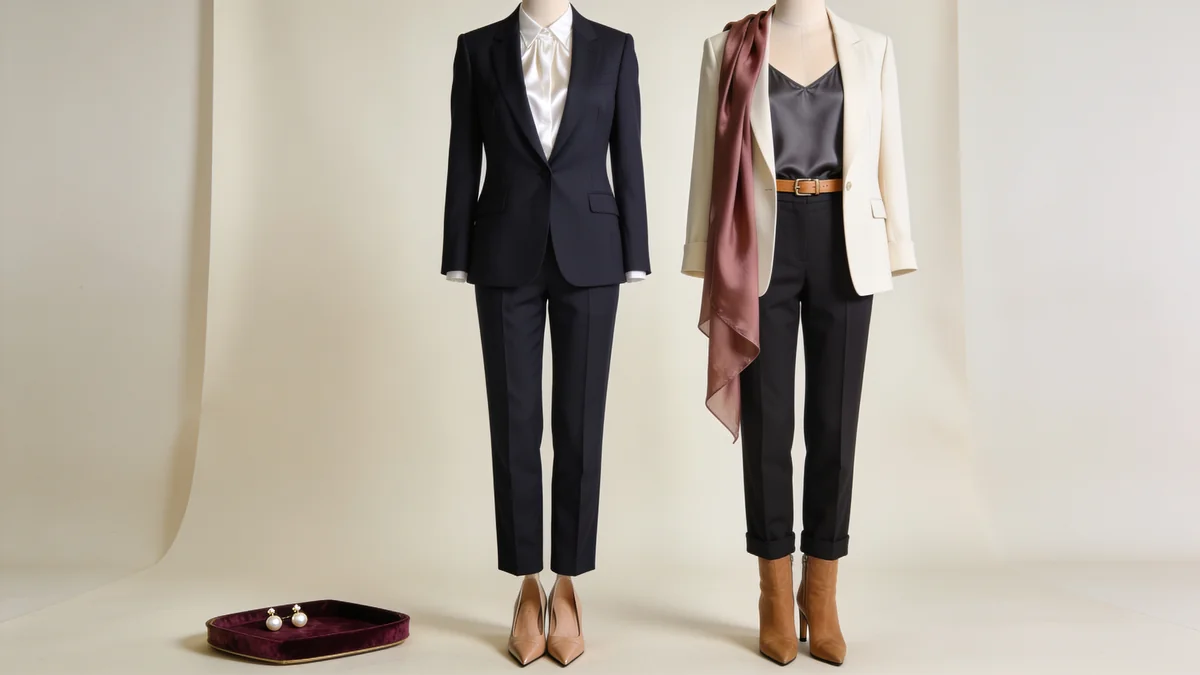
A full suit is not overdressing here, it's baseline. For women: a Theory or J.Crew Collection pantsuit in charcoal or navy with a silk blouse in cream or white, and closed-toe heels or leather flats. For men: a Suitsupply Napoli suit in mid-grey or navy, a Brooks Brothers non-iron white dress shirt, a solid tie in a muted color, and black or dark brown cap-toe oxfords.
A structured leather tote or portfolio in black or tan completes the look without clashing.
Corporate (General)
This covers a wide range: retail headquarters, healthcare administration, financial services outside of traditional law and banking, large nonprofits. The sweet spot is a suit or well-matched separates. For women, M.M.LaFleur's Manda Dress or the Ann Taylor Signature Crepe blazer with matching trousers reads polished without feeling stiff.
For men, a Banana Republic Slim-Fit suit in charcoal or a navy blazer with matching-weight dress trousers (not mismatched fabrics), white shirt, and plain leather oxfords. The distinction here versus finance: a tie is optional, and a more relaxed fabric like a ponte or lightweight wool blend is acceptable.
Tech and Startups
The goal is looking thoughtful, not stiff. A $50 J.Crew blazer over a quality merino knit works perfectly well for a tech interview when the fit is right and the color works. For women: an Everlane Japanese Oxford shirt in pale blue with slim charcoal trousers, or a COS tailored shift dress in slate with clean leather flats.
For men: the Everlane The Day Blazer in navy over a white Oxford shirt, A.P.C. slim chinos in dark navy, and Clarks desert boots or clean leather sneakers. No tie required. Check the sport coat vs. blazer vs. suit jacket guide if you're unsure which outer layer applies.
Creative (Design, Marketing, UX)
Creative industries expect you to have a point of view, but not at the expense of looking put-together. The mistake here is swinging too far toward personality and forgetting that the interview is still a professional meeting. For women: a Sezane cropped blazer in terracotta or forest green worn over a fitted white turtleneck and tailored wide-leg trousers, or a Madewell blazer in warm camel with a clean black trouser.
For men: a COS unstructured blazer in camel or slate over a tucked-in navy crewneck, with tailored dark chinos and leather loafers. The key is one expressive piece (a color, a texture, a silhouette) against a neutral base. Not three expressive pieces at once.
Healthcare and Education
Modesty and cleanliness are doing the communication work here. For women: a Banana Republic ponte blazer in navy or black over a fitted blouse, with tailored trousers or a modest pencil skirt and closed-toe low heels. J.Jill's ponte separates also work well for education roles where comfort during a long day matters.
For men: a navy or charcoal suit or blazer with dress trousers, a light blue or white dress shirt, and plain dark leather shoes. Scrubs are for after the hire. The interview is still a formal occasion in most healthcare settings regardless of what employees wear day to day.
The Color Question (Briefly)
Navy and charcoal are the safest interview colors. This is not an arbitrary style preference, it reflects something real about the associations we have built up around certain colors in professional contexts.
Black is a reasonable choice in finance and law, and for evening or late-day interviews, but in creative and hospitality settings it can register as severe or unapproachable compared to a warmer navy or charcoal. If you're interviewing at a design agency, a muted terracotta or forest green blazer over neutral trousers will actually serve you better than black.
| Color | Reads as | Best for | Avoid for |
|---|---|---|---|
| Navy | Competent, trustworthy | Almost everything | Nothing |
| Charcoal | Authoritative, polished | Corporate, finance | Some creative roles |
| Black | Severe, formal | Law, finance, evening interviews | Casual startups |
| Cream / Beige | Approachable, warm | Creative, hospitality | Conservative roles |
| White (shirt) | Clean baseline | Almost everything | Patterned suits |
For more on finding your best professional colors, the color analysis guide goes deeper into undertone-based choices.
Remote and Video Interview Outfits
The temptation with remote interviews is to dress from the waist up and stop there. Don't. Getting up to grab water, a knock at the door, a stand to adjust your chair.
These things happen mid-interview.
Solid mid-tone colors photograph cleanly on most webcams. Navy, burgundy, forest green, and dusty rose all hold well on camera. Pure white shirts blow out under ring lights and wash out the face beside them.
Cream, pale blue, or light pink are better substitutes that still read neutral.
Small herringbone, dense pinstripe, and tight check patterns produce a moire strobing effect on camera where the sensor can't resolve the fine repeat. It looks distracting even if the mirror said otherwise.
Check your frame 30 minutes before the call with the actual camera and lighting you'll use. The full collar and jacket lapel should be visible. The outfit should contrast enough with the wall behind you that you read as a distinct figure rather than blending into it.
Pro tip: Record a 10-second test clip and watch it back. Live preview flatters more than playback does, and a pattern that looks fine in the mirror can visibly strobe on a recording at 30fps.
What to Wear by Body Type and Personal Style
The formulas above are starting points, not fixed rules. The underlying principle is fit plus color, and everything after that is adjustment.
Tall frames carry longer blazers and coat-length jackets well. Petite frames do better with cropped or single-button blazers that hit at the hip, and high-waisted trousers that visually lengthen the leg. Curvy frames suit wrap dresses and tailored separates over fitted sheaths that pull across the hips.
Athletic or broad-shouldered frames benefit from softer-shoulder blazer constructions, which drape across the shoulder rather than stretching.
Personal style enters through color and accessories. A silk pocket square, a fine-knit tie, a leather belt in a slightly unexpected tone. These are where personality shows without pulling focus from the outfit's main job.
For daily office dressing after the hire, the guide there goes deeper. For men building out a professional wardrobe, how to dress better is the next read.
What to Wear by Season
Fabric weight matters as much as color or silhouette. Spring and summer interviews call for lightweight wool (look for anything labeled "tropical weight" or "150s wool"), cotton-linen blends, or ponte. These fabrics breathe without losing their shape.
Lighter neutrals, pale grey, stone, light navy, all work well in warmer months and feel appropriate rather than overdressed.
Fall and winter shift toward structured wool blazers, heavier crepe, and the option to layer. If you're walking to the interview or parking several blocks away, a fitted wool overcoat over your suit is the right move. Not a parka. Check the forecast the evening before, not the morning of. Five minutes the night before is worth thirty panicked minutes at the door.
Not a down jacket. The overcoat stays on until you get inside, and it reinforces the visual of someone who put thought into the full outfit, not just the pieces visible in the conference room. A J.Crew Topcoat in charcoal or a Banana Republic coat in camel fits the brief at a reasonable price point.
Common Interview Outfit Mistakes
Brand-new shoes are one of the most reliable ways to make the back half of a meeting physically miserable. Shoes you have not broken in will blister, and a blister changes your gait and your focus. Buy new shoes at least two evenings before the interview and wear them around the house.
Pro tip: Lay out the complete outfit, shoes included, the night before. Once everything is in one place and you can see it, your brain stops treating it as an open problem. The morning becomes execution, not decision-making.
Strong cologne or perfume ranks close behind. Interview rooms are small, and some interviewers have fragrance sensitivities. The person who remembers your application should not be remembering your scent.
Wrinkled collars and un-ironed sleeves signal "I almost made it." The outfit can be otherwise excellent and still lose ground on a rumpled collar point. A garment steamer handles most wrinkles in three minutes if you don't own an iron.
Mismatched belt and shoes are a small tell with an outsized effect. Brown shoes and a black belt, or a fabric belt with dress shoes, reads as oversight. Men in conservative settings who wear dress shoes without proper-length socks are making a similar error without realizing it.
For more on what to skip entirely, what not to wear and smart casual outfit ideas cover the adjacent territory.
The Day Before: A 10-Minute Outfit Check
This takes ten minutes and prevents morning-of panic.
- Iron the shirt or blouse, even if it looks fine hanging up. It won't look fine under overhead lighting in a conference room.
- Polish or at minimum wipe down the shoes with a damp cloth and let them dry before the morning.
- Try on the complete outfit, including socks, accessories, and the specific bag or portfolio you're carrying.
- Sit down in it for two minutes. Reach forward. Stand up. Check for anything that pulls, rides up, or gaps.
- Check the bag for the practical items: printed resume copies, water bottle, phone charger if needed, mints (not gum).
- Lay everything out, shoes included, somewhere you can grab it without searching in the morning.
The morning of the interview, you pull on a tested outfit you've already seen and approved. There's no last-minute uncertainty, no discovery that the shirt is creased or the belt is somewhere you can't find. The outfit question is already answered, and the one-notch-above rule has already done its work.
The energy that would have gone into it goes somewhere more useful.
Use Klodsy to test combinations from clothes you already own before landing on a final choice.
More reading:
Related Articles
What to Wear to an Internship Interview
What to wear to an internship interview for students and first time job seekers. Safe outfit picks by industry, budget tips, and video interview advice.
Office Outfit Ideas: What to Wear to Work in 2026
Discover office outfit ideas for every dress code. From corporate to smart casual, learn what to wear to work in 2026 with outfit formulas and AI styling tips.
What to Wear to Jury Duty (and What Gets You Sent Home)
What to wear to jury duty without getting sent home: one dress code rule, straight answers on jeans, sneakers and leggings, and outfits for women and men.
Frequently Asked Questions
Everything you need to know about this topic
Default to one notch above the company's everyday dress code. For corporate roles a tailored suit in navy or charcoal. For tech and creative roles a well-fitted blazer with dress pants and clean leather shoes. Solid colors beat patterns, fit beats brand, polished shoes beat new clothes.