
What to Wear in Spain: Complete Travel Style Guide 2026
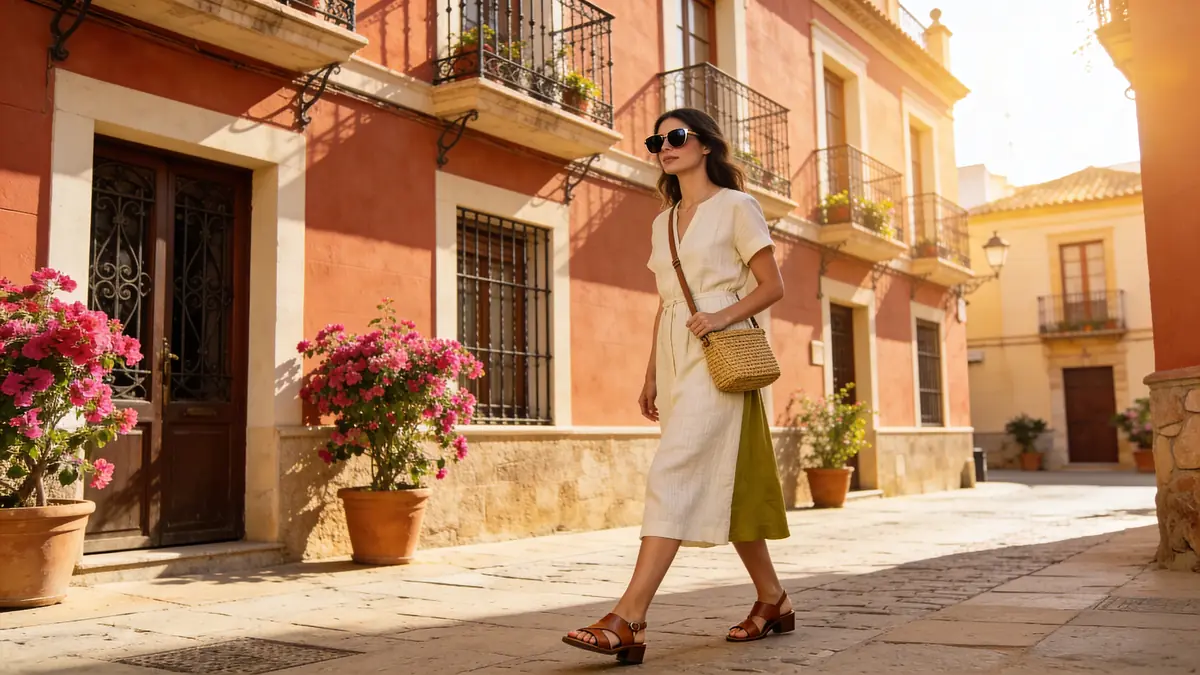
What to Wear in Spain: Why Spanish Style Demands Both Elegance and Ease
Wondering what to wear in Spain? You are heading to a country where fashion is woven into daily life. Spain gave the world Zara, Mango, Loewe, and Balenciaga, and that heritage shows in how everyday Spaniards get dressed. Your clothing choices will shape how you experience the country, from the restaurants that seat you to the nightclubs that let you in.
Spain attracted 85.1 million international tourists in 2024, making it the second most visited country in the world, according to the Spanish National Statistics Institute (INE). Yet according to a Conde Nast Traveler reader survey, 65% of travelers to southern Europe say they packed incorrectly, citing outfits either too casual for city dining or too formal for the coast.
"Spanish style is about confidence, not perfection," explains Lorenzo Caprile, one of Spain's most respected fashion designers. "A Spaniard would rather wear three well-chosen pieces with total conviction than ten expensive items with uncertainty."
This guide covers every region, season, and dress code you will encounter -- from Madrid's elegant boulevards to Barcelona's creative neighborhoods and Andalusia's searing summers. If you are also planning visits to other European destinations, our guides on what to wear in Italy, what to wear in Paris, and what to wear in Japan offer useful comparisons.
The Spanish Style Philosophy: Relaxed Confidence Meets Mediterranean Polish
Before you start packing, understanding how Spaniards think about clothing will help you make better wardrobe choices throughout your trip. Spanish style sits between Italian formality and the laid-back ease of other Mediterranean cultures -- polished without being stiff, intentional without being overthought.
Quality and Self-Expression
Spaniards invest in fewer, better pieces and wear them with conviction. According to McKinsey's 2025 State of Fashion report, Spanish consumers spend 28% more per garment than the European average while purchasing fewer items annually. The average Spaniard wears about 70% of their wardrobe regularly -- significantly higher than the global average of 20% reported by the ThredUp 2025 Resale Report. Breathable fabrics, smart layering, and shoes that handle cobblestones are not afterthoughts -- they are starting points.
The Unwritten Rules of Spanish Fashion
These are the style signals Spaniards read instinctively:
- Fit matters, but comfort is non-negotiable -- clothing follows the body without restricting movement
- Shoes tell the story -- clean, quality footwear is the first thing noticed. Worn-out athletic shoes signal carelessness
- Color is welcome -- unlike Parisian muted neutrals, Spaniards embrace terracotta, deep blue, olive, and warm red
- Evening is a different category -- the Prado outfit at 11 AM needs an upgrade for dinner at 10 PM
- Grooming completes the picture -- well-maintained hair, light fragrance, and clean nails are basic courtesy
Spanish Brands That Define the Aesthetic
Spain is home to Inditex, the world's largest fashion retailer (parent company of Zara, Massimo Dutti, and Uterque), generating EUR 36 billion in 2024 revenue according to their annual report. You do not need luxury labels to dress well in Spain -- affordable, trend-conscious clothing is deeply embedded in the culture.
Brands Spaniards reach for daily: Zara and Mango form the foundation of everyday wardrobes. Massimo Dutti is the go-to for professionals and evening wear. Loewe is Spain's premier luxury house, known for leather craftsmanship. Castaner has made the original espadrille since 1776. Camper, the Mallorcan shoe brand, balances comfort with design across all demographics.
"Spain's fashion industry succeeds because it understands that style must serve real life. Zara did not become the world's largest fashion retailer by accident -- it solved the problem of making good design accessible and wearable." -- Dana Thomas, fashion journalist and author of Fashionopolis
Regional Outfit Guide: What Each City and Coast Demands
Spain is not a single style destination -- it is several distinct fashion cultures shaped by climate, history, and local personality. Here is how to calibrate your wardrobe for each major region.
Madrid Outfit Ideas: Capital City Sophistication
Madrid is Spain's most formally dressed city. The neighborhoods of Salamanca, Chamberi, and Retiro are lined with well-dressed professionals who treat their daily paseo (evening walk) as a style showcase. The climate is continental with scorching summers (38 to 42 degrees) and cold winters (0 to 8 degrees). AEMET recorded over 50 days above 35 degrees in summer 2025.
Madrid outfit formula:
Tailored trousers or structured midi skirt + Quality cotton or linen top + Leather loafers or clean low-profile sneakers + Structured crossbody bag + Sunglasses and a light scarf
Madrid evening upgrade: Swap the casual top for a silk blouse, switch sneakers for leather ankle boots, and add a blazer. Dinner rarely starts before 9:30 PM, and Madrilenos dress sharper for it.
Barcelona Outfit Ideas: Creative Mediterranean Cool
Barcelona is Spain's most fashion-forward and experimental city. Gaudi's architecture, the city's design school tradition, and the coastal setting create a style culture that is more relaxed and creative than Madrid. The Born and Eixample neighborhoods are where Spanish street style meets international bohemia. The climate is pure Mediterranean: mild winters (8 to 15 degrees) and humid summers (25 to 33 degrees) with sea breezes.
Barcelona outfit formula:
Linen shirt or cotton blouse + Tailored shorts or wide-leg linen pants + Structured leather sandals or espadrilles + Canvas tote or leather crossbody + Statement sunglasses
Barcelona style note: This is one of the few European cities where creative sneakers and fashion-forward silhouettes feel natural. Barcelona rewards personal expression. However, beachwear stays at Barceloneta -- walking La Rambla or dining in the Gothic Quarter in a swimsuit cover-up will earn disapproving looks.
Andalusia Outfit Ideas: Seville, Granada, and the South
Andalusia is where Spain's heat, history, and culture converge. Seville routinely exceeds 40 degrees in summer. Andalusian style draws from Moorish and flamenco heritage: terracotta, deep red, golden yellow, and olive feel at home here. Breathable cotton and linen are essential. The region's cathedrals and mosque complexes (Seville Cathedral, the Mezquita, the Alhambra) enforce modest dress.
Andalusia outfit formula:
Lightweight linen dress or cotton shirt with linen pants + Comfortable leather sandals or espadrilles + Wide-brimmed sun hat + Lightweight scarf for cathedral visits + Quality sunglasses and sunscreen
Andalusia evening note: Seville's nightlife starts late. Spaniards dress up for evening tapas along Calle Betis and in Triana -- a cotton dress with leather sandals or tailored linen pants with a structured top works well.
Mediterranean Coast and Beach Towns
Spain's coastal towns -- from Costa Brava to Costa del Sol -- follow a resort-casual dress code with specific boundaries. Spaniards maintain clear separation between the beach and everything else. The moment you step into a restaurant, shop, or promenade, a cover-up at minimum is expected.
Coastal outfit formula:
Linen cover-up dress or cotton shirt over swimwear + Quality leather sandals or espadrilles + Straw or woven bag + Sun hat and sunglasses + Light layer for evening seaside dining
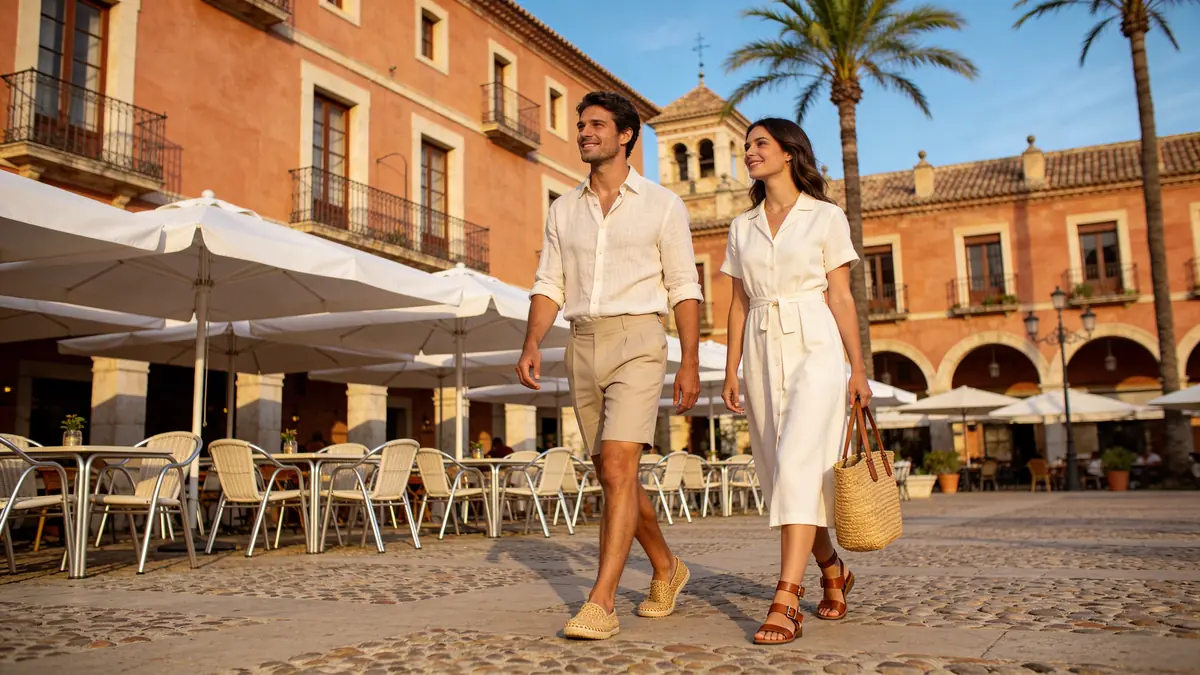
Seasonal Outfit Guide: What to Wear in Spain by Season
Spain's climate varies dramatically by region. Northern Spain is rainy year-round, southern Andalusia bakes in summer, and Madrid's continental climate delivers both extremes.
What to Wear in Spain in Spring (March through May)
Spring is arguably Spain's best travel season. Temperatures range from 14 to 24 degrees Celsius, and cities host festivals including Semana Santa and Feria de Abril. Mornings are cool, afternoons warm, and rain is possible in the north.
Essential spring pieces: Light trench coat, layering knits, midi dresses, tailored pants in warm tones, comfortable walking shoes, and a compact umbrella. Color palette: warm pastels, cream, olive, and muted terracotta.
What to Wear in Spain in Summer (June through August)
Spanish summers are intense -- southern and central Spain regularly exceed 35 to 42 degrees Celsius. According to AEMET, temperatures have increased by 1.6 degrees Celsius over the past 30 years.
Essential summer pieces: Breathable linen trousers and cotton dresses in white and cream, structured leather sandals or espadrilles, quality sunglasses, a wide-brimmed hat, and a light cardigan for air-conditioned interiors. Natural fibers are essential -- polyester traps heat and shows sweat. Linen wrinkles are perfectly acceptable.
What to Wear in Spain in Fall (September through November)
Fall brings fewer crowds, golden light, and temperatures between 12 and 25 degrees Celsius that invite layered knitwear and rich earth tones. Wine harvest in La Rioja adds a culinary dimension.
Essential fall pieces: Quality medium-weight coat, cashmere or merino sweaters, tailored trousers in burgundy or olive, leather ankle boots, and a warm scarf.
What to Wear in Spain in Winter (December through February)
Spanish winters are colder than most tourists expect. Madrid drops to 0 to 8 degrees Celsius with biting wind. Northern Spain sees persistent rain. Only the far south stays genuinely mild.
Essential winter pieces: Quality wool coat, merino thermal base layers, wool sweaters, waterproof boots, leather gloves, and a wool scarf. Spaniards favor black, navy, and camel as winter staples, with jewel tones like burgundy adding warmth.
Spain Dress Codes: Restaurants, Nightlife, and Cultural Sites
Spain is a country where context shapes dress expectations more than formal rules. There are no posted dress codes at most venues, but deeply understood social norms affect how you are treated.
Restaurant and Tapas Bar Dress Code
Casual tapas bars accept anything clean and presentable. Mid-range restaurants expect tailored pants or a dress -- according to a 2024 survey by Spain's hospitality association (Hosteleria de Espana), 72% of sit-down restaurants in Madrid and Barcelona expect smart casual attire from dinner guests. Fine dining venues require elevated dress -- Spain holds over 230 Michelin stars across more than 200 restaurants as of 2025, and places like DiverXO in Madrid expect guests to dress accordingly.
Timing matters: Spaniards eat dinner between 9:30 PM and 11:30 PM and dress noticeably better for evening meals than lunch.
Nightlife and Evening Outfits
Spanish nightlife is legendary and has its own dress expectations. Clubs in Madrid's Malasana and Chueca, Barcelona's Port Olimpic, and Seville's Alameda often enforce door policies that reject athletic shoes, shorts, and overly casual attire.
Nightlife outfit formula:
Tailored pants or a fitted dress + Heeled boots or dress shoes + A quality top or blazer + Minimal but intentional accessories
"Spaniards treat going out as an event worth dressing for," notes journalist and author Giles Tremlett, whose book Ghosts of Spain explores Spanish cultural rituals. "The paseo, the late dinner, the nightclub -- each transition involves a subtle wardrobe upgrade."
Church and Cathedral Dress Codes
Spain's major cathedrals and churches enforce or strongly recommend modest dress.
Venues with enforced dress codes:
- La Sagrada Familia, Barcelona -- no bare shoulders, no shorts above the knee, no see-through clothing
- Seville Cathedral -- covered shoulders and knees required
- Mezquita-Cathedral, Cordoba -- modest attire expected
- Santiago de Compostela Cathedral -- covered shoulders and knees required for pilgrims and visitors alike
- Toledo Cathedral -- enforced modesty standards
The scarf solution: Just as with Italian churches and Parisian churches, a lightweight scarf resolves most coverage issues. Keep one in your bag at all times.
Flamenco Shows and Cultural Events
Flamenco tablaos in Seville, Madrid, and Granada expect smart casual attire. Showing up in beachwear or athletic gear is considered disrespectful to the art form. A nice dress, tailored pants with a blouse, or a collared shirt with trousers shows appreciation.
Festivals: Feria de Abril in Seville is one of Spain's most fashion-conscious events, where traditional flamenco-inspired dresses and tailored suits are standard. At any feria or cultural event, observe locals and match the level.
Spain Packing Checklist: The Capsule Wardrobe Approach
Smart packing for Spain means bringing fewer pieces that handle diverse contexts -- beach, cathedral, late-night dinner. According to Statista travel data, the average European traveler packs 60% more clothing than they actually wear. A Spain-specific capsule wardrobe eliminates that waste.
The 10-Piece Spain Capsule (1 to 2 Weeks)
- 2 bottoms -- one tailored trouser and one casual option (linen pants or tailored shorts), both in neutral tones
- 3 tops -- one dressy blouse, one quality casual tee, one versatile button-down
- 1 light layer -- a cotton blazer, linen jacket, or cardigan
- 1 outer layer -- a coat or trench appropriate for the season
- 1 dress or jumpsuit -- for dinners, flamenco shows, or simple sightseeing days
- 1 pair of walking shoes -- leather sneakers or cushioned loafers
- 1 pair of elevated shoes -- leather sandals, espadrilles, or ankle boots
Essential accessories: A lightweight scarf (church cover-up and style accent), a secure crossbody bag (pickpocket-resistant), quality sunglasses, a sun hat for summer, and one or two pieces of minimal jewelry.
Color strategy for Spain: Build your capsule around warm neutrals -- white plus navy plus terracotta is a natural Spanish palette. Cream plus olive plus deep blue works beautifully in fall. Every piece should pair with every other piece. For help visualizing combinations before packing, Klodsy's AI outfit planner can help you build vacation outfits and test your capsule digitally.
Common Tourist Fashion Mistakes in Spain
Avoid these common errors:
-
Wearing beachwear away from the beach. Spaniards maintain a firm boundary between beach and town. Walking into a tapas bar in a bikini top and board shorts will get you stares and possibly turned away.
-
Athletic wear for city sightseeing. Gym shorts, moisture-wicking tanks, and running shoes communicate that you do not understand Spanish social norms. Lightweight linen and cotton achieve the same comfort with more cultural credibility.
-
Flip-flops outside the sand. Rubber flip-flops in cities, restaurants, or cultural sites read as careless. Leather sandals and espadrilles work in every warm-weather context where flip-flops do not.
-
Ignoring the evening upgrade. The jeans and sneakers from the Prado at noon need a blazer, different shoes, or a silk scarf by dinner at 10 PM.
-
Underdressing for nightlife. Spanish clubs frequently enforce door policies. Athletic shoes, shorts, and overly casual outfits will get you turned away in Madrid and Barcelona.
-
Forgetting church cover-ups. Being denied entry to La Sagrada Familia or Seville Cathedral because of a tank top wastes time. A scarf in your bag solves this instantly.
-
Wearing only black in summer. Black absorbs heat aggressively. An all-black outfit in Sevillian August will leave you drenched. Shift to white, cream, and warm pastels from June through September.
-
Socks with sandals. This is especially conspicuous in Spain where locals have strong opinions about footwear. Commit to sandals barefoot or wear closed shoes with socks.
For more style pitfalls to avoid, our guide on what not to wear covers universal mistakes that apply to any destination.
Plan Your Spain Travel Wardrobe with Klodsy
Planning what to wear in Spain means balancing regional climates, cultural dress codes, and luggage limits. A Madrid dinner, a Barcelona beach day, and a Seville cathedral visit each demand different things from your wardrobe. Klodsy's AI outfit planner helps you manage that complexity.
- Upload your existing wardrobe and see which pieces work for Spain's diverse contexts
- Test outfit combinations digitally before packing
- Try on Spain-specific styles virtually -- linen blazers, espadrilles, structured sandals, cotton dresses
- Plan day-by-day outfits based on your itinerary: cathedral morning, beach afternoon, flamenco show evening
Understanding which colors suit your complexion can elevate your Spain wardrobe -- our AI color analysis guide helps you find the warm Mediterranean tones that work for you.
Planning your Spain wardrobe? Try Klodsy to build outfit combinations that balance Spanish elegance with practical comfort. Whether you are heading to Madrid, Barcelona, or Seville, having outfits planned in advance lets you focus on experiencing Spain.
Related Travel Style Guides
- What to Wear in Italy: Travel Style Guide 2026 -- Rome, Florence, Milan, Venice, and the Amalfi Coast
- What to Wear in Paris: Style Guide for Every Season -- Parisian chic with restaurant and museum dress codes
- What to Wear in Japan: Complete Packing Guide 2026 -- Temple etiquette, seasonal outfits, and Tokyo street style
- Capsule Wardrobe AI Planner -- Build a travel-ready wardrobe with AI
Related Articles
Airport Outfit Ideas: What to Wear for Comfort and Style
Discover the best airport outfit ideas for every season. TSA-friendly tips, layering tricks, and outfit formulas for comfortable, stylish travel.
What to Wear in Paris: Style Guide for Every Season
Plan what to wear in Paris with our seasonal style guide. Parisian outfit ideas, restaurant dress codes, and French fashion rules every traveler needs.
What to Wear in Italy: Travel Style Guide 2026
Plan what to wear in Italy with our city-by-city style guide. Rome, Florence, Milan, Venice outfits, Vatican dress codes, and Milano-Cortina 2026 Olympics tips.
Frequently Asked Questions
Everything you need to know about this topic
Spain has no formal dress code, but Spaniards dress with polished confidence in daily life. Smart casual is the standard for restaurants, museums, and city outings. Athletic wear is reserved for the gym. Churches require covered shoulders and knees, and nightlife venues often enforce a no-sneakers policy.