
What to Wear in Japan by Season (and the Shoes-Off Rule)
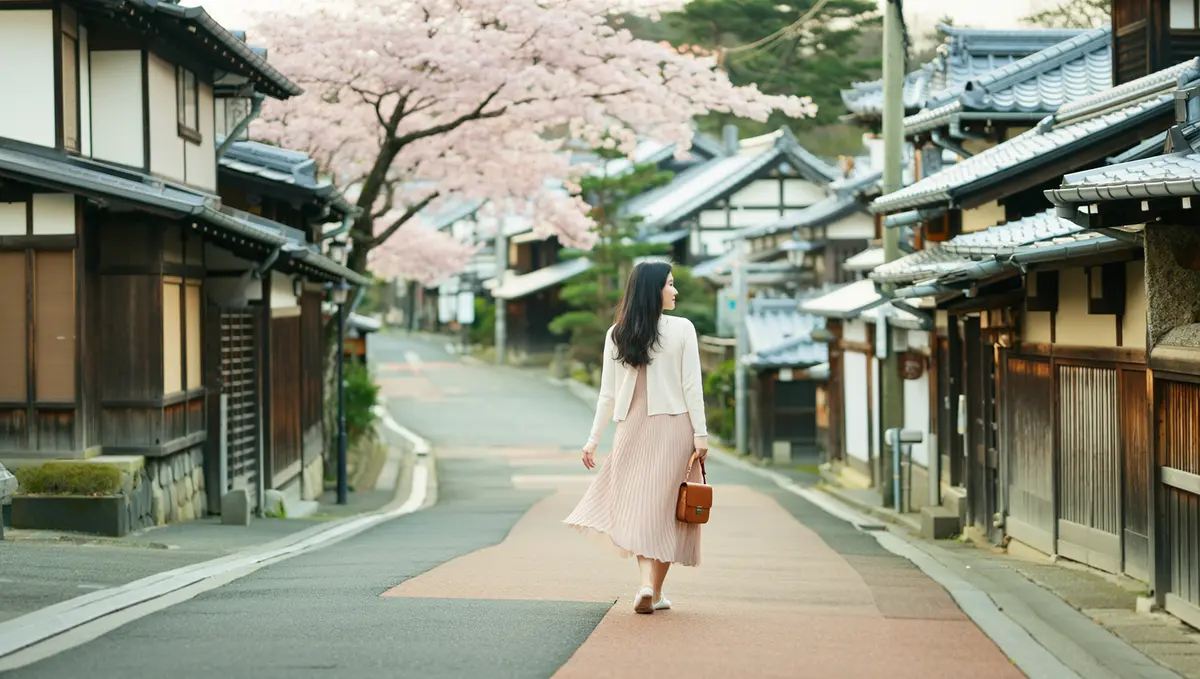
In Japan your shoes come off more often in a day than they do at home in a week, and the weather runs from sticky summers in the 30s°C to Hokkaido snow. Dress for both, keep everything neat, and you'll blend in far better than you expect.
The Shoes-Off Rule Shapes Your Whole Suitcase
Where your shoes come off, and why your socks are part of the outfit.
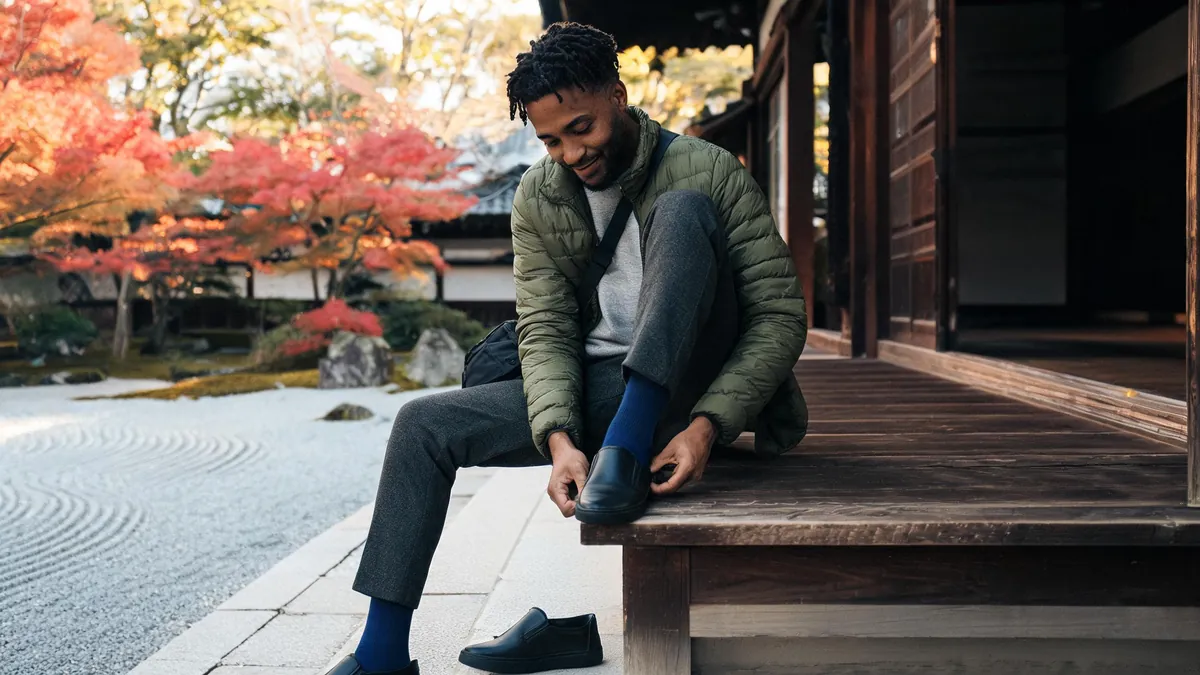
Plan your footwear around one fact: you'll take your shoes off inside temple halls, at the entrance of every ryokan, in restaurants with tatami rooms and many izakaya, in private homes, in shop fitting rooms, and inside castle buildings such as Himeji Castle and the Ninomaru Palace at Nijo Castle. Sometimes there's a shelf or a locker for them, sometimes a plastic bag to carry them in.
That has three consequences:
- Shoes need to go on and off standing up. Slip-on sneakers, loafers, sneakers with elastic laces and side-zip ankle boots all work. Knee-high lace-up boots and hiking boots make you the person holding up the line at the temple steps.
- Your socks will be seen. Bring more pairs than you think, with no holes and ideally in plain colors. If you wear sandals in summer, keep a pair of socks in your bag, since walking barefoot on temple and ryokan floors is best avoided.
- You'll sit on the floor. Tatami dining rooms and temple halls mean low tables and cushions, so a short, tight skirt or stiff skinny jeans get uncomfortable fast. Wide trousers, midi skirts and anything with some stretch are easier.
Slippers come with their own etiquette. Indoor slippers stop at the edge of the tatami (you walk on tatami in socks only), and many toilets have a separate pair of toilet slippers that never leave that room. You'll also walk a lot, through long station corridors and up temple stairs, so whatever slips on still needs a cushioned sole and a proper break-in before you fly.
The rule: if you can't get a shoe on without sitting down and using both hands, leave it at home.
What to Wear in Japan by Season
Four clear seasons, plus a rainy one most packing lists forget.
Japan stretches a long way from north to south, so Sapporo and Tokyo can be a season apart. Here's the short version for Tokyo and Kyoto, with Hokkaido noted where it differs.
| Season | When | Tokyo and Kyoto | What to wear |
|---|---|---|---|
| Spring and cherry blossoms | March to May, blossoms late March to early April | Cool mornings, mild afternoons | Trench or light jacket, a knit, trousers or a midi skirt |
| Rainy season (tsuyu) | Early June to mid July; Hokkaido mostly skips it | Warm, humid, frequent rain | Quick-dry fabrics, shoes that can get wet, an umbrella |
| Summer | Mid July to early September | Hot and very humid, low to mid 30s°C (upper 80s to mid 90s°F); typhoons possible in August and September | Linen, cotton, loose cuts, a cardigan for air-conditioning |
| Autumn leaves | October to early December; Hokkaido turns first | Mild days, cold evenings | Layers: knit, jacket, scarf |
| Winter | December to February | Tokyo dry and sunny, around 10°C (50°F) by day; Hokkaido at or below freezing with heavy snow | Wool coat or down, a thermal layer, snow boots in the north |
Autumn leaves: October to early December
This is the season most people are booking right now, and it's the easiest one to dress for. Hokkaido and the mountains turn first, from late September into October, and feel close to winter by November. In Tokyo and Kyoto the maples usually peak in the second half of November, when days are often pleasant enough for a single knit but temperatures drop fast after sunset. Several Kyoto temples hold evening illuminations of the leaves in late autumn, which means standing outside after dark.
A merino or cotton knit + a light jacket or trench + dark trousers or a midi skirt + a scarf that folds into your bag + slip-on sneakers or side-zip ankle boots
Rust, olive, camel and navy look right against the maples, and our fall outfit ideas have more combinations built from the same layers.
Winter: Tokyo and Hokkaido are two different trips
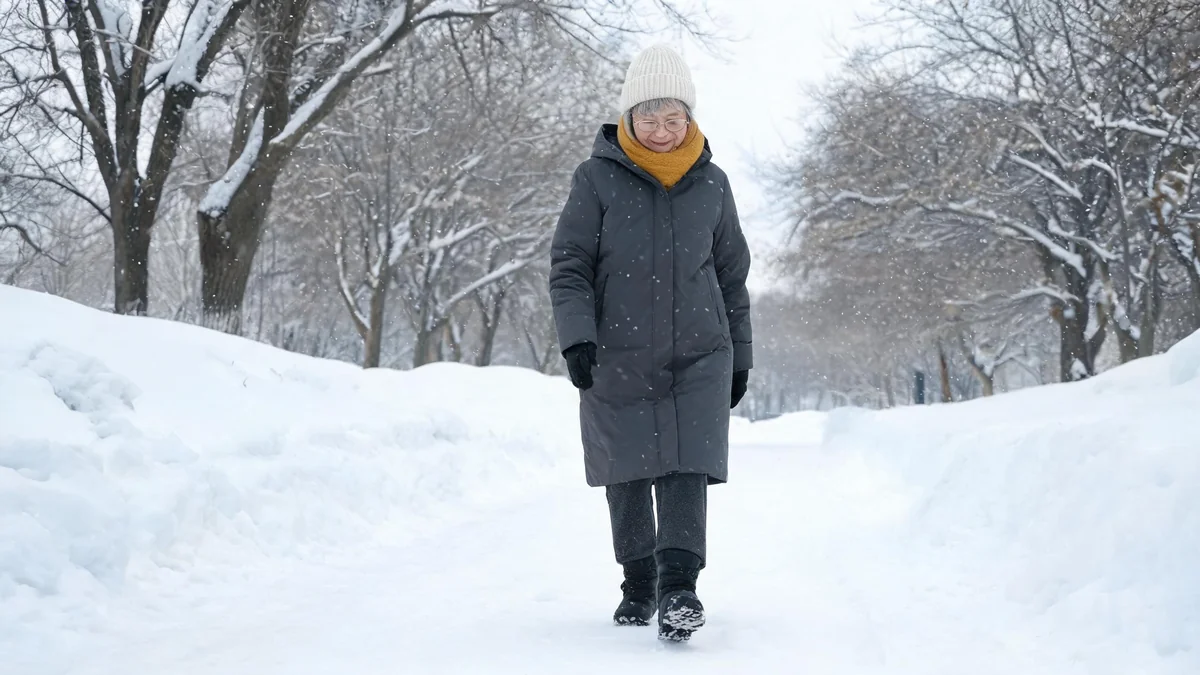
Tokyo in winter is dry, bright and cold rather than brutal, with daytime highs around 10°C (50°F) and frosty mornings. A wool coat, a sweater and a thin thermal top handle it. Kyoto sits in a basin and feels damper and colder, especially inside temple halls, where you'll be standing in socks on wooden floors, so pack warm ones.
Hokkaido is real winter. Sapporo hovers around or below freezing even at midday in January and February, snow piles up along the streets and sidewalks turn to packed ice. You'll need:
- a long down or insulated parka with a hood
- thermal base layers, top and bottom
- snow boots with deep rubber tread, ideally slip-on or side-zip for the shoes-off rule
- a hat that covers your ears, gloves and a scarf
One trick applies everywhere: trains, shops and restaurants are well heated, so wear layers you can open or peel off the moment you step inside. Uniqlo's Heattech base layers and disposable kairo hand warmers are sold all over the country, so you can buy them on arrival. Our winter outfit ideas cover cold-weather layering in more depth.
Rainy season and humid summer
- Tsuyu runs from early June to mid July across most of the country. Expect days of drizzle and heavy, damp air more than nonstop downpours, which is why quick-dry fabrics beat heavy cotton and denim.
- Skip suede and canvas shoes. Leather, rubber-soled sneakers or sandals you don't mind soaking work better, and clear umbrellas are sold at convenience stores everywhere.
- July and August are hot and humid, and Kyoto is often hotter than Tokyo. Loose linen and cotton, wide trousers, midi skirts and breathable sandals are what locals wear.
- Air-conditioning on trains and in shops is strong, so a thin cardigan or overshirt earns its space in your bag.
- Locals handle the sun with parasols, UV arm covers and a small towel or handkerchief for sweat, all easy to buy once you land.
For more on dressing in real heat, see what to wear in 90-degree weather.
Spring and cherry blossoms
Blossom season in Tokyo and Kyoto usually falls from late March into early April, and it's cooler than the photos suggest. Hanami picnics mean sitting on a tarp on the ground for hours, so trousers or a longer skirt, a knit and a light trench are the combination to aim for.
Temples, Shrines and Onsen: What to Wear and What to Take Off
Japanese temples and shrines rarely have a guard checking clothes the way the Vatican does, which is exactly why visitors get it wrong. Inside the halls, cover your shoulders, avoid very short shorts or skirts, take your hat off and leave your shoes at the step. On the grounds outside, normal neat clothes are fine. Think of it as a softer version of the shoulders-and-knees rule that Italian churches enforce at the door. If you've booked a temple stay or a zazen session, go more modest still: loose, long trousers you can sit cross-legged in and a top that covers your shoulders.
Onsen are the opposite problem, because you take everything off. The basics:
- Baths are separated by gender and you bathe naked. Swimsuits aren't allowed in traditional onsen.
- Wash thoroughly at the shower stations first and rinse off every trace of soap before you get in.
- The small towel stays out of the water. Fold it on your head or leave it at the edge.
- Tie up long hair so it doesn't touch the water.
- Visible tattoos are still refused at many onsen. Some accept them under a cover sticker, and private baths (kashikiri) avoid the question entirely, so check before you book.
At a ryokan you'll be given a yukata, a light cotton robe, to wear in your room, at dinner and to the bath. Wrap it left side over right; right over left is how the dead are dressed for a funeral. In onsen towns such as Kinosaki or Hakone, guests stroll the streets in their yukata, but elsewhere it stays indoors.
How Locals Dress: Quiet Kyoto, Tokyo Street Style, Easygoing Osaka
Everyday dressing in Japan is neat before it's anything else: clean, pressed, layered and in good repair. Silhouettes are often loose and long rather than tight, and colors stay in navy, black, beige, grey and white, with more color in younger neighborhoods. One detail visitors notice is that shorter skirts are common, while low necklines and bare midriffs are much rarer, and many women keep their shoulders covered even in summer. Adult men in cities rarely wear athletic shorts, and leggings worn as trousers are mostly for exercise.
Tokyo is where the rules loosen. Harajuku is known for youth and subculture fashion, Shimokitazawa and Koenji for vintage, and Omotesando and Ginza for designer shopping and sharp tailoring. Almost anything goes on those streets as long as it looks deliberate and clean, and our street style guide is a good starting point if you want to lean in. For men, the easy Tokyo look is a loose shirt or knit, straight or wide trousers, clean sneakers and a light jacket.
Kyoto is quieter and more traditional. An outfit that disappears in Shibuya can feel loud on a lane in Higashiyama, so muted colors and longer hemlines fit better there. Osaka is more relaxed than either: casual clothes, comfortable shoes and a crossbody bag that leaves your hands free for street food in Dotonbori. If you already like understated dressing, Japan will feel familiar, and the minimalist style guide covers the same few-good-pieces approach.
Japan Packing List: Pack Light, Wash Often, Buy the Rest There
Luggage matters more in Japan than in most countries. Stations have long stairs, space for big cases on trains is limited, and hotel rooms are small. Many travelers send large suitcases ahead between hotels with a luggage forwarding service (takkyubin), and coin laundries are easy to find, so a week of clothes covers a two-week trip.
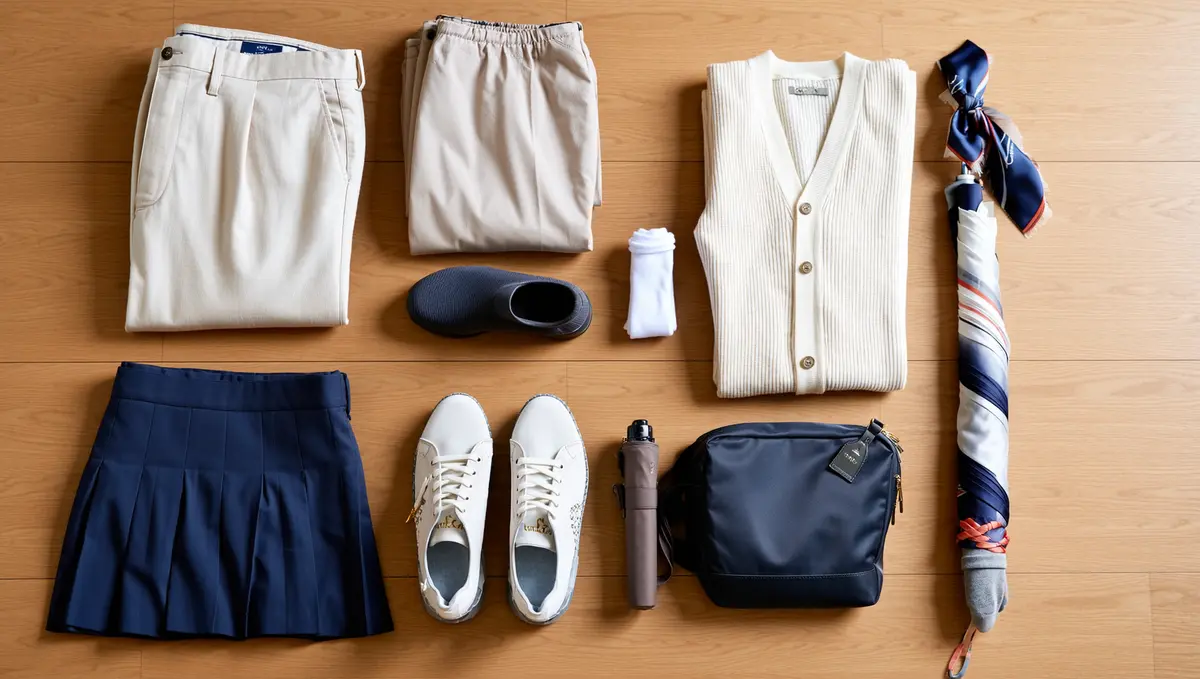
- Two pairs of shoes that slip on and off: cushioned sneakers and a slightly dressier loafer or ankle boot
- Seven or more pairs of socks without holes
- Two or three bottoms: wide or straight trousers, dark jeans or a midi skirt
- Four tops, including at least one that covers your shoulders
- One knit and one light jacket, or a down coat and thermal layers in winter
- A cardigan or overshirt for summer air-conditioning
- A compact umbrella, or a plan to buy one
- A small crossbody bag and a foldable tote for carrying shoes and shopping
Buy the rest there. Uniqlo, Muji and department stores sell Heattech, socks, umbrellas and cooling towels at local prices, and trying things on is easy (shoes off in the fitting room, of course). If the trip starts with a long-haul flight, our airport outfit ideas help you choose layers that work on the plane and in a Tokyo arrivals hall.
To check that eight or nine pieces really make two weeks of outfits, you can plan looks from the clothes you already own in Klodsy before you pack. Then try Klodsy to see your Kyoto-in-November outfit on your own photo before the flight.
Related Articles
What to Wear to a Fall Wedding: Every Dress Code, Solved
What to wear to a fall wedding as a guest, by dress code: colors that photograph well in October, layers so you won't freeze at the ceremony, men's looks.
Fall Outfit Ideas 2026: What to Wear This Autumn
Fall outfit ideas for 2026, from warm September days to cold November mornings. Layering formulas, a small autumn capsule, and the fabrics that make it work.
What to Wear in London: Style Guide for Visitors 2026
What to wear in London by season and neighborhood. Covers the London uniform, Tube tips, packing list, tourist mistakes to avoid, and outfit formulas.
Frequently Asked Questions
Everything you need to know about this topic
Layers: a knit, a light jacket or coat for the evening, trousers or a midi skirt, and shoes that slip on and off. Tokyo and Kyoto are mild by day and cold after dark, while Hokkaido is already close to winter.