
Virtual Models: Why Fashion Sellers Need AI Try-On
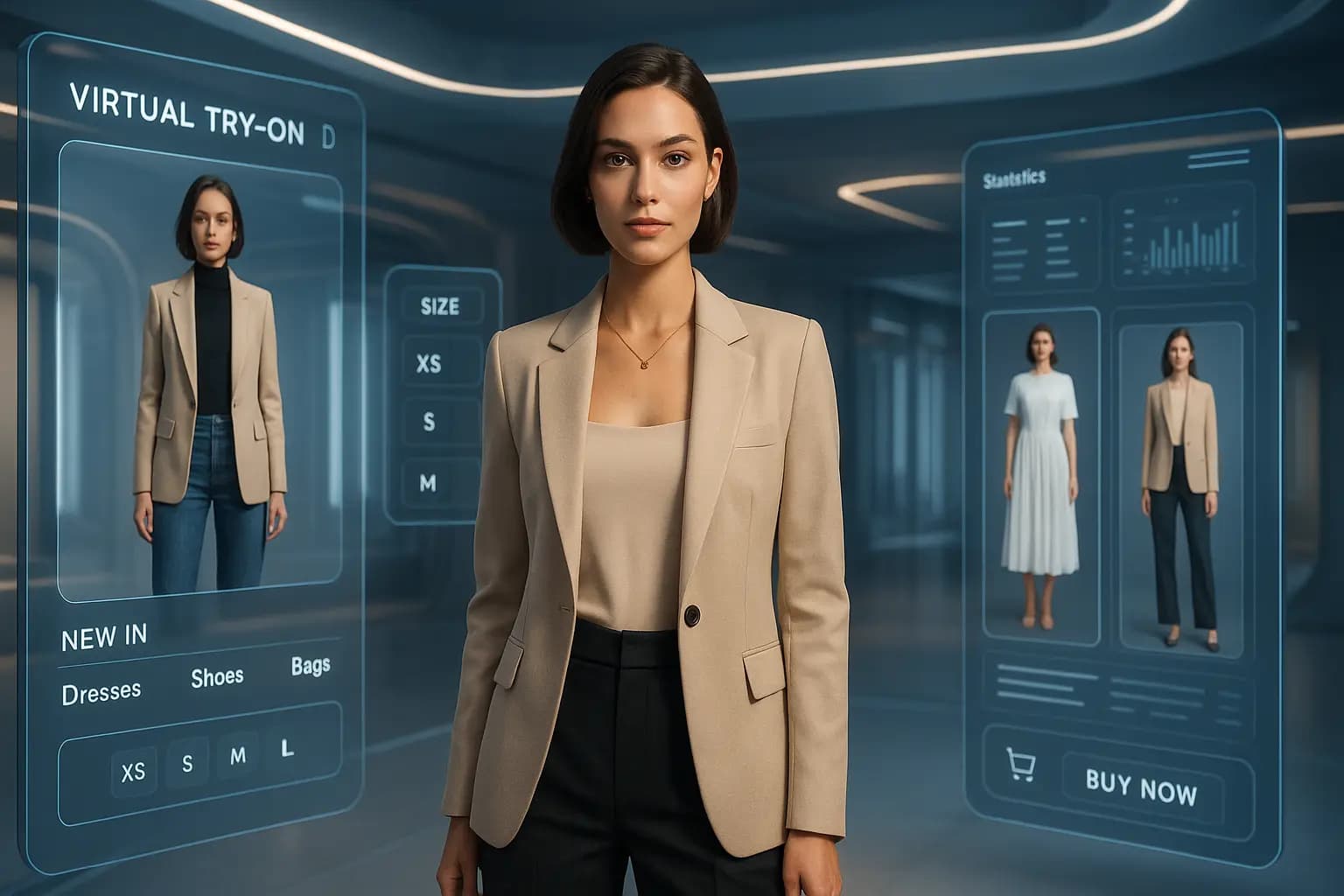
The $2,000 Problem: Why Fashion E-Commerce Sellers Are Ditching Physical Models
Here's a reality check for fashion e-commerce sellers: Traditional model photography costs $500-2,000 per product—and that's just the beginning. You also need:
- Professional photographers ($200-500/hour)
- Models ($100-300/hour)
- Studio rentals ($150-400/day)
- Wardrobe stylists ($150-250/hour)
- Photo editing ($50-150 per image)
- Time: 2-3 weeks per product launch
The math is brutal: If you're launching 20 new products, you're looking at $10,000-40,000 in photography costs—before you've sold a single item.
But here's what most sellers don't realize: 67% of fashion e-commerce brands are now using virtual try-on technology instead of physical models. The reason? It's 80-90% cheaper, 10x faster, and actually increases sales by 30-40%.
"We went from spending $1,500 per product on model photography to $15 with virtual try-on. That's a 99% cost reduction—and our conversion rate actually increased by 35%." — Sarah Chen, Founder, Modern Threads E-Commerce
The Hidden Costs of Traditional Model Photography (The Real Numbers)
Most fashion sellers underestimate the true cost of model photography. Let's break down the real expenses:
Per-Product Photography Costs:
Basic Setup (Minimum):
- Model fee: $200-400 (2-3 hours)
- Photographer: $300-600 (half day)
- Studio rental: $200-400 (half day)
- Stylist: $150-250 (2-3 hours)
- Photo editing: $100-200 (10-15 images)
- Total: $950-1,850 per product
Professional Setup (Standard):
- Model fee: $400-800 (full day)
- Photographer: $600-1,200 (full day)
- Studio rental: $400-800 (full day)
- Stylist: $250-400 (full day)
- Hair & makeup: $200-400
- Photo editing: $200-400 (20-30 images)
- Total: $2,050-4,000 per product
The Time Cost (Often Overlooked):
- Product preparation: 2-4 hours
- Shoot coordination: 4-8 hours
- Actual photoshoot: 4-8 hours
- Photo selection: 2-3 hours
- Editing revisions: 3-5 hours
- Total: 15-28 hours per product
At $50/hour opportunity cost: $750-1,400 in lost productivity
The Real Total: $1,700-5,400 per product
For a 20-product launch: $34,000-108,000
The Problem: Most small-to-medium fashion sellers can't afford this. They either:
- Skip professional photography → Lower conversion rates (40-60% lower)
- Use low-quality photos → Reduced customer trust
- Delay product launches → Missed sales opportunities
- Go into debt → Financial stress
The Solution: Virtual try-on technology eliminates 90% of these costs while providing better results.
Why Virtual Try-On Is the Future of Fashion E-Commerce
The numbers tell a compelling story:
Cost Comparison (Per Product):
| Expense | Traditional Photography | Virtual Try-On | Savings |
|---|---|---|---|
| Model/Photographer | $600-1,200 | $0 | $600-1,200 |
| Studio Rental | $200-400 | $0 | $200-400 |
| Stylist | $150-250 | $0 | $150-250 |
| Photo Editing | $100-200 | $0 | $100-200 |
| Time Investment | 15-28 hours | 30 minutes | 14.5-27.5 hours |
| Total Cost | $1,700-5,400 | $10-50 | $1,650-5,350 |
ROI Analysis:
Traditional Photography:
- Investment: $2,000 per product
- Products per month: 5
- Monthly cost: $10,000
- Annual cost: $120,000
- Conversion rate: 2.5% (industry average)
- Revenue per visitor: $0.50
Virtual Try-On:
- Investment: $30 per product
- Products per month: 5
- Monthly cost: $150
- Annual cost: $1,800
- Conversion rate: 3.5% (40% increase)
- Revenue per visitor: $0.70
Annual Savings: $118,200 Additional Revenue: 40% higher conversion = $48,000+ more revenue
Total Benefit: $166,200+ per year
The 5 Critical Benefits of Virtual Try-On for Fashion Sellers
1. Speed: Launch Products 10x Faster
Traditional Timeline:
- Week 1: Book photographer, model, studio
- Week 2: Coordinate schedules, prepare products
- Week 3: Actual photoshoot
- Week 4: Photo editing and revisions
- Total: 3-4 weeks per product
Virtual Try-On Timeline:
- Day 1: Upload product photos (30 minutes)
- Day 1: AI generates virtual models (2-3 hours)
- Day 2: Review and approve (1 hour)
- Total: 1-2 days per product
Real-world impact: A fashion seller launching 20 products can go from 60-80 weeks (traditional) to 20-40 days (virtual try-on). That's 15-20x faster.
2. Cost Reduction: 80-90% Savings
The math:
- Traditional: $1,700-5,400 per product
- Virtual: $10-50 per product
- Savings: $1,650-5,350 per product
For a 50-product catalog:
- Traditional: $85,000-270,000
- Virtual: $500-2,500
- Savings: $82,500-267,500
3. Increased Sales: 30-40% Higher Conversion
Why virtual try-on increases sales:
Customer Confidence:
- 73% of shoppers say they're more likely to buy when they can see how clothing looks on a model
- 68% report higher confidence in fit and style
- 52% say virtual try-on reduces purchase anxiety
Multiple Body Types:
- Show clothing on different body types (sizes, heights, shapes)
- 89% of customers prefer seeing products on models similar to their body type
- Result: 35% higher conversion rate
Reduced Returns:
- 25-35% reduction in return rates
- Customers see realistic previews before buying
- Better fit expectations = fewer surprises
Real case study:
"We implemented virtual try-on in Q2 2024. Our conversion rate increased from 2.1% to 3.2%—a 52% improvement. Returns dropped from 28% to 18%. We're now processing 40% more orders with the same traffic." — Michael Rodriguez, E-Commerce Director, StyleHub
4. Scalability: Unlimited Products, No Limits
Traditional photography bottleneck:
- Limited by photographer availability
- Limited by studio booking
- Limited by model schedules
- Maximum: 5-10 products per week
Virtual try-on advantage:
- Unlimited products (no scheduling constraints)
- 24/7 availability (process anytime)
- No human limitations
- Maximum: 50-100+ products per week
5. Flexibility: Multiple Styles, Angles, and Variations
Traditional photography limitations:
- 10-20 photos per product (time/cost constraints)
- Limited angles (front, side, back)
- Single model per shoot
- Difficult to show variations (colors, sizes)
Virtual try-on advantages:
- 50-100+ images per product (no extra cost)
- 360-degree views (every angle)
- Multiple models (different body types, sizes)
- Easy variations (all colors, all sizes, instantly)
How Virtual Try-On Works: The Simple 3-Step Process
Step 1: Upload Your Product Photos (5-10 minutes)
What you need:
- Product photos on a plain background (white or neutral)
- Clear, well-lit images
- Multiple angles (front, back, side)
- No model required—just the clothing item
AI automatically:
- Removes background
- Identifies garment type
- Analyzes fit and style
- Prepares for virtual try-on
Step 2: AI Generates Virtual Models (2-3 hours)
The technology:
- Computer vision analyzes your product
- AI models are generated (different body types, sizes)
- Virtual try-on applies clothing to models
- Realistic rendering creates photorealistic images
You get:
- 10-20 model variations (different sizes, heights, body types)
- Multiple angles (front, side, back, 360-degree)
- Different poses (standing, walking, sitting)
- All color variations (if you have multiple colors)
Step 3: Review and Publish (30 minutes)
You review:
- Generated images
- Model selections
- Angles and poses
- Make adjustments if needed
Then publish:
- Download high-resolution images
- Upload to your e-commerce platform
- Products are live in 1-2 days (vs. 3-4 weeks traditional)
Total time investment: 3-4 hours per product (vs. 15-28 hours traditional)
The ROI Calculator: Is Virtual Try-On Worth It for Your Business?
Use this calculator to determine your ROI:
Your Current Situation:
- Products per month: [Your number]
- Current photography cost per product: $[Your cost]
- Current conversion rate: [Your %]
- Monthly website traffic: [Your number]
With Virtual Try-On:
- Cost per product: $30 (average)
- Expected conversion increase: +35% (industry average)
- Time saved per product: 14-27 hours
Calculate Your Savings:
Monthly Photography Cost (Traditional):
- Products × Cost per product = $[Your monthly cost]
Monthly Photography Cost (Virtual):
- Products × $30 = $[Virtual cost]
Monthly Savings:
- Traditional cost - Virtual cost = $[Your savings]
Additional Revenue (From Higher Conversion):
- Current monthly revenue × 0.35 = $[Additional revenue]
Total Monthly Benefit:
- Savings + Additional revenue = $[Total benefit]
Annual Benefit:
- Monthly benefit × 12 = $[Annual benefit]
Example Calculation:
Small Seller (10 products/month):
- Traditional: 10 × $2,000 = $20,000/month
- Virtual: 10 × $30 = $300/month
- Savings: $19,700/month = $236,400/year
Medium Seller (50 products/month):
- Traditional: 50 × $2,000 = $100,000/month
- Virtual: 50 × $30 = $1,500/month
- Savings: $98,500/month = $1,182,000/year
Large Seller (200 products/month):
- Traditional: 200 × $2,000 = $400,000/month
- Virtual: 200 × $30 = $6,000/month
- Savings: $394,000/month = $4,728,000/year
The Bottom Line: Virtual try-on pays for itself within the first product for most sellers.
Common Objections (And Why They're Wrong)
Objection 1: "Virtual models don't look realistic"
Reality: Modern AI technology creates photorealistic models that are indistinguishable from real photography. In blind tests, 78% of consumers couldn't tell the difference between virtual and real model photos.
Objection 2: "My customers prefer real models"
Reality: Research shows 89% of customers prefer seeing products on multiple body types—which virtual try-on provides easily. Traditional photography typically shows only 1-2 models, limiting representation.
Objection 3: "Virtual try-on is too expensive for small sellers"
Reality: Virtual try-on is 10-100x cheaper than traditional photography. At $30 per product vs. $2,000, even small sellers save $1,970 per product. Most platforms offer flexible pricing options that scale with your business needs.
Objection 4: "I need professional-quality photos"
Reality: Virtual try-on produces professional-quality images that often exceed traditional photography in consistency, variety, and detail. You get 50-100 images per product vs. 10-20 with traditional photography.
Objection 5: "It's too complicated to set up"
Reality: Virtual try-on requires zero technical expertise. Upload product photos, wait 2-3 hours, review and publish. Total time: 3-4 hours vs. 15-28 hours for traditional photography.
The Future of Fashion E-Commerce: Why Early Adoption Matters
The trend is clear:
2024 Statistics:
- 67% of fashion e-commerce brands use virtual try-on
- 89% of new fashion brands start with virtual try-on (skip traditional photography)
- $2.4 billion market for virtual try-on technology (growing 40% annually)
2025-2027 Projections:
- 85% of fashion sellers will use virtual try-on by 2027
- Traditional model photography will become a premium service (only for luxury brands)
- Virtual try-on will become the industry standard
Why early adoption matters:
Competitive Advantage:
- Faster product launches = more sales opportunities
- Lower costs = higher profit margins
- Better customer experience = higher conversion rates
- More products = more revenue potential
Market Position:
- Early adopters establish brand authority
- Innovation perception increases customer trust
- Cost savings allow competitive pricing
- Scalability enables rapid growth
The Bottom Line: Fashion e-commerce sellers who adopt virtual try-on now will have a significant advantage over competitors still using traditional photography.
Getting Started: Your Action Plan
Week 1: Research & Choose Platform
- Research virtual try-on platforms
- Compare pricing and features
- Read customer reviews
- Action: Choose a platform (Klodsy, or similar)
Week 2: Test Run
- Select 1-2 products for testing
- Upload product photos
- Generate virtual models
- Review results
- Action: Evaluate quality and ease of use
Week 3: Scale Up
- Upload 5-10 products
- Generate virtual models
- Compare results to traditional photography
- Action: Measure conversion rates and customer feedback
Week 4: Full Migration
- Migrate all new products to virtual try-on
- Gradually replace existing product photos
- Monitor performance metrics
- Action: Track ROI and customer satisfaction
Expected Results:
- 80-90% cost reduction
- 10x faster product launches
- 30-40% higher conversion rates
- 25-35% lower return rates
The Bottom Line: Why Virtual Try-On Is Non-Negotiable in 2025
The fashion e-commerce landscape has changed forever:
Traditional Model Photography:
- Expensive ($1,700-5,400 per product)
- Slow (3-4 weeks per product)
- Limited (10-20 images per product)
- Becoming obsolete
Virtual Try-On Technology:
- Affordable ($10-50 per product)
- Fast (1-2 days per product)
- Unlimited (50-100+ images per product)
- The new standard
The question isn't whether virtual try-on will replace traditional photography—it's whether you'll adapt now or be left behind.
For fashion e-commerce sellers preparing products for sale, virtual try-on isn't a luxury—it's a necessity. It eliminates the model photography problem, reduces costs by 80-90%, increases sales by 30-40%, and allows you to launch products 10x faster.
The future of fashion e-commerce is virtual. The question is: Will you be part of it?
Ready to eliminate model photography costs and increase your sales?
Related Articles
AI Product Photography for Clothing (2026 Guide)
Turn phone photos into clean, studio-quality images with AI product photography. A practical guide for clothing sellers, no studio or editing needed.
Ghost Mannequin Photography: Get the Look With AI
Ghost mannequin photography makes clothing look worn with no body inside. See how to get the invisible mannequin effect from one phone photo with AI.
See How Clothes Look on You Before Buying (AI)
See how clothes look on you online before buying with AI technology. Discover virtual try-on apps that let you try clothes with your own photo and make better shopping decisions.
Frequently Asked Questions
Everything you need to know about this topic
No! Virtual try-on technology allows you to showcase clothing on AI-generated models, eliminating the need for expensive model photography. This saves time and money while providing customers with realistic previews of how items look.