
What to Wear to a Funeral: A Respectful Guide
What to Wear: The Short Version
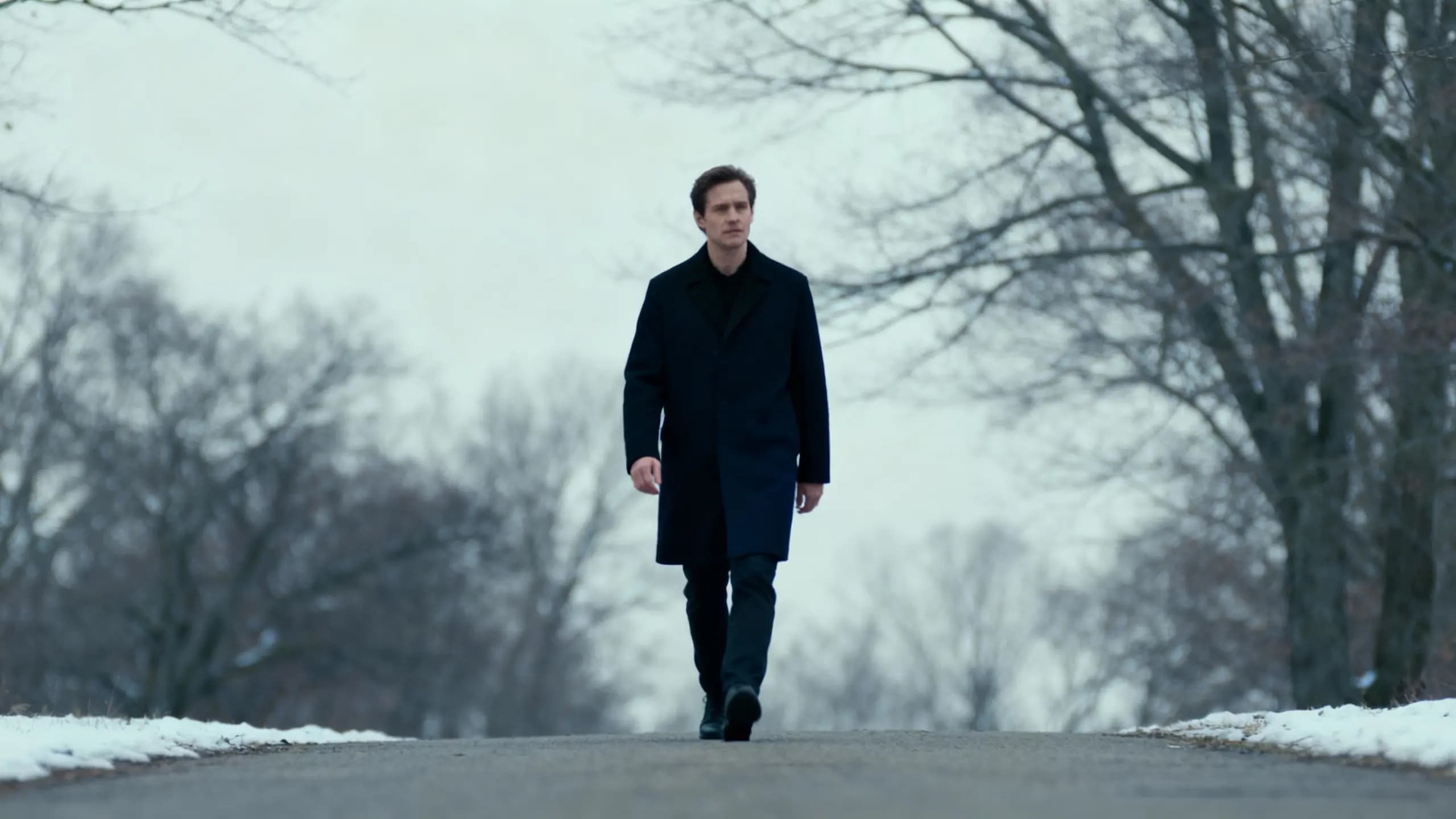
You're probably looking this up because you're grieving, or you're about to support someone who is. The answer is short and respectful: something dark and muted, modest in fit, comfortable enough to sit through a long service, clean and pressed. Dark, Modest, Comfortable covers most of it. Below: outfit formulas for women and men, what different faith traditions ask for, what to skip entirely, and quick notes for hot weather or outdoor services.
The short rules:
- Dark neutrals: black, charcoal, navy, or deep gray
- Modest coverage: covered shoulders, knee-length or longer hemlines, no plunging necklines
- Simple closed-toe shoes, ideally ones you've broken in
- Minimal accessories, nothing that catches light or makes noise
- Clean and wrinkle-free, from jacket to shoes
- Comfortable enough for two or more hours of sitting, standing, and sometimes walking on uneven ground
Outfit Formulas for Women
A good funeral outfit for women doesn't require buying anything new. Most wardrobes already have a version of at least one of these.
| Occasion | Outfit Formula |
|---|---|
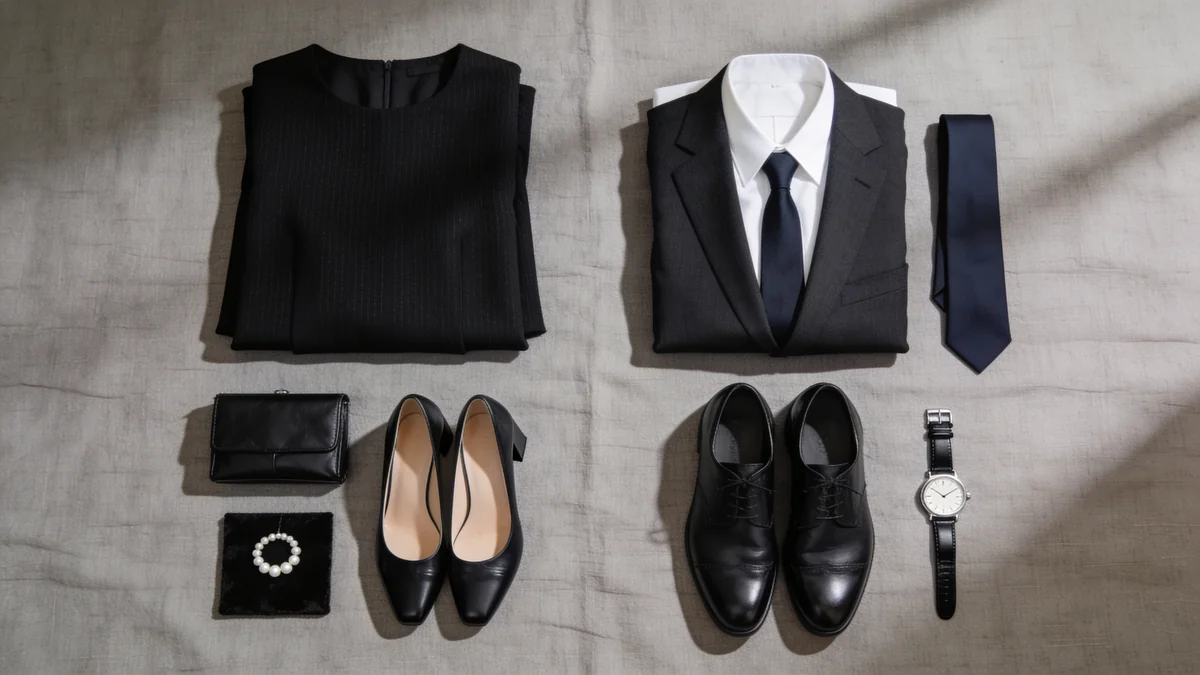
| Formal traditional service | Black or charcoal midi dress + low closed-toe heels + simple stud earrings |
| Memorial service (semi-formal) | Navy or charcoal pants + dark blouse + flat loafers + small leather bag |
| Outdoor/celebration of life | Dark wide-leg trousers + simple knit + leather flats + light wrap |
| Summer formal service | Lightweight black or navy sheath dress + lightweight cardigan + low pumps |
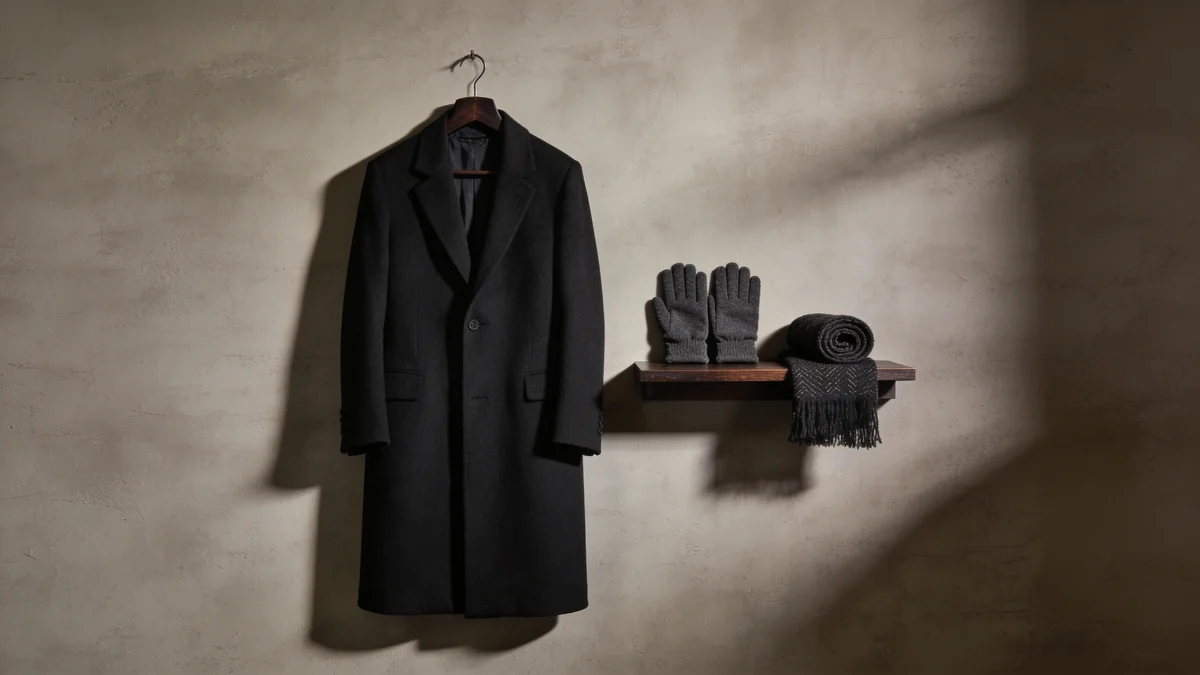
| Winter formal service | Wool dress or pants suit + closed coat + leather boots + dark gloves |
Modest coverage means covered shoulders, a hemline at the knee or below, and nothing that requires conscious adjustment throughout the service. Sheer panels, exposed backs, and plunging necklines all pull focus in a setting where that focus belongs elsewhere. You don't need to look severe.
A well-fitted navy midi dress from Ann Taylor, a charcoal wrap from COS, or a classic black pants suit from Banana Republic or M.M.LaFleur all read as entirely appropriate while being genuinely wearable. J.Crew's Tall and regular options make it easier to find the right length without tailoring. These are pieces that work beyond the day itself, which is worth considering if you're buying something new.
For jewelry, keep it small. Stud earrings or a thin chain are the right register. Statement necklaces, hoop earrings large enough to catch on anything, and bangles that knock together draw the kind of attention that isn't welcome at a funeral.
A simple watch is fine. A thin bracelet is fine. The goal is that your accessories don't register at all.
Outfit Formulas for Men
Men's funeral attire is more standardized than women's, which makes it easier and harder at the same time: easier because the formula is clear, harder because there's less room to interpret it loosely.
| Occasion | Outfit Formula |
|---|---|
| Formal traditional service | Dark suit (black/charcoal/navy) + white shirt + dark muted tie + black leather oxfords |
| Memorial service (semi-formal) | Charcoal dress pants + dark blazer + button-down + dark loafers |
| Outdoor/celebration of life | Dark chinos + dark sweater or quality knit + leather loafers |
| Summer formal service | Lightweight wool or cotton blend suit in navy + white shirt + dark tie |
| Winter formal service | Wool suit + overcoat (dark wool) + leather gloves + dark scarf |
If you own a dark suit, wear it. Suitsupply has the best accessible options at most price points. J.Crew Ludlow, Spier and Mackay, and Brooks Brothers are all solid for men who need something that holds up through multiple formal occasions.
The suit doesn't have to be black specifically: charcoal and navy both read as appropriately respectful. What matters more is that it's clean, pressed, and fits you.
Ties should be plain or subtly textured in a dark, muted color. A solid navy, charcoal, or dark burgundy tie works. Skip anything novelty, anything with a bold repeating pattern, and anything too light.
White shoes are not appropriate regardless of the season. Sneakers and casual shoes don't work even if the rest of the outfit is formal. Shoes matter more than people expect, and dressing for formal occasions consistently comes back to footwear as the detail that shifts the entire look.
What to Wear When You Are Not Close to the Family
Friends, coworkers, distant relatives, and acquaintances often carry a quiet version of the same anxiety: "Am I going to be overdressed? Underdressed? Will anyone notice?"
The answer is simpler than it feels. Dress at a similar level of formality to what you'd expect from the immediate family, and if you genuinely don't know, go one notch above casual rather than one notch below the service's tone. Attending a coworker's father's funeral calls for the same care you'd give a job interview outfit: dark, clean, appropriately formal.
I attended a coworker's mother's funeral in a navy dress I'd originally bought for a job interview. No one noticed and no one cared. What I remember from that day is the family, not what any of us wore.
That's the point.
One thing worth keeping in mind: don't outdress the immediate family. If the deceased's children are in modest dark suits and simple dresses, wearing a full-length formal gown reads as conspicuous. The goal is to blend into the respectful register of the room, not to stand out at either extreme.
Cultural and Religious Traditions
Funeral attire varies more across traditions than most guides acknowledge. Getting it right matters, and a quick question to the funeral home or a close family member is always better than guessing.
Christian funerals (Catholic, Protestant, Orthodox)
Dark formal attire is the standard across most Christian denominations. Catholic services often include kneeling, so comfortable shoes matter more than usual, and women may want to avoid very tight skirts. Orthodox services tend to run longer, sometimes an hour or two, which means you'll be standing more than expected.
Some Protestant celebrations of life are deliberately informal, and the invitation will usually reflect that.
Jewish funerals
Dark formal clothing is expected. Men should bring a yarmulke if they have one; funeral homes typically provide them at the entrance for guests who don't. Modest dress applies clearly here: sleeves and longer hemlines for women, a dark suit or dress pants and jacket for men.
At Orthodox funerals, some traditions request leather-free shoes as a sign of mourning. If you're attending an Orthodox service and you're unsure, it's worth asking.
Muslim funerals
Modesty is essential. Women should cover their hair with a scarf, cover their shoulders, and wear clothing that covers most of the legs. Men should wear long trousers and modest shirts.
Bright colors are not appropriate. If the service takes place in a mosque, remove your shoes before entering.
Hindu funerals
White is the traditional mourning color in Hindu tradition, which is the direct opposite of Western funeral attire. Simple, clean, and modest white or light-colored clothing is appropriate. Avoid black, which is sometimes associated with celebration rather than mourning in Hindu contexts.
Buddhist funerals
White or muted, subdued colors are most common. Modest dress applies. Buddhist ceremonies often involve extended rituals, so dressing for both comfort and reverence at the same time is practical rather than optional.
Military funerals
Civilians attending military funerals should wear dark suits or the equivalent. Veterans attending in civilian clothes follow the same standard. Those in uniform follow their branch's protocols.
The service tends to be structured and formal.
When you're uncertain about any tradition, a brief call to the funeral home before the service will answer the question quickly and without awkwardness.
What to Avoid (and Why)
Clothing that draws attention to you is the main category to avoid. This includes bright colors, large prints, statement jewelry, and anything with a strong fragrance. Perfume or cologne that arrives before you do is a real problem in a small chapel, and a fragrance that's unmistakably yours in a room full of grieving people pulls focus in a way that's hard to undo.
Anything reading as casual doesn't belong: jeans, sneakers, baseball caps, graphic t-shirts, athletic wear. Even if your jeans are dark and expensive, the silhouette communicates something that's hard to override in a formal or semi-formal setting. The same applies to anything that reads as celebratory, including white at Western funerals, sequins, satin party dresses, and anything with an obvious nightlife register.
There's a category worth separating out: clothing that's formally appropriate in other contexts but wrong for funerals. A crisp white linen suit that works for a garden party reads as conspicuous here. A fitted bodycon dress that's correct for a dinner event is too much in a chapel.
The register you're aiming for is closer to what to wear to church or what to wear to court than to any social event.
One practical note: don't wear anything new and untested to a service that runs two hours or more. A stiff new dress shoe at a graveside burial is its own form of suffering, and it's entirely preventable.
Quick tip: if you only own one funeral-appropriate outfit, keep it clean and accessible, not buried in storage. These days arrive without much warning.
The rule is not to disappear, just to not stand out. People will remember whether you were there, not what you wore.
A Short Note on Comfort
Funerals ask a lot of the body. Long periods of sitting in folding chairs, standing for prayers or tributes, walking across grass at a graveside burial. Cold chapels and warm afternoon sun within the same hour.
Your clothing should make none of that harder.
Wear closed-toe shoes you've worn before. Layers help: a cardigan or jacket you can remove works in chapels that run warm and at outdoor services that run cold. Keep tissues in a pocket rather than a bag you'll have to open during quiet moments.
Quick tip: keep a folded dark cardigan in your car. Dark, modest, comfortable is easier to achieve when you have a backup layer within reach.
A water bottle in the car for after is worth more than any outfit detail. Comfort isn't a concession to casualness here. It's how you stay present for the service and for the people who need you there.
When the Service Is a Celebration of Life
Celebrations of life have become a common alternative to traditional funeral services. They're often held outdoors, sometimes weeks after the death, and the family's intention is typically less formal. The invitation will usually say so directly.
Some families explicitly ask guests to wear a favorite color of the deceased, or to skip black entirely.
If the family requests color, honor it. That's a meaningful instruction, not a suggestion. If the invitation gives no guidance, default to muted earth tones rather than full mourning black: olive, warm taupe, a dusty slate blue.
These read as respectful without the weight of traditional funeral attire.
If you're unsure whether a service qualifies as a celebration of life or a traditional service, the phrasing of the invitation usually makes it clear. "Celebration of life" language almost always signals a lighter, more personal tone. A traditional funeral notice will typically include service times, a casket, and formal service language.
When you genuinely can't tell, the more formal outfit is the safer choice.
Funerals are exhausting and emotional. Your outfit should be the easiest part of the day. Dark, modest, comfortable, ready.
Beyond that, your presence matters more than anything you're wearing.
If you want to check what you already own before buying anything new, use Klodsy to test outfit combinations from your existing wardrobe so you don't have to think about it on the day.
Related Articles
Family Photo Outfits: How to Coordinate Without Matching
Family photo outfits that actually work: how to coordinate 3-6 people without going matchy-matchy. Palettes, what to avoid on camera, 5 combinations.
What to Wear to a World Cup Watch Party in 2026
What to wear to a World Cup watch party in 2026. Jersey styling, team colors without the costume, bar vs backyard vs fan zone, summer heat, and what to skip.
World Cup Outfit Ideas 2026: What to Wear to a Match
World cup outfit ideas for the 2026 tournament. Stadium-ready looks for women and men, summer heat dressing, jersey styling, shoes, bags, and what to skip.
Frequently Asked Questions
Everything you need to know about this topic
Black is the most traditional and safe choice, but dark neutrals like navy, charcoal, and deep gray work as well. White is reserved for the immediate family in some Western Christian traditions and is the mourning color in Hindu and some East Asian traditions. When unsure, ask a family member or default to a dark neutral.