
School Outfit Ideas: Stylish Looks for Every Dress Code
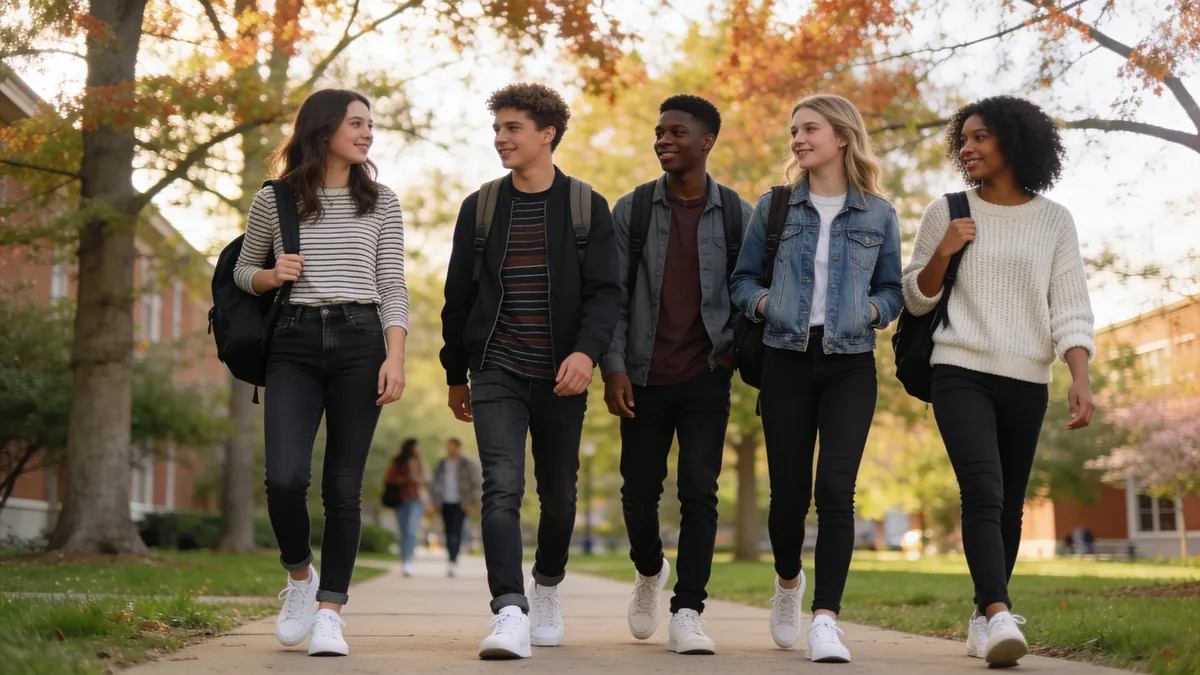
School Outfit Ideas: A Practical Style Framework
School outfit ideas are one of the most searched fashion topics every year, and for good reason. Students spend roughly 35 hours per week in classrooms, hallways, and campus spaces, meaning school clothes get more wear than any other category in a young person's wardrobe. Yet according to a 2024 Piper Sandler Taking Stock With Teens survey, the average American teenager spends approximately $680 annually on clothing, a number that has barely kept pace with inflation while the pressure to dress well has intensified through social media.
The core challenge is not a lack of options. It is decision fatigue amplified by dress codes, peer expectations, weather changes, and the need for comfort during long school days. A 2023 study published in the Journal of Adolescent Research found that 68% of high school students report spending more than 15 minutes each morning choosing an outfit, with a significant portion describing the process as stressful.
This guide solves that problem with ready-to-use outfit formulas for every school scenario: casual public school settings, strict dress codes, the first day of school, seasonal transitions, and college campuses. Every combination prioritizes style, comfort, and practicality in equal measure.
"Adolescents use clothing as one of the primary tools for identity construction. When students feel confident in what they wear, it directly correlates with social engagement and academic performance." — Dr. Jennifer Baumgartner, clinical psychologist and author of You Are What You Wear
If you just need a quick decision for today, our guide on what to wear today offers a fast framework. This article goes deeper into school-specific outfit strategies that work all year long.
School Outfit Essentials: The Pieces That Build Every Look
Before jumping into specific outfit formulas, building the right foundation saves time and money. The most stylish students at any school share one thing in common: a small set of versatile pieces that mix and match effortlessly. This approach works whether your school has zero dress code restrictions or requires specific uniform-adjacent clothing.
According to the ThredUp 2025 Resale Report, the average person wears only 20% of their wardrobe regularly. For students, that percentage skews even lower because school outfits must meet comfort and dress code requirements that eliminate many closet items from contention. A focused collection of essentials reverses this pattern.
The School Wardrobe Foundation
| Category | Essential Pieces | Why They Work |
|---|---|---|
| Tops (5-6) | 2 quality tees (white, neutral), 1 button-down, 1 polo, 1 knit sweater, 1 hoodie or sweatshirt | Cover casual through dress code; mix with any bottom |
| Bottoms (4) | Dark jeans, khakis or chinos, casual trousers, athletic or knit joggers | Span every formality level from gym to presentation day |
| Layers (3) | Denim jacket or shacket, cardigan or crewneck sweater, lightweight zip-up or hoodie | Handle temperature swings between outdoor walks and air-conditioned classrooms |
| Shoes (2-3) | Clean white sneakers, canvas sneakers, loafers or ankle boots | White sneakers anchor every outfit; secondary pair adds variety |
| Accessories (2-3) | Functional backpack, simple watch or jewelry, cap or beanie (seasonal) | Complete the look without violating dress codes |
Fabric Choices That Survive School Days
School clothes endure more than typical wear. Between walking, sitting for hours, carrying heavy bags, and unpredictable weather, fabrics need to perform. A Textile Research Journal study (2024) found that cotton-polyester blends retain their shape and color 40% longer than pure cotton garments through repeated washing cycles.
Best school fabrics: Cotton-poly blend tees, stretch denim, wrinkle-resistant chinos, merino wool knits for layering. Avoid: Pure linen (wrinkles in minutes), delicate silks, dry-clean-only fabrics, and anything that restricts movement during a full day of activity.
Casual School Outfit Ideas: No Dress Code, Maximum Style
Casual school outfits give you the most creative freedom, but that freedom is exactly what makes morning decisions overwhelming. When anything goes, narrowing the options matters more than expanding them. These formulas work for public schools and any campus without a formal dress code.
The Jeans-and-Layers Formula
Jeans remain the backbone of school style for a reason: they are durable, comfortable, and pair with virtually everything. The key is using layering to create visual interest beyond a basic jeans-and-tee default.
Formula 1: The Everyday Standard
Well-fitted dark jeans + crew-neck tee in white or a muted color + denim jacket or flannel shirt + clean white sneakers
This outfit works for any day with zero thought required. The layering piece transforms a basic combination into something that looks deliberate. For a complete guide on styling jeans for every occasion, our dedicated article covers dozens of variations.
Formula 2: The Relaxed-Cool Look
Straight-leg or wide-leg jeans + oversized knit sweater + sneakers + crossbody bag + minimal jewelry
The oversized top with structured bottoms creates a silhouette that reads trendy without being overdone. Tuck the front of the sweater slightly to add shape.
Formula 3: The Weekend-to-School Crossover
Light-wash jeans + graphic tee (not oversized) + structured jacket or blazer + canvas sneakers + simple backpack
A structured jacket elevates any casual base. This combination transitions directly from school to weekend plans without changing.
The Athleisure-Meets-Polished Look
Athleisure has earned a permanent place in school fashion. According to market research firm NPD Group, activewear and athleisure now account for roughly 30% of total youth apparel spending in the US. The challenge is wearing athletic pieces without looking like you just left gym class.
Formula 4: The Elevated Athleisure
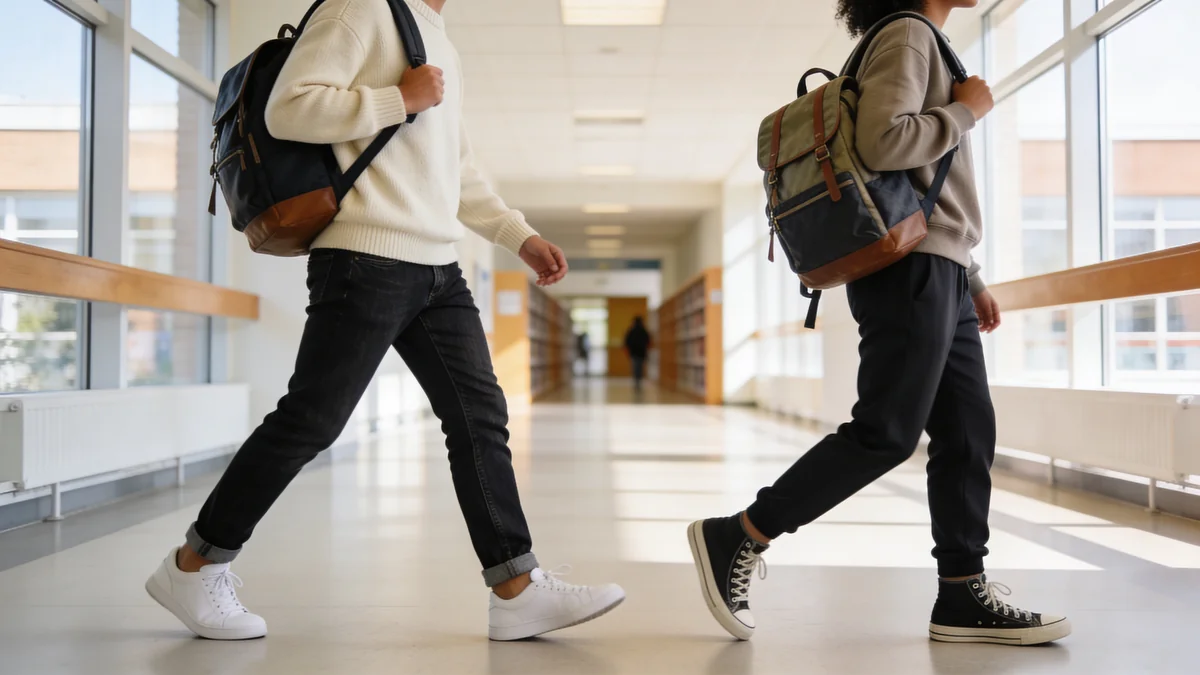
Tailored joggers (not sweatpants) + fitted crewneck sweatshirt + clean sneakers + structured tote or backpack
The difference between "athletic" and "athleisure" is fit and fabric. Tailored joggers with a tapered leg and quality fabric read as intentional fashion. Baggy sweatpants with a stretched waistband read as pajamas. Celebrity stylist Allison Bornstein, author of Wear It Well, puts it clearly: "The line between lazy and effortless comes down to one thing: fit. If every piece fits your body intentionally, casual always reads as a choice."
Formula 5: The Sport-Inspired Smart Look
Black athletic leggings + oversized hoodie (clean, no logos) + white sneakers + denim jacket tied at the waist or worn open
When the hoodie is clean and logo-free, the outfit crosses from gym wear into intentional casual territory. The denim jacket as an accessory layer adds dimension without bulk.
Dress-Code-Friendly School Outfit Ideas
Dress codes do not have to mean boring outfits. Approximately 21% of US public schools require students to wear uniforms, and many more enforce semi-formal dress codes with restrictions on ripped jeans, graphic tees, or athletic wear, according to the National Center for Education Statistics. The goal within these boundaries is expressing personal style through fit, color, texture, and accessories.
Khakis-and-Polo Outfits That Actually Look Good
The khaki-and-polo requirement does not dictate how those pieces fit, what colors you choose, or what you layer over them. These three variables contain enormous style potential.
Formula 6: The Polished Dress Code
Slim-fit khakis + fitted polo in a rich color (navy, forest green, burgundy) + clean white sneakers + simple watch + leather or canvas belt
Fit is the entire game here. A polo that skims the body rather than billowing out transforms the same dress code into a completely different look. Color choice matters too: deep, saturated polo colors appear more intentional than faded pastels.
Formula 7: The Layered Dress Code
Dark chinos + white button-down (sleeves rolled) + crewneck sweater in a school-approved color + loafers or clean sneakers
Layering a sweater over a collared shirt creates a preppy, put-together appearance that satisfies strict dress codes while showing clear personal style. This is the outfit that teachers compliment.
Uniform-Adjacent Outfits That Show Personality
When the core garments are dictated, accessories and grooming carry the full weight of personal expression.
Accessories within dress codes: A quality watch, small stud earrings, a tasteful necklace, a stylish belt, or an interesting bag can shift an identical uniform into something recognizably yours. Socks with subtle patterns (visible when seated) are an underrated move in strict uniform environments.
Outerwear as expression: Most dress codes allow choice in outerwear. A well-fitted denim jacket, structured cardigan, or clean bomber jacket worn over dress code clothing makes a statement the moment you walk in.
First Day of School Outfit Ideas
The first day of school outfit carries outsized importance because first impressions form in seconds. A Princeton University study found that people form judgments about competence and trustworthiness within 100 milliseconds of seeing someone. For students entering a new school year, new classes, or an entirely new campus, that initial visual impression sets a social baseline.
The practical advice is to choose something that represents your genuine style rather than something trendy that feels unfamiliar. Discomfort shows. An outfit you feel confident in will always outperform an outfit that looks good but feels foreign.
First Day Formula (Casual School):
Your best-fitting jeans + a top in your most confident color + your cleanest sneakers + one signature accessory (watch, necklace, jacket)
First Day Formula (Dress Code School):
Your best-fitting dress code bottoms + a top in the boldest color your code allows + your cleanest shoes + one permitted accessory
First Day Formula (College):
Well-fitted casual trousers or jeans + a slightly elevated top (knit polo, quality button-down, or interesting sweater) + clean sneakers or loafers + a bag that works for carrying textbooks
The common thread across all three formulas is prioritizing your best-fitting, best-condition versions of familiar pieces. The first day is not the day to debut a brand-new outfit you have not worn before. Untested shoes cause blisters. Unfamiliar fabrics create self-consciousness. Wear what you know works, but wear the best version of it.
School Outfit Ideas by Season
Weather changes everything about school outfits, yet most students own a single wardrobe that ignores seasonal demands. Building season-specific formulas prevents the morning scramble when temperatures shift.
Fall and Winter School Outfits
Fall marks the start of layering season, and school buildings are notorious for inconsistent heating. The hallway is freezing, the classroom is overheated, and the walk between buildings is windy. Adaptable layering is essential.
Fall Formula:
Dark jeans or corduroy pants + long-sleeve tee or lightweight knit + flannel shirt or cardigan + ankle boots or sneakers + light jacket for outdoor transitions
Winter Formula:
Insulated or lined jeans + turtleneck or thermal base layer + heavy knit sweater + warm coat (removed indoors) + waterproof boots + scarf and beanie
According to NOAA climate data, morning temperatures in the US school-season months of September through November average 8 to 15 degrees Celsius lower than afternoon highs, making morning layers a non-negotiable part of school dressing.
Spring and Warm-Weather School Outfits
Spring and late-school-year warmth demand lighter fabrics while maintaining style. Air-conditioned classrooms can still feel cold, so carrying a light layer prevents discomfort during long lectures.
Spring Formula:
Light-wash or mid-wash jeans + cotton tee or blouse + denim jacket or light cardigan (for AC) + canvas sneakers or loafers
Warm Weather Formula:
Chino shorts or a breathable skirt/dress + lightweight cotton top + sunglasses + comfortable flat sandals or sneakers + crossbody bag
For more seasonal inspiration, our spring outfit ideas guide covers layering strategies and 2026 color trends that translate directly to school settings.
| Season | Key Layering Piece | Footwear | Fabric Priority |
|---|---|---|---|
| Fall | Flannel, cardigan, or light jacket | Ankle boots, sneakers | Cotton blends, light knits |
| Winter | Heavy sweater + warm coat | Waterproof boots, insulated sneakers | Wool, thermal, fleece |
| Spring | Denim jacket, light cardigan | Canvas sneakers, loafers | Breathable cotton, linen blends |
| Summer | Sunglasses, optional cardigan for AC | Sandals, canvas sneakers | Lightweight cotton, moisture-wicking |
College Outfit Ideas: School Style Beyond High School
College introduces a completely different dressing context. There are no dress codes, no parental oversight, and a social environment where personal style becomes a more visible part of identity. Yet the practical demands remain: long walking distances across campus, hours sitting in lecture halls, unpredictable weather, and the need for outfits that work from 8 AM classes through evening study groups.
A 2025 Business of Fashion education survey found that 72% of college students say their personal style evolved significantly during their first two years on campus, driven by peer exposure to diverse fashion perspectives.
College Lecture Hall Formulas
The Comfortable Intellectual:
Tailored trousers or clean chinos + quality crewneck sweater + loafers or leather sneakers + structured messenger bag or tote
This look bridges casual and put-together seamlessly. It reads as someone who cares about their appearance without broadcasting effort.
The Campus Casual:
Well-fitted jeans + layered tees or a flannel over a basic tee + clean sneakers + functional backpack
Layering two simple pieces creates visual complexity from basic items. The flannel-over-tee combination is a campus staple because it adapts instantly to temperature changes between buildings.
The Minimalist:
Black or dark jeans + monochrome top + structured jacket + minimal accessories + clean sneakers
Minimalist dressing works exceptionally well in college because it requires the fewest decisions while always looking deliberate. A capsule wardrobe approach reduces morning decision time to under five minutes while maintaining consistent style.
College Style Principles
- Invest in one quality bag. You carry it every day. A well-made backpack or tote becomes part of your signature.
- Prioritize walking comfort. Campus distances eliminate impractical footwear. Clean sneakers and comfortable loafers outperform every other category.
- Own fewer, better layers. One excellent denim jacket and one quality sweater outperform ten mediocre alternatives.
- Let color tell your story. Understanding which colors complement your complexion elevates even basic outfits. Klodsy's AI color analysis tool identifies your ideal palette so you shop with precision.
Common School Outfit Mistakes
These mistakes are the most frequent style pitfalls in school settings, and every one of them has a simple fix.
1. Wearing brand-new shoes on important days. New shoes cause blisters and discomfort. Always break in footwear for at least three wears before a long school day or first-day appearance.
2. Prioritizing trends over comfort. A trendy outfit that you tug at, adjust, or feel self-conscious in all day undermines confidence. Style psychologist Dr. Dawnn Karen, author of Dress Your Best Life, explains: "When clothing causes physical discomfort, cognitive resources shift away from learning and social engagement toward body monitoring. Comfort is not the opposite of style — it is a prerequisite."
3. Ignoring classroom temperature swings. Dressing for outdoor weather alone leads to either sweating through an overheated classroom or shivering in aggressive air conditioning. Always have a removable layer.
4. Defaulting to the same outfit rotation. Wearing the same three outfits on repeat is common but unnecessary. With 5 tops, 4 bottoms, and 3 layers, you have 60 combinations. Most students own enough pieces but lack the framework to combine them creatively.
5. Neglecting shoe condition. Dirty, worn-out sneakers undermine an otherwise solid outfit. A Journal of Research in Personality study found that observers accurately judge personality traits from footwear alone. Clean shoes signal care.
6. Over-accessorizing. Layering multiple statement necklaces, rings on every finger, and a loud watch creates visual noise. One or two intentional accessories create a cleaner, more impactful look than five competing pieces.
How Klodsy Helps You Plan School Outfits
Morning outfit decisions before school are a solvable problem. Klodsy's AI outfit planner takes the guesswork out of daily dressing by analyzing your actual wardrobe and generating combinations you would not think of on your own.
Contextual suggestions: Tell Klodsy you are heading to school, a study group, or a campus event, and get outfit recommendations calibrated to that exact scenario. Weather-aware planning: Suggestions factor in your local forecast so you never overdress or underdress for the walk between buildings. Virtual try-on: See how a new layering piece or color works with clothes you already own before spending money.
For students building a wardrobe from scratch or working within a budget, Klodsy identifies which new pieces would create the most additional outfit combinations from your existing clothes, turning a 10-piece wardrobe into 30+ looks.
Explore our full guide to casual outfit ideas for even more formulas that translate directly to school settings.
Your School Style Starting Point
Great school style is not about having the most clothes or following every trend. It is about owning versatile pieces that fit well, combining them with intention, and feeling genuinely comfortable in what you wear.
Carry these principles into your next school morning:
- Fit matters more than brand. A well-fitting $15 tee beats an ill-fitting $80 one every time
- One standout piece per outfit. A jacket, accessory, or color choice creates the focal point
- Comfort enables confidence. If you are adjusting your outfit all day, it is the wrong outfit
- A small, coordinated wardrobe beats a massive random closet. Fifteen versatile pieces create more looks than fifty mismatched ones
- Clean, maintained basics always win. Fresh sneakers and well-kept clothes signal intention without effort
Ready to build school outfits from your own wardrobe? Try Klodsy to discover outfit combinations you have not considered, test new looks with virtual try-on, and plan your week of school outfits in minutes instead of stressful mornings.
Related Articles
Pregnancy Outfit Ideas: Trimester-by-Trimester Style Guide
Pregnancy outfit ideas that combine comfort and style for every trimester. Maternity workwear, casual looks, event outfits, and budget-smart wardrobe tips.
What to Wear Today: Outfits for Every Occasion
Find what to wear today with ready-to-copy outfit ideas for work, casual, date night, and weekend plans. Practical outfit formulas you can use right now.
Chinese New Year Outfit Ideas: Lucky Colors & Style 2026
What to wear for Chinese New Year 2026, the Year of the Fire Horse. Lucky colors, outfit formulas, cultural etiquette, and styling tips for every occasion.
Frequently Asked Questions
Everything you need to know about this topic
Pair khakis or dark chinos with a fitted polo or button-down, clean sneakers, and one personal accessory like a watch or simple necklace. Layering with a cardigan or crewneck sweater adds style within most dress codes without breaking any rules.