
Body Type Guide for Women: Find Yours & Dress It Well
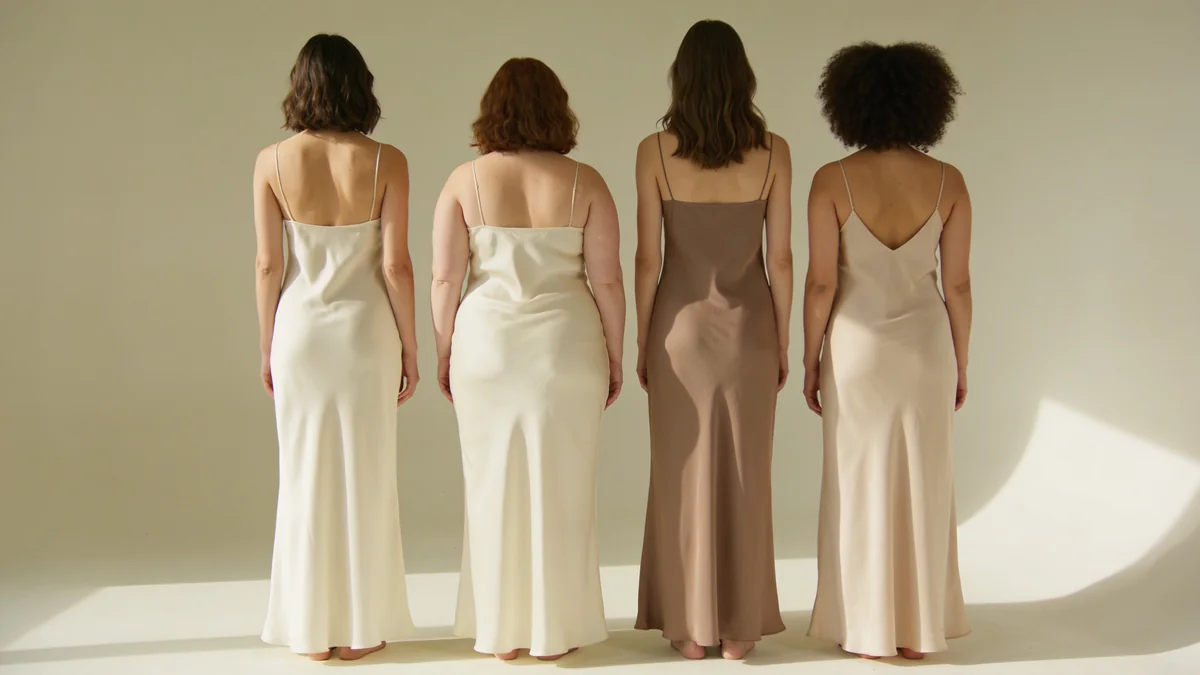
Find Your Body Type in Five Minutes
A dress can look perfect on a model and still feel off on you. The fix isn't your body, it's recognizing your silhouette. Three measurements (bust, waist, hip) tell you which of five common shapes you're closest to: hourglass, pear, rectangle, inverted triangle, or apple. Measure, Match, Mirror is the working rule throughout the guide. Below: the 5-minute measurement quiz, outfit advice for each shape, and the universal principles that apply to everyone.
Why Body Type Guidance Exists (and Why It's Not a Rule)
The concept of dressing for body proportions didn't originate in Instagram infographics. David Kibbe's 1987 book Metamorphosis built a detailed system around skeletal structure and soft tissue, sorting women into 13 image archetypes. Before that, mid-century dressmakers and couture houses designed patterns around a client's actual measurements because ready-to-wear didn't exist at scale.
The underlying idea was practical: cuts behave differently depending on where a body curves.
Modern body-type guides strip that system down to five basic shapes (sometimes six), which makes it accessible but also makes it imprecise. Real bodies don't sort neatly into five bins. Most women fall somewhere between two types, and proportions shift across life phases, seasons, and what you had for lunch.
Trinny Woodall, who spent two decades advising women on fit, has consistently said that rules around body type are the most misused tool in styling because they get treated as prohibitions instead of starting points.
So here's the framing that makes this guide useful rather than limiting: shapes are neutral geometry, not rankings. There's no ideal silhouette, no body type that gets easier access to good clothes than others, no "problem" to solve. What the framework gives you is a vocabulary for understanding why certain cuts create optical balance on your proportions, and why others don't.
Use it like a map, not a rulebook. Plenty of women look incredible in styles that supposedly "don't work" for their body type, because they wore it with confidence and it fit well. That's the real final authority here.
The 3-Measurement Quiz: Find Your Body Type in 5 Minutes
This 5-minute measurement process needs only one tool: a soft fabric measuring tape. If you don't have one, a piece of string works fine. Measure the string against a ruler afterward.
Stand in your underwear with relaxed posture, not sucking in or pushing out, just standing normally. First, measure your bust by wrapping the tape around the fullest part of your chest, keeping it level all the way around your back. Write down the number in inches or centimeters.
Next, measure your waist at the narrowest point, which is usually an inch or two above your belly button, not at the hip bone. Finally, measure your hips around the fullest part of your seat, typically 7 to 9 inches below your natural waist. You now have three numbers.
Compare them using the table below:
| If your measurements show... | Your body type is | Other common names |
|---|---|---|
| Bust and hips are within 1-2 inches of each other, waist defined (8+ inches less) | Hourglass | Curvy, X shape |
| Hips significantly bigger than bust (3+ inches), defined waist | Pear | Triangle, A shape |
| Bust significantly bigger than hips (3+ inches) | Inverted Triangle | Athletic V, broad shoulders |
| Bust and hips similar, waist within 5 inches of both | Rectangle | Straight, athletic, banana |
| Waist is the widest measurement or close to it | Apple | Round, O shape, oval |
If your numbers sit right on the boundary between two types, that's completely normal. The FAQ at the top of this page covers the between-types situation specifically. For now, read both sections and see which advice resonates when you actually stand in front of your closet.
Pro tip: Re-measure every year or after any significant body change. Proportions shift naturally with age, muscle gain, and other life phases, so the type you identify today is a snapshot, not a permanent category.
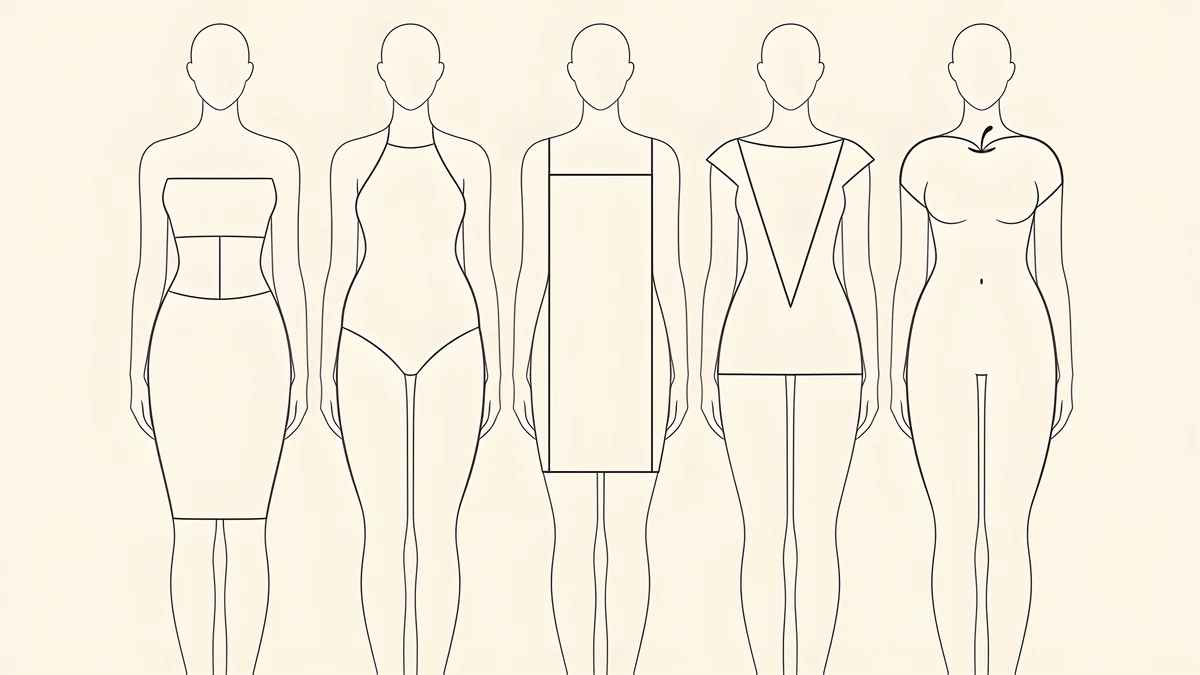
#1 Hourglass: Defined Waist, Balanced Top and Bottom
Your bust and hip measurements are close to each other, and your waist is noticeably narrower, typically 8 or more inches smaller than either. The silhouette is balanced top to bottom with a visible curve at the middle.
The styling strategy here is simple: silhouettes that follow your natural curve without adding bulk to the shoulder or hip. You don't need structure to create shape because it's already there. What you're looking for are cuts that stay close to the body through the torso without pulling or bunching.
"Wait, do I need a belt every time?" No. The belt just makes a smart casual look pop and adds a deliberate punctuation mark. Wrap dresses do exactly the same waist-defining work without any accessory at all, which is why they've been a reliable staple for this shape for decades.
The belt is an option, not a requirement.
Pieces that play to your shape: wrap dresses, fitted blazers with waist taper, high-waisted trousers and skirts, V-necks and scoop necks, pencil and A-line skirts, belted coats, bodycon with good stretch fabric.
Skip if comfort dips: oversized boxy tops that hide the waist entirely, shapeless shifts that treat the torso as one flat column, low-rise pants that cut across the widest hip point and create an unflattering horizontal line.
If you're looking for everyday outfit ideas built around this shape, the principles above translate naturally into a reliable weekday rotation.
#2 Pear / Triangle: Hips Wider Than Bust, Defined Waist
Picture this: it's a Wednesday evening and you're getting dressed for dinner with friends. You want to feel good, not overdone. You pull out a well-fitted A-line midi skirt in navy, pair it with a cream boatneck top with subtle puff sleeves, and finish with a long pendant necklace that draws the eye straight up the center.
The top half looks structured and interesting. The skirt flows clean. You leave the house feeling exactly right.
That's the pear-shape strategy in one outfit. The goal isn't to minimize the lower half, it's to create visual interest in the upper half so the overall silhouette reads as balanced. Adding volume and structure through the shoulders and neckline does this without doing anything "against" the hips, which don't need hiding. They're just part of how your body is built.
Darker wash bottoms and lighter or brighter tops reinforce this balance because the eye naturally moves toward color and contrast. Statement necklaces, structured blazers with defined shoulders, and anything that broadens the visual width of the upper body all work in the same direction.
Works well: boatneck and off-shoulder tops, structured blazers with shoulder definition, A-line skirts, dark wash bootcut or straight-leg jeans, wide-leg trousers, statement necklaces, bright or patterned tops.
Trickier: super-tight skinny jeans paired with a fitted top (no upper-body balance to counteract), drop-waist dresses that cut across the widest hip point, tapered ankle pants in pale colors with a plain dark top (reverses the balance entirely).
#3 Rectangle / Athletic: Bust, Waist, and Hips in a Straight Line
Your three measurements are close to each other, with less than 5 inches difference between waist and bust or hips. The silhouette is lean and straight. This shape carries clothes beautifully because there's no pulling at the bust or hip, but if the goal is creating curves, that's a job for the clothing rather than the body.
Here's how to think about it step by step. First, the goal is creating the illusion of curves through cut and layering, not changing anything about your body. Second, waist definition comes from outside: a belt, a peplum hem, a wrap silhouette, or a half-tuck into high-waisted bottoms.
Third, layering creates dimension. A cardigan worn open over a top and skirt establishes two distinct visual planes, which breaks up the straight vertical line. Fourth, prints and texture draw the eye to specific areas.
A printed wide-leg pant with a plain top pulls visual attention to the lower half and adds perceived width at the hip.
| Element | Pick |
|---|---|
| Tops | Peplum, ruffled hems, anything that creates waist illusion |
| Bottoms | Wide-leg pants, flared jeans, A-line skirts (add hip dimension) |
| Dresses | Wrap, fit-and-flare, drop-waist |
| Avoid if you want curves | Straight shift dresses, monochrome head-to-toe in the same fitted silhouette |
For smart casual outfit ideas that incorporate layering well, that article covers some specific combinations that work particularly well for straight-line proportions.
#4 Inverted Triangle: Bust and Shoulders Wider Than Hips
Your shoulders and bust are noticeably wider than your hips, often by 3 or more inches. This is common in women with broader skeletal shoulder structure and in athletes who carry upper-body muscle mass. The silhouette is strong across the top and tapers toward the lower body.
The styling strategy points in one direction: soften the upper half visually and add weight or interest to the lower half so the silhouette reads as balanced rather than top-heavy. V-necks and scoop necks open up the neckline and draw the eye inward and downward rather than across the widest point of the shoulder. Softer, drapey fabrics on top, think jersey, silk, or lightweight knit, avoid adding bulk the way a stiff structured blazer with built-in shoulder padding would.
On the bottom, wide-leg or flared trousers and full skirts add the visual volume that brings the lower half into proportion with the upper. A statement printed pant or a bright-colored skirt draws the eye down. Dark on top with light or printed on the bottom is the simplest version of this principle and it works consistently.
Swimwear follows the same logic: a solid or minimal top with a printed, ruffled, or high-waisted bikini bottom shifts visual interest to the lower half without any complicated coordination.
Many athletes, dancers, and women with naturally wider shoulders have this shape and dress with striking confidence precisely because they don't try to hide the shoulder width. Owning the strength of the upper body while balancing it with a statement bottom is a genuinely powerful look.
#5 Apple / Round: Waist at or Near the Widest Measurement
Your waist is your widest measurement, or close to it, which means the typical advice about "defining the waist" doesn't apply the same way. Most of the styling guidance for this shape focuses on creating vertical lines that elongate the silhouette and bringing attention to the legs and neckline rather than the midsection.
"Should I wear belts?" Sometimes. A belt placed just under the bust, at the empire line rather than the natural waist, creates a long vertical line below it that elongates the lower half. Placing a belt at the widest point of the torso does the opposite.
Position matters more than whether you belt at all.
"What about tucked-in shirts?" Skip the full tuck. A French tuck, where only the front is tucked in loosely and the back hangs free, creates a slight waist suggestion without pulling fabric tight across the middle. Shirts worn untucked at hip length work the same way: they create a clean vertical line from shoulder to hem.
"Are wrap dresses a bad idea?" Not at all. Wrap dresses with empire waists or A-line skirts from below the bust are particularly good because they drape over the midsection entirely and create shape through the chest and leg lines.
Three styles worth skipping if you find them uncomfortable: cropped tops (expose the widest point), low-rise pants (no vertical line from waist to hip), anything cinched tight at the natural waist (pulls fabric across the widest measurement).
Most styling for this shape works by emphasizing what's above the bust (statement necklaces, open necklines, interesting collars) and what's below the hip (great legs are a genuine asset and short hemlines or fitted trousers show them off well).
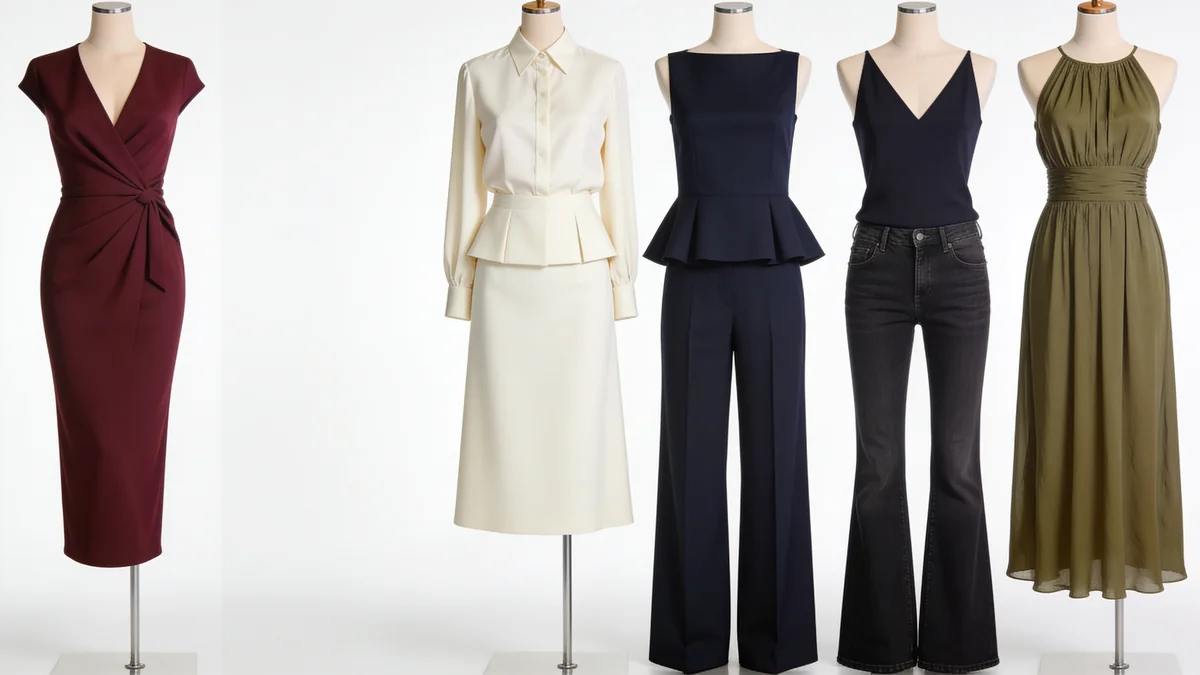
Universal Principles That Work for Every Body Type
Fit matters more than any rule in this guide. A piece that fits your actual measurements, through the shoulder, across the chest, at the waist, will look better than a theoretically "correct" style that bunches, pulls, or sags. When in doubt, go with what fits and alter or skip the rest.
One vertical line elongates any shape. It doesn't need to be dramatic. An open-front cardigan, a long delicate necklace, a vertical seam on a dress, even a center-front button placket creates a line that draws the eye up and down rather than across.
Color blocking is a specific tool. A darker block at the area you want to visually minimize, a lighter or brighter block where you want to draw the eye, that's the whole technique. You can use it to narrow a shoulder, widen a hip, define a waist, or pull focus to a neckline depending on where you place the contrast.
Fabric quality is underrated in every style discussion. A good fabric drapes differently than a cheap one. Silk jersey, quality ponte, substantial cotton, these materials follow the body with intention.
Cheap polyester pulls and clings in all the wrong places regardless of what cut it's made into. If a piece looks off and you can't figure out why, touch the fabric first.
Pro tip: The silhouette guide is a starting point. The mirror is the final word. If something works on you but "shouldn't" according to a chart, the chart is wrong for your body.
I'm a pear shape and ignored A-line skirts for years, convinced they would add bulk. Then I tried one in a thick structured cotton at mid-calf length and the silhouette finally clicked. The fabric held its shape instead of clinging, and the flare was subtle enough to balance the hip without amplifying it.
Sometimes a style works when the fabric is right, even if you've written it off based on a different version.
Confidence reads as more flattering than any silhouette. The woman who owns the room in her outfit wins over the woman who's tugging at a technically "correct" piece all evening. Styling advice is useful context.
Personal ease is the final filter.
There Was Nothing Wrong with the Dress
Remember the dress that arrived and felt wrong? Now you have the framework to understand exactly why. Maybe it was cut for a rectangle silhouette and the waist seam hit below your natural waist curve.
Maybe the shoulder seam was designed for someone with broader shoulders and it slid off yours all evening. The dress wasn't poorly made and your body wasn't the problem. The geometry just didn't match.
This guide gives you a starting vocabulary for recognizing that mismatch before you spend money and before the box goes back. The logic is simple enough to hold in your head: Measure, Match, Mirror. Find your approximate shape, find pieces that work with it, then let the mirror have the final say. Use the sections above as a first filter, and trust what you see and how you feel moving around.
Your comfort and what makes you feel powerful are the real authorities here, not a chart. Use Klodsy to test outfit combinations before buying, so the dress that arrives is the one that actually works.
Related Articles
Black Boots Outfits: Ankle, Knee-High and Over the Knee
Black boots outfits by height: ankle, knee-high and over the knee. The hem, trouser and heel that work with each, plus the mistakes that shorten your leg.
Leather Jacket Outfits: 20 Looks Beyond the Biker Cliché
Leather jacket outfits that don't read as costume: 20 looks for dinner, errands, concerts and work, plus fit rules, colors past black and faux vs real.
Jumpsuit Outfits: 20 Looks From Work to Wedding Guest
Jumpsuit outfits for every occasion: 20 ways to style one for work, weekends and weddings, plus how to fix the fit, the length and the bathroom problem.
Frequently Asked Questions
Everything you need to know about this topic
Take 3 measurements: bust (around fullest part), waist (narrowest), and hips (fullest part of seat). Then compare. Bust bigger than hips means inverted triangle. Hips bigger than bust means pear. Waist clearly defined with bust and hips similar means hourglass. Bust and hips similar with little waist definition means rectangle. Waist bigger or wider middle means apple.