
What to Wear to the Gym: Workout Outfit Guide 2026
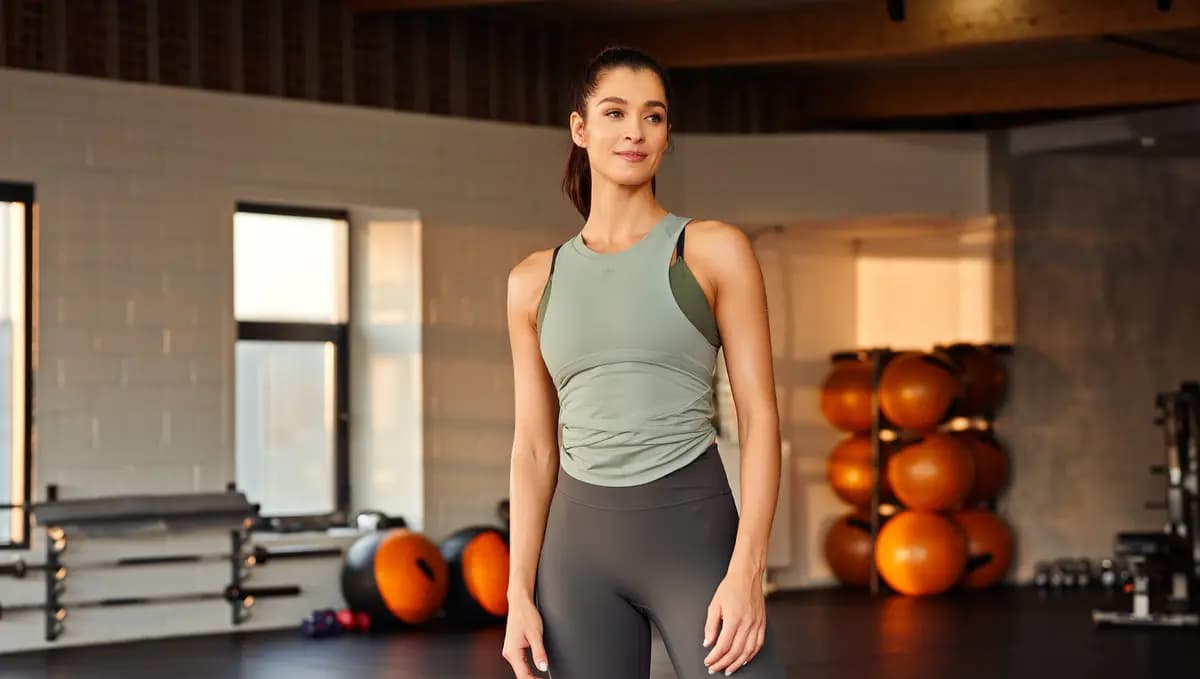
What to Wear to the Gym: The Complete Workout Outfit Guide for 2026
Walking into a gym feeling unsure about your outfit can undermine your entire workout. According to a 2024 fitness industry survey, 62% of new gym members feel anxious about what to wear, with 38% admitting they avoided the gym because they felt their clothes were wrong and 45% unsure which shoes to choose for different exercises.
The challenge? Different workouts demand different clothing. What works for a spin class will fail during deadlifts. Fabric technology has evolved dramatically, and understanding moisture-wicking, compression, and breathability can transform your workout experience. Yet most people still grab whatever t-shirt is clean without considering how it affects their performance.
This comprehensive guide covers everything you need to know about what to wear to the gym in 2026. We'll explore outfit requirements for different workout types, break down fabric technology, discuss footwear essentials, and show you how to build a functional gym wardrobe that supports your fitness goals.
"I used to dread the gym partly because I never felt dressed right. Once I understood the basics of proper workout clothing, my confidence and performance both improved. Now I have a rotation of outfits I know work, and I actually look forward to getting dressed for my workouts." — Jennifer M., Personal Trainer, Austin
Understanding Gym Clothing Essentials: What Makes Good Workout Wear
Before diving into specific workouts, let's establish what separates good gym clothing from everyday clothes:
Moisture-Wicking Technology
The foundation of modern workout wear:
What it does:
- Pulls sweat away from your skin to the fabric surface
- Allows moisture to evaporate quickly
- Keeps you dry and comfortable
- Prevents chafing and skin irritation
Fabrics to look for:
- Polyester blends
- Nylon
- Polypropylene
- Technical synthetic blends
Why it matters: Staying dry affects temperature regulation, comfort, and prevents the bacterial growth that causes odor. Cotton absorbs sweat and holds it against your skin, making you feel heavy and uncomfortable.
Compression Clothing
More than just a tight fit:
Benefits:
- Supports muscles during exercise
- May improve blood circulation
- Reduces muscle vibration and fatigue
- Provides a secure, no-shift fit
When to use:
- Weightlifting (compression shorts, leggings)
- High-intensity workouts
- Long cardio sessions
- Recovery wear
What to know: Compression should feel snug but never restrict breathing or movement. If it leaves deep marks or feels painful, size up.
Breathability and Ventilation
Keeping cool during intense workouts:
Key features:
- Mesh panels in high-sweat areas
- Lightweight, open-weave fabrics
- Strategic ventilation zones
- Quick-dry construction
Areas that benefit most:
- Underarms
- Back
- Behind knees
- Inner thighs
Gym Outfits by Workout Type
Cardio Workouts: Treadmill, Elliptical, Rowing
Cardio demands breathability and freedom of movement:
Women's Cardio Outfit:
- Moisture-wicking sports bra with medium to high support
- Breathable tank top or fitted t-shirt
- Running shorts, capris, or moisture-wicking leggings
- Cushioned running shoes
- Moisture-wicking socks
Men's Cardio Outfit:
- Moisture-wicking t-shirt or tank top
- Athletic shorts with built-in liner or compression shorts underneath
- Cushioned running shoes
- Moisture-wicking socks
Key considerations:
- Prioritize breathability for temperature regulation
- Choose cushioned footwear for impact protection
- Avoid loose clothing that might catch on equipment
- Light colors can help with temperature management
Outfit formula:
- Breathable moisture-wicking top + running shorts or leggings + cushioned running shoes
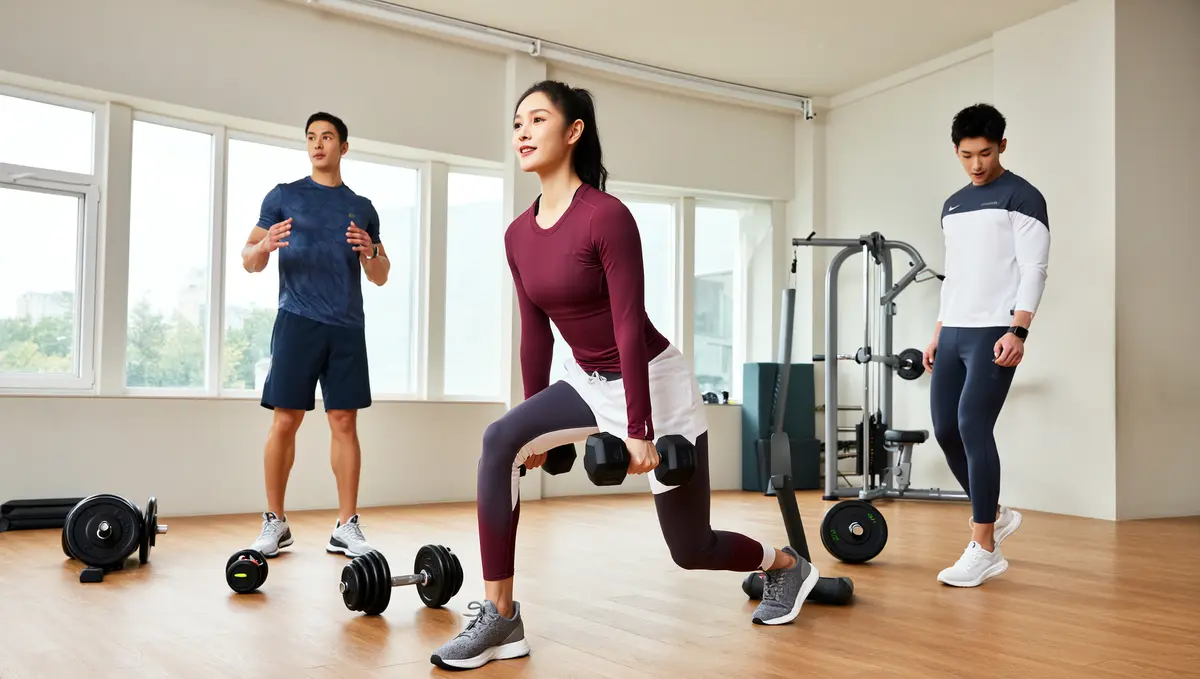
Weightlifting: Strength Training and Powerlifting
Lifting requires stability, visibility of form, and specific footwear:
Women's Weightlifting Outfit:
- Supportive sports bra
- Fitted tank top or compression top (form visibility)
- High-waisted compression leggings or fitted shorts
- Flat-soled shoes or lifting shoes
- Optional: Weight belt, wrist wraps, knee sleeves
Men's Weightlifting Outfit:
- Fitted t-shirt or tank top (form visibility)
- Athletic shorts or compression shorts
- Optional: Compression leggings under shorts
- Flat-soled shoes or lifting shoes
- Optional: Weight belt, wrist wraps, knee sleeves
Key considerations:
- Fitted clothing allows trainers to check your form
- Flat soles provide stable base for lifting
- Compression supports muscles under heavy loads
- Avoid loose fabric that could catch on bars or machines
Why footwear matters for lifting: Running shoes have cushioned, elevated heels that shift your weight forward and reduce stability. Lifting shoes have flat, hard soles that keep your feet stable and grounded. For squats and deadlifts, this makes a significant difference in both safety and performance.
Outfit formula:
- Fitted top + compression bottoms + flat-soled lifting shoes
HIIT Workouts: High-Intensity Interval Training
HIIT combines cardio and strength, requiring versatile clothing:
Women's HIIT Outfit:
- High-support sports bra (essential for jumping movements)
- Moisture-wicking fitted tank or t-shirt
- High-waisted compression leggings (stay-put waistband)
- Cross-training shoes
- Moisture-wicking socks
Men's HIIT Outfit:
- Moisture-wicking t-shirt or tank top
- Athletic shorts with secure waistband or compression shorts
- Cross-training shoes
- Moisture-wicking socks
Key considerations:
- High support essential for jumping, burpees, and dynamic movements
- Secure waistbands prevent constant adjustment
- Cross-trainers provide both cushioning and lateral support
- Quick-dry fabrics handle intense sweating
Why cross-trainers work best: HIIT involves running, jumping, lateral movements, and sometimes lifting. Cross-training shoes balance cushioning for impact with stability for strength moves. They handle the multi-directional demands better than specialized running or lifting shoes.
Outfit formula:
- High-support sports bra + moisture-wicking top + high-waisted leggings + cross-trainers
Spin and Cycling Classes
Indoor cycling has specific clothing requirements:
Women's Spin Outfit:
- Supportive sports bra
- Moisture-wicking tank top or cycling jersey
- Padded cycling shorts or leggings with padding
- Cycling shoes (if using clip-in pedals) or athletic sneakers
- Optional: Moisture-wicking headband
Men's Spin Outfit:
- Moisture-wicking t-shirt or cycling jersey
- Padded cycling shorts
- Cycling shoes (if using clip-in pedals) or athletic sneakers
- Optional: Moisture-wicking headband
Key considerations:
- Padded shorts dramatically improve comfort on long rides
- Tight-fitting bottoms prevent chafing from repetitive motion
- Cycling jerseys have moisture-wicking backs for seated sweating
- Avoid very loose shorts that can bunch
About padded shorts: Cycling puts continuous pressure on your sit bones. Padded shorts have chamois padding that cushions this area and reduces friction. For spin classes longer than 20 minutes, they make a significant comfort difference.
Outfit formula:
- Fitted moisture-wicking top + padded cycling shorts/leggings + cycling or athletic shoes
Yoga and Pilates
Flexibility-focused workouts demand unrestricted movement:
Women's Yoga/Pilates Outfit:
- Low to medium support sports bra
- Fitted tank top or cropped top
- High-waisted leggings (stay in place during inversions)
- Barefoot or grip socks
Men's Yoga/Pilates Outfit:
- Fitted t-shirt or tank top
- Athletic shorts with liner or fitted shorts
- Barefoot or grip socks
Key considerations:
- Fitted clothing prevents fabric interference during poses
- High-waisted bottoms stay in place during inversions
- Four-way stretch fabric moves with your body
- No zippers or hardware that dig in during floor work
Fabric matters for yoga: Look for fabrics with four-way stretch that move in all directions without losing shape. Spandex blends (typically 15-25% spandex) provide the flexibility yoga requires while maintaining structure.
Outfit formula:
- Fitted stretchy top + high-waisted four-way stretch leggings + barefoot/grip socks
Group Fitness Classes: Zumba, Aerobics, Dance Fitness
Dance-based workouts require movement freedom and support:
Women's Dance Fitness Outfit:
- High-support sports bra (jumping and dancing)
- Loose or fitted tank top (personal preference)
- Leggings, capris, or fitted shorts
- Dance fitness shoes or cushioned cross-trainers
- Optional: Wristbands for sweat
Men's Dance Fitness Outfit:
- Moisture-wicking t-shirt or tank top
- Athletic shorts or joggers
- Dance fitness shoes or cushioned cross-trainers
- Optional: Wristbands for sweat
Key considerations:
- High support handles jumping and dynamic movement
- Shoes should allow pivoting and lateral movement
- Breathability crucial for high-energy classes
- Some dancers prefer looser tops for expression
Outfit formula:
- Supportive sports bra + breathable top + leggings or shorts + pivot-friendly shoes
Men's Gym Clothing Guide
Essential Pieces for Men
Building a functional gym wardrobe:
Tops:
- 3-4 moisture-wicking t-shirts
- 2-3 tank tops for intense workouts
- 1-2 lightweight long-sleeve options
- 1 hoodie or light jacket for warm-up/cool-down
Bottoms:
- 2-3 athletic shorts with liner
- 1-2 compression shorts
- 1 pair athletic joggers or track pants
- Optional: Compression leggings for lifting
Undergarments:
- Moisture-wicking boxer briefs or compression underwear
- Avoid cotton underwear that retains moisture
Fit Considerations for Men
Finding the right balance:
Too tight issues:
- Restricts movement and breathing
- Can look uncomfortable
- May cause chafing
Too loose issues:
- Gets caught on equipment
- Interferes with form visibility
- Can ride up or shift during exercise
Ideal fit:
- Shirts should allow full arm movement without riding up
- Shorts should hit mid-thigh to knee
- Compression wear should feel snug but not constricting
- Nothing should shift or require constant adjustment
Women's Gym Clothing Guide
Essential Pieces for Women
Building a functional gym wardrobe:
Sports Bras (the most important piece):
- 2-3 high-support bras for HIIT, running, jumping
- 2-3 medium-support bras for weightlifting, cycling
- 1-2 low-support bras for yoga, stretching
Tops:
- 3-4 moisture-wicking tank tops
- 2-3 fitted t-shirts
- 1-2 cropped or longline options
- 1 light hoodie or jacket
Bottoms:
- 2-3 high-waisted compression leggings
- 1-2 pairs athletic shorts
- 1 pair capri leggings
- Optional: Joggers for warm-up/cool-down
Sports Bra Support Levels
Matching support to activity:
High Support (Impact Level 4-5):
- Running, jumping, HIIT, aerobics, dance fitness
- Features: Encapsulated cups, wide straps, sturdy band
- Minimizes bounce and provides maximum control
Medium Support (Impact Level 2-3):
- Cycling, weightlifting, elliptical, moderate cardio
- Features: Compression or light encapsulation
- Balances support with comfort
Low Support (Impact Level 1):
- Yoga, Pilates, stretching, walking
- Features: Light compression, pullover style
- Prioritizes comfort and freedom of movement
Leggings: What to Look For
Quality leggings make a difference:
Squat-proof test:
- Bend over in dressing room mirror
- Check for see-through issues
- Quality leggings maintain opacity during stretching
High-waisted benefits:
- Stays in place during movement
- Provides core support
- No constant pulling up required
- More flattering for many body types
Features to consider:
- Hidden pocket for key or card
- Flatlock seams to prevent chafing
- Four-way stretch for flexibility
- Moisture-wicking fabric
- No front seam (comfort during squats)
Gym Footwear Guide: Matching Shoes to Workouts
Running and Cardio Shoes
For treadmill, elliptical, and cardio-focused workouts:
Features to look for:
- Cushioned midsole for impact absorption
- Breathable upper mesh
- Supportive heel counter
- Proper fit with thumb-width toe room
- Suited to your gait (neutral, stability, or motion control)
When to replace:
- Every 300-500 miles
- When cushioning feels compressed
- When outsole shows significant wear
- When you notice increased fatigue or discomfort
Weightlifting Shoes
For serious strength training:
Features to look for:
- Flat, hard sole (no cushioning)
- Elevated heel (typically 0.5-1 inch) for squatting
- Wide toe box for stable stance
- Secure strap or lacing system
- Non-compressible base
Alternatives:
- Minimalist flat shoes
- Converse Chuck Taylors (flat sole, affordable)
- Barefoot-style training shoes
Why they matter: Cushioned running shoes absorb force you want to transfer into the ground during lifts. They also create an unstable base. Flat, hard soles provide the stability and ground connection that maximizes lifting performance and safety.
Cross-Training Shoes
The versatile all-purpose option:
Features to look for:
- Balance of cushioning and stability
- Lower heel-to-toe drop than running shoes
- Lateral support for side-to-side movement
- Durable outsole
- Flexible forefoot
Best for:
- HIIT workouts
- Circuit training
- General gym use
- Those who do varied workouts
Specialty Footwear
For specific activities:
Cycling shoes:
- Stiff sole for power transfer
- Clip-in compatible or platform
- Secure closure system
Dance/aerobics shoes:
- Pivot point on sole
- Lightweight construction
- Good cushioning
- Flexibility for movement
What NOT to Wear to the Gym
Clothing to Avoid
Cotton t-shirts and sweatshirts:
- Absorb sweat and stay wet
- Become heavy and uncomfortable
- Cause chafing
- Trap heat
Jeans or denim:
- Restrict movement
- Cause chafing
- Not breathable
- Inappropriate for exercise
Very loose clothing:
- Can catch on equipment
- Makes form difficult to assess
- Shifts during movement
- Safety hazard on machines
Jewelry:
- Rings can cause injury during lifting
- Necklaces can catch on equipment
- Earrings risk getting caught
- Bracelets interfere with grip
Strong fragrances:
- Heavy perfume or cologne
- Consideration for shared space
- Can be overwhelming in enclosed areas
Footwear to Avoid
Sandals or flip-flops:
- Zero support or protection
- Dangerous with weights
- Slipping hazard
Casual everyday shoes:
- Lack proper support
- Not designed for exercise
- Can cause injury
Worn-out athletic shoes:
- Compressed cushioning provides no protection
- Worn soles reduce traction
- Can cause or aggravate injuries
High heels or dress shoes:
- Obviously inappropriate
- Dangerous for exercise
Fit Problems to Avoid
Too tight:
- Restricts breathing and movement
- Causes discomfort and distraction
- Can restrict blood flow
Too loose:
- Equipment hazard
- Constant adjustment needed
- Form difficult to assess
Wrong support level:
- Inadequate sports bra support causes discomfort
- Oversupport for low-impact activities unnecessary
Building Your Gym Wardrobe: Outfit Formulas
The Minimalist Gym Capsule
Everything you need to start:
Essential pieces (10 items):
- 3 moisture-wicking t-shirts/tanks
- 2 pairs athletic shorts or leggings
- 2-3 sports bras (women) or compression underwear (men)
- 1 pair cross-training shoes
- 3 pairs moisture-wicking socks
This covers: Most general gym workouts, classes, and cardio.
The Complete Gym Wardrobe
For varied fitness enthusiasts:
Expanded collection (20+ items):
- 5-6 tops (mix of tanks, tees, long-sleeves)
- 3-4 bottoms (shorts, leggings, capris)
- 3-4 sports bras at different support levels (women)
- 2-3 types of shoes (cardio, lifting, cross-training)
- Warm-up layers (hoodie, track jacket)
- Accessories (headbands, wristbands, lifting gloves)
Quick Reference Outfit Formulas
Cardio day: Breathable tank + running shorts + cushioned running shoes
Leg day: Fitted tee + compression leggings + flat-soled shoes
Upper body day: Tank top + athletic shorts + cross-trainers
HIIT class: High-support sports bra + moisture-wicking top + high-waisted leggings + cross-trainers
Spin class: Fitted tank + padded cycling shorts + cycling or athletic shoes
Yoga: Low-support bra + fitted tank + four-way stretch leggings + barefoot
Gym Outfit Tips for Beginners
First Gym Visit Outfit
Keep it simple and comfortable:
What to wear:
- Comfortable moisture-wicking t-shirt
- Athletic shorts or leggings you can move in
- Supportive athletic shoes (cross-trainers work well)
- Sports bra with appropriate support (women)
What to avoid:
- Brand new shoes (risk of blisters)
- Anything you feel self-conscious in
- Complicated outfits
- Cotton that will get soggy
Gym Etiquette Notes
Clothing-related courtesy:
- Wipe down equipment after use
- Bring a towel for sweat
- Wear deodorant (not heavy cologne)
- Cover up appropriately (know gym's dress code)
- Clean your workout clothes regularly
Budget-Friendly Options
Building a gym wardrobe affordably:
- Start with basics and add specialty items as needed
- Athletic store sales and clearance sections
- Multi-purpose pieces that work for multiple activities
- Quality over quantity for frequently worn items
- Take care of items to extend their life
How Klodsy Can Help Plan Your Gym Outfits
Klodsy's AI-powered tools make gym outfit planning easier:
Workout-Specific Recommendations
Get outfit suggestions based on:
- Your planned workout type
- Gym environment (class, free weights, cardio)
- Weather if outdoor training
- Your personal preferences
Virtual Try-On for Activewear
See how gym clothes look before purchasing:
- Test different styles and fits
- Visualize complete gym outfits
- Compare options side by side
- Build confidence in your choices
Wardrobe Planning
Organize your gym clothing:
- Track what you own
- Identify gaps in your collection
- Plan outfits for the week
- Mix and match for variety
Conclusion: Dress for Your Workout Success
The right gym clothing enhances your workout experience, performance, and confidence. By understanding fabric technology, matching outfits to workout types, and investing in proper footwear, you eliminate distractions and focus on your fitness goals.
Key takeaways:
- Choose moisture-wicking fabrics over cotton
- Match support levels to workout intensity
- Invest in activity-appropriate footwear
- Fitted clothing allows form visibility without restricting movement
- Build a versatile capsule wardrobe that covers your workout needs
- Use Klodsy to visualize and plan your gym outfits
Remember: Your gym outfit should support your workout, not distract from it. Comfort, functionality, and appropriate fit matter more than fashion trends. When you feel good in what you're wearing, you perform better.
Ready to optimize your gym wardrobe? Try Klodsy's outfit planner to visualize different gym outfit combinations, plan your activewear purchases, and ensure you're properly dressed for every workout.
Related Articles
What to Wear to Pilates: Complete Outfit Guide 2026
Discover what to wear to Pilates for mat, reformer, and wall classes. Learn about fabrics, fit requirements, grip socks, and outfit formulas for every Pilates type.
What to Wear to Yoga: Complete Outfit Guide 2026
Learn what to wear to yoga for every style. Expert guide to yoga clothes for Vinyasa, hot yoga, and more. Fabric tips, outfit formulas, and what to avoid.
What to Wear Running: Activewear Guide for Every Season
Discover what to wear running in any weather. Learn about running outfits for hot weather, cold weather, rain, and different temperatures. Get activewear recommendations, layering tips, and complete running gear guides.
Frequently Asked Questions
Everything you need to know about this topic
For your first gym visit, wear comfortable moisture-wicking clothes that allow full range of motion. A breathable t-shirt or tank top with athletic shorts or leggings works well. Choose supportive athletic shoes appropriate for your planned workout. Avoid jeans, sandals, or restrictive clothing.