
What to Wear in Japan: Complete Packing Guide 2026
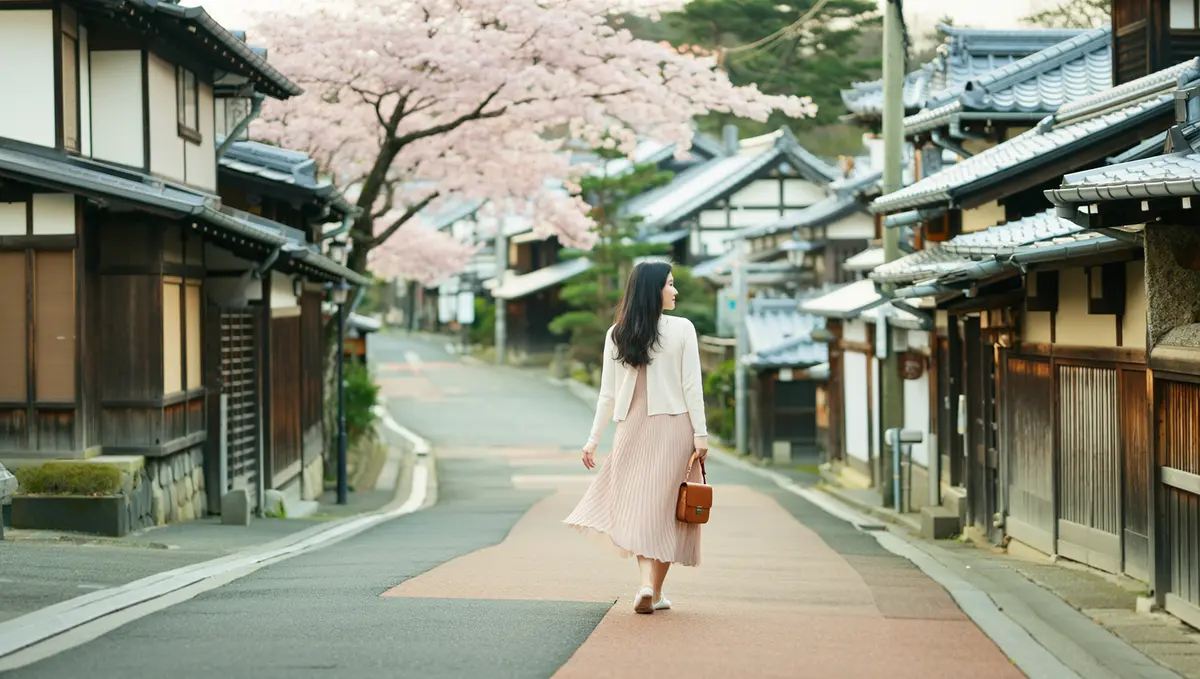
What to Wear in Japan: Your Complete Seasonal and Cultural Guide
Planning a trip to Japan but unsure what to pack? You are not alone. According to travel surveys, 68% of first-time Japan visitors worry about cultural dress codes, and 45% overpack by bringing the wrong items for the climate and customs they will encounter.
Japan presents unique wardrobe challenges: You need outfits that respect centuries-old temple traditions while keeping pace with Tokyo's cutting-edge street fashion. You will remove your shoes dozens of times, walk miles through city streets, and potentially experience four distinct climate zones in a single trip.
This guide covers everything you need to know about dressing for Japan in 2026. From cherry blossom season in Kyoto to winter in Hokkaido, business meetings in Osaka to rural ryokan stays, we will help you pack smart and dress respectfully for every situation.
"I packed all the wrong things for my first Japan trip—heeled boots I could not remove easily, shorts that felt inappropriate at temples, and heavy luggage I regretted on trains. Learning the basics of Japanese dress expectations transformed my second visit." — Travel blogger, Kyoto
Cultural Dress Code Essentials: What Every Visitor Must Know
Before diving into seasonal specifics, understand these fundamental cultural expectations that apply year-round in Japan:
Modesty Matters More Than You Think
Japanese fashion favors subtlety and polish over revealing styles:
- Cover shoulders and knees at temples, shrines, and traditional venues
- Avoid deep necklines and overly tight clothing in formal settings
- Sheer or see-through fabrics may attract unwanted attention
- Layering is your friend—it allows easy adjustment for different venues
Why it matters: Japan is not prudish, but attention-grabbing outfits can make locals uncomfortable and may deny you entry to certain establishments. Tokyo street style can be bold, but it tends toward creative rather than revealing.
The Shoe Removal Rule
This single custom will shape your entire packing strategy:
Where you will remove shoes:
- Traditional restaurants (many in Japan)
- Temples and shrines
- Ryokans and many hotels
- Homes and some shops
- Fitting rooms
- Some museums and cultural sites
Footwear implications:
- Slip-on shoes are essential—avoid lace-up boots or complicated closures
- Always wear clean socks without holes (bare feet is considered rude)
- Pack multiple sock pairs—you will go through them faster than usual
- Consider the squat: You will crouch to remove/replace shoes constantly
Pro tip: Japanese people notice your socks. Pack presentable pairs, and consider fun or colorful socks as a subtle style statement that shows cultural awareness.
Tattoo Considerations
Tattoos carry historical associations with organized crime in Japan:
What to expect:
- Onsens (hot springs): Most traditional onsens prohibit visible tattoos
- Public pools and gyms: Many have similar restrictions
- Daily life: Generally not an issue in urban areas
Solutions:
- Research "tattoo-friendly" onsens before visiting
- Cover tattoos with waterproof bandages for smaller designs
- Private onsen rooms (kashikiri) often have no restrictions
- Urban areas like Tokyo are increasingly relaxed
Seasonal Packing Guide: What to Wear in Japan by Season
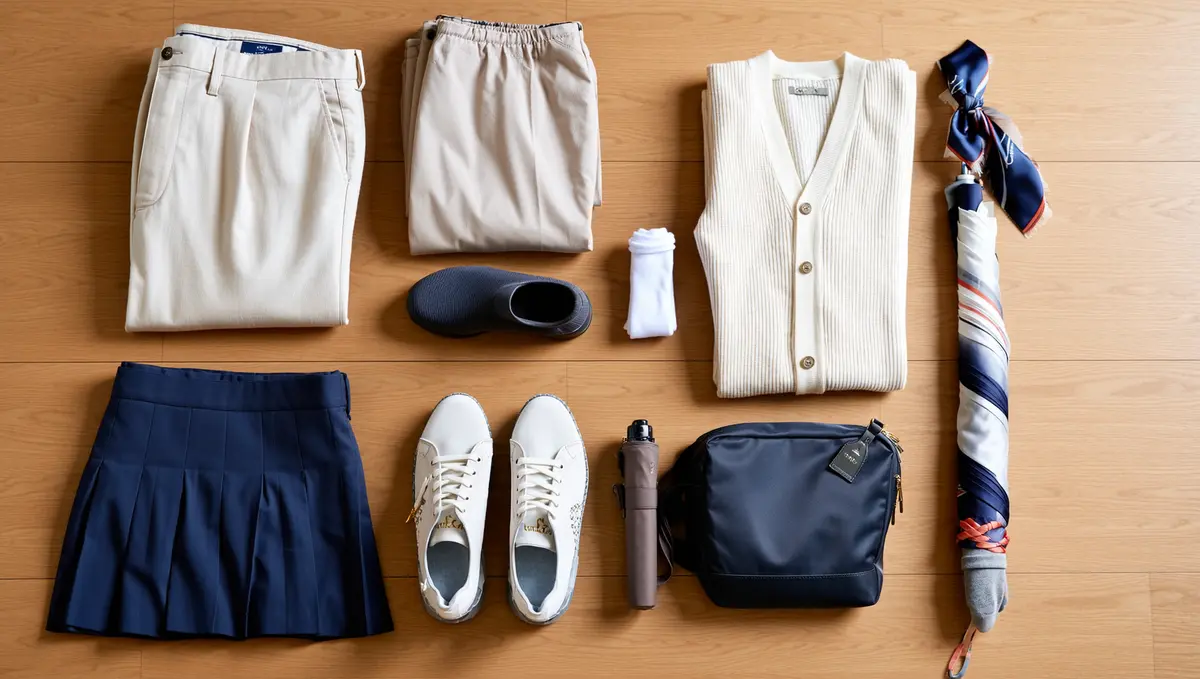
Spring in Japan (March-May): Cherry Blossom Season
Weather overview: 10-20 degrees Celsius (50-68 Fahrenheit), variable with occasional rain. Early spring can be cold; late spring feels like early summer.
The challenge: Cherry blossom season draws crowds and cameras. You want to look put-together for photos while staying comfortable during long hanami (flower viewing) sessions.
Essential pieces:
For Women:
- Light trench coat or packable jacket
- Layering pieces (cardigans, light sweaters)
- Midi skirts or comfortable pants
- Light dresses with tights
- Comfortable walking flats or sneakers
- Scarf for temperature changes
For Men:
- Light jacket or blazer
- Layering shirts (button-downs, light sweaters)
- Chinos or dark jeans
- Comfortable walking shoes
- Light scarf or neck gaiter
Spring outfit formula:
Base layer (light long-sleeve) + Mid layer (cardigan/sweater) + Outer layer (trench/jacket) + Comfortable pants/skirt + Slip-on walking shoes
Color palette: Soft pastels, cream, navy, and muted colors photograph beautifully against cherry blossoms without competing.
What to avoid:
- Heavy winter coats (too warm by mid-April)
- Sandals (still cool, especially evenings)
- All-black outfits (can look severe against spring scenery)
Summer in Japan (June-August): Heat and Humidity
Weather overview: 25-35 degrees Celsius (77-95 Fahrenheit) with extreme humidity, especially during rainy season (June-July). August is brutally hot.
The challenge: Japanese summer humidity is intense—even light clothing feels heavy. You need breathable fabrics while maintaining modesty at cultural sites.
Essential pieces:
For Women:
- Loose, breathable cotton or linen dresses
- Wide-leg pants in natural fibers
- Light, flowy tops (not too tight)
- Packable cardigan for over-air-conditioned spaces
- Comfortable sandals or breathable sneakers
- Small umbrella (for sun and sudden rain)
- Portable fan or cooling towel
For Men:
- Lightweight linen or cotton button-downs
- Breathable chinos or linen pants
- Light-colored shirts (dark absorbs heat)
- Comfortable sandals or breathable sneakers
- Handkerchief for sweat (culturally common)
Summer outfit formula:
Breathable loose top + Wide-leg pants or midi skirt + Comfortable sandals + Cardigan for AC + Umbrella
Fabric priorities:
- Choose: Linen, cotton, bamboo blends, moisture-wicking technical fabrics
- Avoid: Polyester, silk (shows sweat), heavy denim
Pro tip: Japanese department stores sell amazing summer accessories like UV-blocking arm covers, cooling neck towels, and parasols. Consider purchasing locally.
What to avoid:
- Tight clothing (traps heat)
- Dark colors (absorbs sun)
- Heavy fabrics
- Shorts in temples (bring a wrap or choose knee-length)
Fall in Japan (September-November): Autumn Foliage
Weather overview: 10-25 degrees Celsius (50-77 Fahrenheit), crisp and comfortable. Early fall remains warm; late November gets cold, especially in mountainous regions.
The challenge: Fall is Japan's other photogenic season. Like spring, you want to look polished for autumn foliage photos while navigating varying temperatures between sunny days and cool evenings.
Essential pieces:
For Women:
- Medium-weight jacket or stylish coat
- Turtlenecks and long-sleeve knits
- Midi skirts with tights
- Comfortable pants in rich colors
- Ankle boots or comfortable walking shoes
- Large scarf (doubles as wrap)
For Men:
- Medium-weight jacket or blazer
- Sweaters and long-sleeve shirts
- Chinos or dark jeans
- Comfortable walking shoes
- Scarf for cooler days
Fall outfit formula:
Base layer (turtleneck/long-sleeve) + Sweater or knit + Jacket + Comfortable pants + Ankle boots or walking shoes + Scarf
Color palette: Rich autumn tones (burgundy, rust, forest green, navy, camel) complement fall foliage beautifully.
What to avoid:
- Summer-weight fabrics (cool evenings)
- Heavy winter coats (too warm most days)
- Bright colors that clash with foliage
Winter in Japan (December-February): Cold with Regional Variation
Weather overview: 0-10 degrees Celsius (32-50 Fahrenheit) in most cities. Hokkaido and mountain regions see heavy snow and sub-zero temperatures. Tokyo winters are milder but still require proper layers.
The challenge: Japanese winters vary dramatically by region. Tokyo requires standard cold-weather gear, while Hokkaido demands serious winter equipment. Indoor heating is inconsistent, so layers remain essential.
Essential pieces:
For Women:
- Warm winter coat (knee-length recommended)
- Layering pieces (thermal underlayers, sweaters)
- Warm pants or skirts with thick tights
- Waterproof, insulated boots (for snow regions)
- Warm slip-on shoes (for frequent removal)
- Gloves, hat, scarf
- Hand warmers (popular in Japan)
For Men:
- Warm winter coat
- Thermal underlayers
- Warm sweaters and long-sleeve shirts
- Warm pants
- Waterproof boots (for snow regions)
- Gloves, hat, scarf
Winter outfit formula:
Thermal base + Sweater/knit + Warm coat + Insulated pants + Waterproof slip-on boots + Accessories (hat, gloves, scarf)
Regional variations:
- Tokyo/Osaka: Standard winter wear, waterproof shoes for rain
- Kyoto: Colder than Tokyo, add extra layers
- Hokkaido: Full winter gear, snow boots essential, thermal everything
What to avoid:
- Inadequate footwear (wet, cold feet ruin trips)
- Single-layer approach (you need true layering)
- Forgetting wind protection
City vs. Rural Japan: Location-Based Dressing
Tokyo and Urban Fashion Centers
Tokyo is one of the world's most fashion-forward cities. Harajuku, Shibuya, and Ginza each have distinct style cultures.
Urban outfit guidelines:
- More fashion risk is acceptable—experimental styles welcomed
- Sneakers are stylish and practical—Japanese sneaker culture is huge
- Neutral, monochromatic looks blend with sophisticated crowds
- Quality over quantity—Japanese fashion values craftsmanship
- Walking comfort essential—Tokyo requires significant walking
Neighborhood style notes:
- Harajuku: Creative, experimental, youth-oriented
- Ginza: Sophisticated, polished, designer-focused
- Shibuya: Trendy, youthful, street style
- Shinjuku: Mixed, business to casual
Kyoto and Traditional Cities
Kyoto demands more conservative dressing due to temple concentration and traditional atmosphere.
Traditional city guidelines:
- Modesty matters more—cover shoulders and knees
- Neutral colors blend better with traditional architecture
- Avoid flashy patterns that feel disrespectful at temples
- Comfortable walking shoes essential—cobblestones and hills
- Rain preparation—Kyoto weather is unpredictable
Rural Japan and Countryside
Rural areas expect casual, practical clothing but appreciate effort.
Rural guidelines:
- Dress practically for nature, farming communities, hiking
- Clean, neat appearance shows respect
- Outdoor-appropriate footwear for uneven terrain
- Layers for temperature changes in mountains
- Conservative approach in small communities
Occasion-Specific Dress Codes in Japan
Business and Formal Settings
Japanese business dress is conservative and uniform:
For Women:
- Dark suit (navy, black, charcoal)
- Conservative blouse (high neckline)
- Minimal jewelry
- Closed-toe pumps
- Natural makeup
For Men:
- Dark suit (navy, black, charcoal)
- White or light blue dress shirt
- Conservative tie
- Dark dress shoes
- Minimal accessories
Business culture notes:
- Seniority matters—dress as formally as or more than colleagues
- Quality signifies respect—invest in good accessories
- Avoid standing out—conformity valued in business
- Clean, pressed clothing essential
Onsen and Ryokan Stays
Traditional accommodations have specific expectations:
What to bring:
- Yukata provided—wear it around the ryokan
- Clean underwear—you will change frequently
- Small towel—onsens provide large towels
- Minimal clothing—you will mostly wear provided yukata
Onsen etiquette:
- Enter completely nude (small towel for modesty when walking)
- Shower thoroughly before entering bath
- Keep towel out of water
- No swimsuits in traditional onsens
Temple and Shrine Visits
While not strictly enforced, respect matters:
Do:
- Cover shoulders and knees
- Wear easy-to-remove shoes
- Dress in muted colors
- Remove hats when praying
Avoid:
- Very casual attire (gym clothes, beachwear)
- Revealing or tight clothing
- Loud patterns or slogans
- Excessive accessories
Practical Packing Tips for Japan
What to Bring
Universal Japan packing essentials:
- Slip-on shoes (multiple pairs ideal)
- Clean socks (more than you think you need)
- Layering pieces (any season)
- Compact umbrella (rain is common)
- Small bag for daily use (big bags awkward on trains)
- Packable day bag (for temple visits and day trips)
- Comfortable walking shoes (10-15 km daily is normal)
What NOT to Bring
Leave these at home:
- Bulky luggage—Japanese spaces are compact
- Too many shoes—pack versatile options
- Lace-up boots—impractical for shoe removal
- Revealing clothing—limited use in Japan
- Heavy coats in spring/fall—layer instead
- Expensive jewelry—theft is rare but minimalism is practical
Laundry Strategy
Japan has excellent laundry options:
- Coin laundries everywhere and affordable
- Hotel laundry services available
- Quick-dry fabrics make sense for packing light
- Pack 4-5 days of clothes and plan to wash
Outfit Formulas for Every Japan Scenario
Cherry Blossom Viewing (Hanami)
Soft-colored dress or blouse + Comfortable pants/skirt + Light cardigan + Slip-on flats + Pastel scarf
Summer Temple Tour
Loose cotton dress (knee-length) + Comfortable sandals + Light cardigan + Umbrella + Cooling accessories
Fall Foliage Day Trip
Turtleneck + Stylish jacket + Comfortable pants + Ankle boots + Large scarf for photos
Winter City Exploration
Thermal base + Sweater + Warm coat + Insulated pants + Waterproof slip-on boots + Full accessories
Business Meeting
Dark suit + Conservative shirt + Quality accessories + Polished dress shoes + Minimal jewelry
Ryokan Stay
Comfortable travel clothes (arrive) + Provided yukata (during stay) + Clean socks + Minimal items
How Klodsy Helps You Pack for Japan
Planning outfits for a multi-faceted Japan trip is complex. Klodsy's AI outfit planner can help you:
Visualize Your Japan Wardrobe
- See outfits together before packing
- Test color combinations for photogenic locations
- Ensure versatility across different occasions
- Identify gaps in your planned wardrobe
Create Season-Specific Capsules
- Build mini capsules for each season
- Plan layering combinations for temperature swings
- Coordinate pieces for maximum outfit variety
- Pack lighter with strategic planning
Try Before You Buy
- Virtual try-on helps visualize new pieces
- Test Japan-appropriate styles with your existing wardrobe
- Avoid packing mistakes by seeing combinations first
Common Mistakes to Avoid
First-time Japan visitors often make these errors:
- Packing lace-up boots—you will regret the shoe removal hassle
- Bringing only one jacket weight—layer for temperature variation
- Forgetting sock quality—Japanese people notice your feet
- Overpacking heavy items—Japanese trains and hotels have limited space
- Wearing revealing clothes to temples—you may be denied entry
- Ignoring the humidity factor—summer requires specific fabrics
- Skipping rain preparation—Japan gets frequent rain
- Packing uncomfortable shoes—walking is the primary transportation
Conclusion: Dress Smart, Travel Better
Packing for Japan requires balancing cultural respect, practical comfort, and personal style. The key principles remain constant across seasons:
Remember:
- Slip-on shoes are non-negotiable
- Modesty matters at cultural sites
- Layers beat single heavy pieces
- Comfort enables exploration
- Quality impresses Japanese hosts
- Neutral colors photograph well
With proper planning, you can explore ancient temples, navigate cutting-edge Tokyo, and experience everything in between—while looking appropriate and feeling confident.
Use Klodsy's outfit planner to visualize your Japan wardrobe before packing. Test combinations, identify versatile pieces, and ensure you are prepared for every experience Japan offers.
Planning your Japan trip wardrobe? Try Klodsy to create outfit combinations that work across temples, city streets, and traditional experiences—all from your existing closet.
Related Reading
- What to Wear in Italy: Travel Style Guide 2026 - Another destination style guide covering Rome, Florence, Milan, and the 2026 Olympics
Related Articles
What to Wear in Italy: Travel Style Guide 2026
Plan what to wear in Italy with our city-by-city style guide. Rome, Florence, Milan, Venice outfits, Vatican dress codes, and Milano-Cortina 2026 Olympics tips.
Valentine's Day Outfit Ideas: Romantic Date Night Style Guide
Discover perfect Valentine's Day outfit ideas for every date type. From romantic dinners to cozy home dates and Galentine's celebrations, find your ideal look.
Frequently Asked Questions
Everything you need to know about this topic
Avoid overly revealing clothing like low-cut tops, very short skirts, and exposed shoulders in temples and shrines. Skip flashy or loud patterns in business settings, and never wear shoes indoors. Tattoo-revealing clothing may restrict access to onsens and some traditional establishments.