
Virtual Try-On Clothes Online: Complete 2026 Guide
The $550 Billion Returns Problem Virtual Try-On Solves
Online fashion has a massive problem: 30-40% of all purchases get returned. This costs the industry $550 billion annually and creates enormous waste. The primary reason? People cannot see how clothes will look on them until the package arrives.
Here is the frustrating reality of online shopping: flat product photos on models who look nothing like you provide almost no useful information about how that item will fit your body, drape on your frame, or work with your proportions. You are essentially guessing with every purchase.
Virtual try-on technology changes this equation fundamentally.
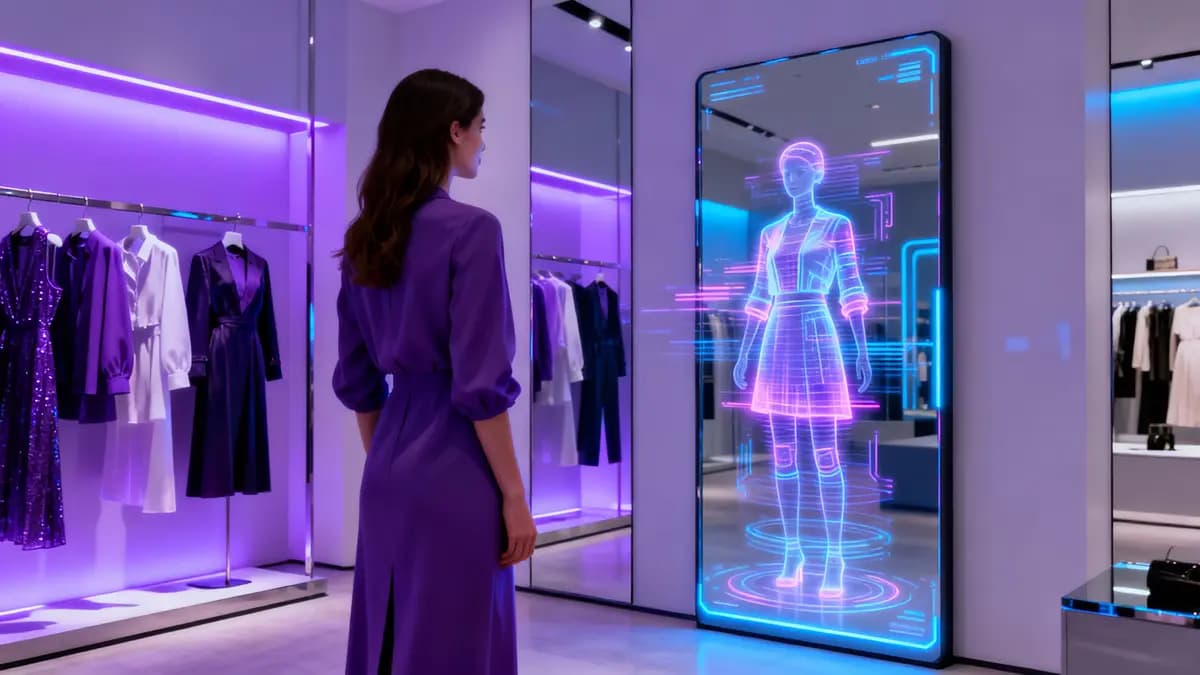
In 2026, you can upload your photo and see exactly how a garment will drape on your body before clicking buy. You can test different sizes virtually. You can compare how different colors work with your skin tone. You can make confident purchasing decisions without guesswork.
What virtual try-on delivers:
- Visual confirmation of fit and style before purchase
- Size recommendations based on your body, not generic charts
- Reduced returns (good for your wallet and the environment)
- Faster shopping decisions (no more agonizing over maybes)
- Fitting room confidence from your couch
"I used to order three sizes of everything and return two. Now I order one size and keep it 90% of the time. Virtual try-on saved me hundreds in return shipping and hours of my time." — Sarah K., Marketing Manager
The Technology Behind Virtual Try-On: How It Actually Works
Understanding the technology helps you use it effectively and set realistic expectations.
The Two Types of Virtual Try-On
Type 1: Model-Based Try-On
You select a model that represents your body type. The garment appears on that model, showing how it fits on a similar figure.
How it works:
- Retailers provide models in various sizes and shapes
- You select the model closest to your proportions
- AI renders the garment on that model
- You see how the item fits someone similar to you
Best for: Quick browsing, general fit sense, comparing multiple items fast
Limitations: The model is not actually you, so subtle proportion differences affect accuracy
Type 2: Photo-Based Personal Try-On
You upload your own photo. AI fits the garment onto your actual body, showing how it would look specifically on you.
How it works:
- Upload a full-body photo
- AI analyzes your body shape, proportions, and pose
- The garment is digitally fitted to your image
- You see the exact item on your actual body
Best for: Final purchase decisions, accurate personal visualization, seeing how items work with your features
Limitations: Requires quality photo input, processing time
The Technology Stack Explained
Computer Vision: AI analyzes your photo to detect body features, pose, and proportions. It understands where your shoulders, waist, and hips are located, even in complex poses.
3D Garment Modeling: Clothing items are digitized into 3D models that understand how fabric falls, stretches, and moves. Better 3D models produce more realistic try-ons.
Physics Simulation: Advanced systems simulate how fabric behaves on different body shapes. A flowing dress drapes differently than structured denim, and the technology accounts for this.
Neural Rendering: AI generates the final image, blending the garment naturally with your photo. Good systems adjust lighting, shadows, and fabric texture to look realistic.
Accuracy by Technology Type
| Technology Type | Accuracy Range | Best Use Case |
|---|---|---|
| Basic overlay | 60-70% | Quick browsing |
| Model-based selection | 75-85% | Size comparison |
| Photo-based AI | 85-92% | Purchase decisions |
| AR real-time | 80-90% | In-app exploration |
| Professional/brand integrated | 90-95% | High-confidence buying |
Getting the Best Results: The Photo Requirements
Virtual try-on accuracy depends heavily on what you provide. A poorly lit photo will produce poor results regardless of how sophisticated the AI is.
Photo Requirements for Personal Try-On
Phase 1: Preparation
Before taking your photo:
- Clear space with neutral background
- Good lighting setup (natural daylight ideal)
- Outfit ready (form-fitting clothes)
- Camera charged and clean
Phase 2: Lighting
Lighting makes or breaks virtual try-on accuracy:
- Natural daylight preferred
- Even lighting across entire body
- Avoid harsh shadows or backlighting
- Indoor lighting works if bright and diffused
- No dramatic overhead lights creating shadows
Phase 3: Positioning
How you stand affects results:
- Stand straight, facing camera
- Arms slightly away from body (not crossed)
- Full body visible from head to at least below knees
- Centered in frame with some space at edges
- Relaxed, natural posture
Phase 4: Clothing
What you wear in the photo matters:
- Form-fitting clothes work best (leggings and fitted top)
- Avoid bulky layers that obscure body shape
- Solid colors photograph better than busy patterns
- Remove jackets, scarves, or accessories that add bulk
Photo Quality Checklist:
- Natural or bright, even lighting
- Neutral background (plain wall ideal)
- Full body visible, head to below knees
- Form-fitting clothing worn
- Arms slightly away from body
- Standing straight, facing camera
- Good image resolution (not blurry)
- No filters applied
Body Measurements for Enhanced Accuracy
When platforms ask for measurements, providing them improves results:
Essential measurements:
- Height
- Bust/chest circumference
- Waist circumference
- Hip circumference
- Inseam (for pants)
How to measure accurately:
| Measurement | Where to Measure | Tip |
|---|---|---|
| Bust/Chest | Fullest part, tape parallel to floor | Do not pull tight |
| Waist | Natural waist, narrowest point | Breathe normally |
| Hips | Fullest part of hips/butt | Stand straight |
| Inseam | Inside leg, crotch to ankle | Measure pants that fit |
| Height | Against wall, no shoes | Morning is most accurate |
Why measurements matter: Accurate measurements improve size recommendations and virtual fit visualization significantly. The AI can compensate for photo angles when it knows your actual dimensions.
Virtual Try-On Across Different Platforms
The virtual try-on experience varies significantly by platform. Here is what to expect from major options in 2026.
Google Shopping Virtual Try-On
What it offers:
- Access to billions of clothing listings
- Upload your photo for personal try-on
- See items on models of various body types
- Integrated into normal Google Shopping flow
How to use it:
- Search for clothing on Google Shopping
- Look for "Try on" button on supported items
- Upload your photo or select a body type model
- View the garment rendered on the selected image
Strengths:
- Massive catalog coverage
- No app download required
- Integrated with shopping flow
Limitations:
- Quality varies by retailer's garment data
- Not all items have try-on enabled
Major Retailer Implementations
Zara: Zara's virtual try-on received widespread praise for realism. Available through their app, it shows garments with accurate drape and fit visualization.
ASOS: ASOS offers "See My Fit" showing clothes on models of various sizes, plus personal virtual try-on through their app. Strong for visualizing different sizes.
Nike: Nike Fit scans your feet for perfect shoe sizing. Their app also offers apparel visualization for select items. Industry-leading for footwear.
Warby Parker: Their glasses try-on remains industry-leading for eyewear, using facial mapping for accurate frame placement. Set the standard for accessory try-on.
Amazon Fashion: Amazon's try-on features vary by item and brand but are expanding rapidly. Integration with Prime Wardrobe for physical try-before-you-buy backup.
Dedicated Virtual Try-On Apps
Klodsy: Upload your photo and virtually try on items from your own wardrobe or from shopping sites. Strong for testing outfits before wearing and purchase decisions.
DressX: Creates a personal avatar from your selfie for trying on items from 200+ brands. Strong for luxury and designer pieces.
Style.me: Creates a 3D avatar for virtual fitting room experiences. Strong for multi-brand comparison shopping.
Aiuta: Generates virtual try-on images and can suggest items based on what looks good on your body. Strong for AI-powered recommendations.
Virtual Try-On for Different Clothing Categories
Different garments present different visualization challenges. Here is what to expect and how to evaluate by category.
Tops (Shirts, Blouses, Sweaters)
Accuracy level: High (85-92%)
What virtual try-on shows well:
- Shoulder placement and fit
- Sleeve length relative to your arms
- Neckline shape and depth
- Torso fit (fitted vs. relaxed)
What to watch for:
- Does the shoulder seam align with your shoulder?
- Where does the hem hit your waist/hip?
- How does the neckline frame your face?
- Do sleeves hit at the right point on your wrist?
Common issues virtual try-on catches:
- Shoulders too wide or narrow
- Sleeves too short for long arms
- Torso length issues (too short, rides up)
- Neckline too high or too low
Bottoms (Pants, Jeans, Skirts)
Accuracy level: High (85-90%)
What virtual try-on shows well:
- Waist placement and fit
- Hip and thigh silhouette
- Length and hem position
- Overall leg shape
What to watch for:
- Does the waist hit at your natural waist?
- How does the hip area look (tight, roomy)?
- Is the length right for your height?
- What is the rise situation (low, mid, high)?
Common issues virtual try-on catches:
- Rise too low for comfort
- Hips too tight or too loose
- Length wrong for your proportions
- Thigh fit issues
Dresses and Jumpsuits
Accuracy level: Medium-High (80-88%)
What virtual try-on shows well:
- Overall silhouette and shape
- Waist definition placement
- Skirt/leg length
- Neckline and shoulder fit
What to watch for:
- Does the waist hit at your actual waist?
- How does the length work with your height?
- Is the bodice area appropriate for your bust?
- Does the overall shape flatter your figure?
Challenges:
- Full-body items are more complex to render accurately
- Multiple fit points (bodice, waist, skirt) multiply potential issues
- Flow and drape harder to simulate than structured pieces
Outerwear (Jackets, Coats)
Accuracy level: Medium (75-85%)
What virtual try-on shows well:
- Shoulder fit
- Overall proportion to your body
- Length relative to your height
- Closure placement
What to watch for:
- Will it fit comfortably over layers?
- Do shoulders align with your shoulders?
- Is the length right for your proportions?
- Can you move comfortably?
Limitation to note: Outerwear needs room for layers underneath. Virtual try-on shows the garment alone, so size up mentally if you will wear thick sweaters underneath.
Shoes
Accuracy level: High with proper tools (88-95%)
What virtual try-on shows well:
- Style compatibility with outfits
- Proportional appearance with your clothes
- Color coordination
What sizing tools show:
- Recommended size based on foot scan
- Width fit predictions
- Brand-specific sizing adjustments
Best approach: Use apps like Nike Fit that scan your feet for sizing. Use visual try-on for style assessment.
Accessories (Glasses, Jewelry, Hats)
Accuracy level: Very High (90-95%)
Why accessories work so well:
- Face mapping technology is mature
- Smaller items are easier to render accurately
- Less variation in fit (no body proportions to match)
What virtual try-on shows well:
- Frame shape on your face
- Proportion to your features
- Color compatibility with skin tone
- Style suitability
Combining Virtual Try-On with Size Recommendations
Virtual try-on becomes most powerful when combined with AI size prediction.
How AI Sizing Works
Data inputs:
- Your body measurements
- Brand-specific size data
- Garment specifications
- Fit preference (tight, regular, loose)
Process:
- AI accesses brand's actual size data (not generic charts)
- Compares your measurements to garment specs
- Factors in fit preference
- Returns recommended size with confidence score
Output:
- Recommended size for this specific item
- Confidence level of recommendation
- Notes on how the brand fits (runs small, true to size, etc.)
Platforms with Integrated Sizing
Fit:match: Analyzes your measurements against 10,000+ size charts to predict best fit across brands.
True Fit: Uses purchase history and return data across brands to improve recommendations over time.
Kleep: Works with brands like Lacoste and Kenzo for personalized size recommendations.
Using Both Together
The optimal workflow:
- Enter measurements and fit preferences in your profile
- Get AI size recommendation for the specific item
- Use virtual try-on to see that recommended size on your body
- If visualization shows fit issues, try one size up or down
- Purchase with confidence
Why this combination works: AI sizing handles the technical fit question (will this physically fit my body?). Virtual try-on handles the visual question (will this look good on me?). Together, they address both concerns.
Understanding Virtual Try-On Limitations
Technology has limits. Understanding them prevents disappointment.
What Virtual Try-On Cannot Show
Fabric feel: You cannot know if a material is scratchy, heavy, or breathable through visualization. Read material descriptions and reviews.
Exact color: Screen calibration varies. Colors may appear slightly different in person. Natural light photos are more accurate than studio shots.
Movement and comfort: Static images cannot show whether a garment restricts movement or feels uncomfortable during activity. Reviews help here.
Quality and construction: Stitching, fabric weight, and construction quality are invisible in virtual try-on. Brand reputation and reviews matter.
When Virtual Try-On Struggles
Complex garments: Items with unusual construction, heavy draping, or architectural elements may not render accurately.
Very fitted items: Skin-tight clothing requires precise body mapping. Results can over- or underestimate fit.
Heavy textures: Lace, heavy knits, and textured materials are harder to simulate realistically.
Layered outfits: Trying on outfits with multiple layers is still limited. Most systems handle single items better than complete outfits.
Working Around Limitations
Cross-reference sources: Use virtual try-on for visuals, reviews for fabric and quality, size charts for fit.
Test the technology: Try virtual try-on on items you already own. If it accurately shows how your current clothes fit, trust it for new purchases.
Start with lower stakes: Test the technology on moderately priced items before relying on it for expensive purchases.
Combine with return policy: Even with 90% accuracy, use retailers with good return policies for backup.
Virtual Try-On for Wardrobe Planning
Beyond shopping, virtual try-on transforms how you use your existing wardrobe.
Testing Outfits Before Wearing
Do not stand at your closet wondering if pieces go together. Use virtual try-on to test combinations:
Process:
- Upload photos of your wardrobe items
- Create outfit combinations virtually
- See how pieces look together on your body
- Save successful combinations for future reference
Benefits:
- Eliminates morning decision paralysis
- Prevents walking out in outfits that do not work
- Discovers combinations you would not have thought to try
- Builds an outfit library for reference
Planning for Events
Have a wedding, interview, or special occasion coming up?
Virtual planning approach:
- Define dress code and your goals
- Test existing wardrobe options virtually
- Identify gaps that need filling
- Test potential purchases virtually
- Arrive at event with a tested, confident outfit
Seasonal Wardrobe Transitions
When weather changes, virtual try-on helps you reassess:
Seasonal questions to answer:
- Do stored items still work with current pieces?
- What combinations have you forgotten?
- What gaps exist for the coming season?
- What new items would create the most new outfits?
The 14-Day Virtual Try-On Challenge
Master virtual try-on technology in two weeks:
Week 1: Setup and Learning (Days 1-7)
Day 1-2: Profile creation
- Download virtual try-on apps (Klodsy, Google Shopping, retailer apps)
- Take quality full-body photo following guidelines
- Enter accurate measurements
- Set fit preferences
Day 3-4: Technology testing
- Try virtual try-on on items you already own
- Compare virtual results to how items actually fit
- Note accuracy and any patterns in errors
- Calibrate expectations based on results
Day 5-7: Exploration
- Try on items from wish lists
- Compare multiple sizes virtually
- Test different categories (tops, bottoms, dresses)
- Document what works well vs. what does not
Week 1 Goal: Understand the technology's accuracy for your body and shopping needs
Week 2: Application (Days 8-14)
Day 8-9: Wardrobe integration
- Upload 10-20 wardrobe items to your app
- Create 5 outfit combinations virtually
- Test combinations you have never tried
- Save successful combinations
Day 10-11: Shopping application
- Identify one item you need to purchase
- Find 3-5 options from different brands
- Try all virtually with size recommendations
- Make purchase decision based on results
Day 12-14: Validation and adjustment
- When purchased item arrives, compare to virtual preview
- Note accuracy of size recommendation
- Provide feedback to apps if available
- Refine measurement profile if needed
Expected Results After 14 Days
- Profile set up with accurate measurements
- Calibrated expectations for technology accuracy
- Wardrobe items uploaded for outfit planning
- At least one successful purchase using virtual try-on
- Confidence in using technology for future decisions
"The two-week test convinced me. I bought a blazer that looked perfect in virtual try-on. It arrived and fit exactly as shown. I would have never picked that size from the size chart alone." — Michael P., Accountant
The Future of Virtual Try-On
The technology continues advancing. Here is what is emerging:
Real-Time Video Try-On
Instead of static images, live video shows garments moving with you. Point your camera at yourself and see clothing responding to your movements in real-time.
Status: Available in some AR apps, improving rapidly.
Complete Outfit Try-On
Current technology handles single items best. Emerging systems can layer multiple pieces for complete outfit visualization.
Status: Early stages, limited availability.
Social Try-On
Share virtual try-ons with friends for feedback before purchasing. Some platforms enable collaborative shopping experiences.
Status: Available in select apps.
In-Store Integration
Physical stores adding virtual try-on mirrors. Scan items, see them on yourself without changing clothes.
Status: Rolling out in flagship stores of major brands.
AI Style Recommendations
Virtual try-on combined with AI styling advice. Technology not only shows how items fit but recommends what would look better.
Status: Emerging in advanced fashion AI platforms.
Making Virtual Try-On Part of Your Shopping Routine
Here is your action plan for integrating virtual try-on into everyday shopping:
Before Shopping
- Keep profile updated: Refresh photo and measurements quarterly
- Check app options: Know which apps cover which retailers
- Define needs: Know what you are looking for before browsing
During Shopping
- Always try virtually: Before adding anything to cart, test it virtually
- Compare sizes: Try multiple sizes to see differences
- Combine with reviews: Check reviews for fabric and quality information
- Save favorites: Keep virtual try-on images for comparison
After Purchase
- Compare results: When items arrive, compare to virtual preview
- Provide feedback: Help apps improve accuracy
- Document successes: Note which virtual try-ons matched reality
- Adjust if needed: Update measurements if fit was different than shown
For Wardrobe Management
- Digitize your closet: Upload items for outfit planning
- Plan outfits weekly: Use virtual try-on to plan ahead
- Test before events: Never arrive at an important occasion in an untested outfit
- Identify gaps: See what is missing when outfits do not quite work
Ready to try on clothes virtually?
Start Your Virtual Try-On Experience with Klodsy
Related Reading
- AI Wardrobe App 2026: Build Your Smart Digital Closet - Complete guide to digitizing your wardrobe
- AI Shopping Assistant: Reduce Fashion Returns - How AI prevents returns before purchase
- Best AI Stylist Apps 2026: Complete Comparison - Compare top AI fashion apps
- How to See Clothes on You Before Buying with AI - Detailed guide to AI try-on technology
Related Articles
What to Wear to an Interview: Use AI to Plan the Perfect Outfit
Plan your interview outfit with AI. Virtual try-on, color analysis, and smart outfit suggestions help you look confident and land the job.
What to Wear to Jury Duty: Preview Your Courthouse Outfit with AI
Not sure if your jury duty outfit works? Use AI virtual try-on to see your courthouse look before you go. Dress code guide and outfit ideas included.
AI Shopping Assistant: How to Reduce Fashion Returns in 2026
Stop returning clothes with AI shopping assistants. Learn how AI predicts fit, matches your style, and helps you buy right the first time, saving money and reducing waste.
Frequently Asked Questions
Everything you need to know about this topic
Leading virtual try-on technology achieves 85-95% accuracy in showing how clothes drape, fit, and look on your body. Accuracy depends on photo quality, body measurement data, and retailer's garment 3D modeling. High-quality implementations rival in-store fitting room experiences.