
Winter Wear Guide: What Clothes to Wear in Winter to Stay Warm
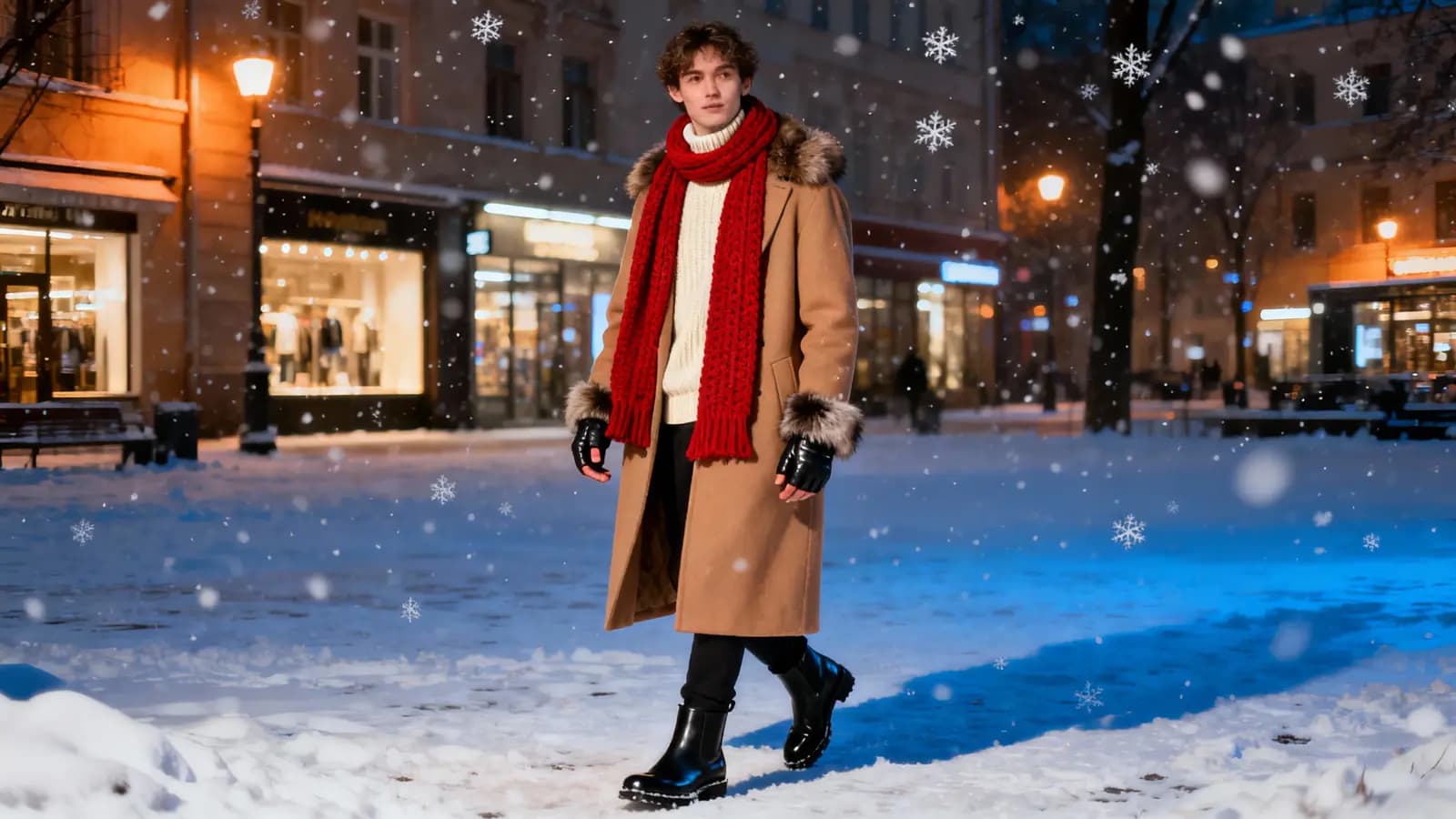
Winter Wear Guide: How to Stay Warm and Stylish in Cold Weather
Winter fashion doesn't have to mean sacrificing style for warmth. With the right knowledge and approach, you can create winter outfits that keep you comfortable in freezing temperatures while looking effortlessly stylish. The secret? Understanding layering, choosing the right fabrics, and using modern technology to plan your outfits.
The winter dressing challenge affects millions: According to a 2024 fashion survey, 68% of people struggle to balance warmth and style during cold months. Many end up either freezing in stylish outfits or looking bulky in warm ones. But it doesn't have to be this way.
Modern winter fashion combines cutting-edge fabric technology with timeless style principles. From high-tech thermal layers to classic wool coats, today's winter wear offers both function and fashion. And with AI-powered styling tools like Klodsy, you can visualize and plan perfect winter outfits before you even step outside.
"I used to hate winter because I could never find outfits that were both warm and stylish. After learning proper layering techniques and using Klodsy to plan my winter wardrobe, I actually look forward to cold weather now. I stay warm and feel confident." — Sarah M., Marketing Director, New York
The Science of Staying Warm: Understanding Heat Loss
Before diving into specific winter wear recommendations, it's helpful to understand how your body loses heat—and how clothing prevents it. This knowledge helps you make smarter choices about what to wear.
Your body loses heat in four main ways:
1. Conduction (25% of heat loss):
- What it is: Direct contact with cold surfaces
- Example: Sitting on a cold bench, touching cold metal
- Solution: Insulated layers prevent direct contact
2. Convection (15% of heat loss):
- What it is: Heat carried away by moving air (wind)
- Example: Wind cutting through thin clothing
- Solution: Windproof outer layers block air movement
3. Radiation (60% of heat loss):
- What it is: Heat escaping from your body surface
- Example: Body heat radiating into cold air
- Solution: Insulating layers trap body heat
4. Evaporation (varies):
- What it is: Heat lost when sweat evaporates
- Example: Getting sweaty, then feeling cold
- Solution: Moisture-wicking base layers keep you dry
The layering system addresses all four types of heat loss:
- Base layer: Prevents evaporation, wicks moisture
- Middle layer: Provides insulation (radiation protection)
- Outer layer: Blocks wind (convection) and insulates (conduction)
Understanding this science helps you choose the right pieces for different conditions. For example, on a windy day, you need a windproof outer layer. On a dry, cold day, insulation is more important than wind protection.
The Three-Layer System: Foundation of Winter Dressing
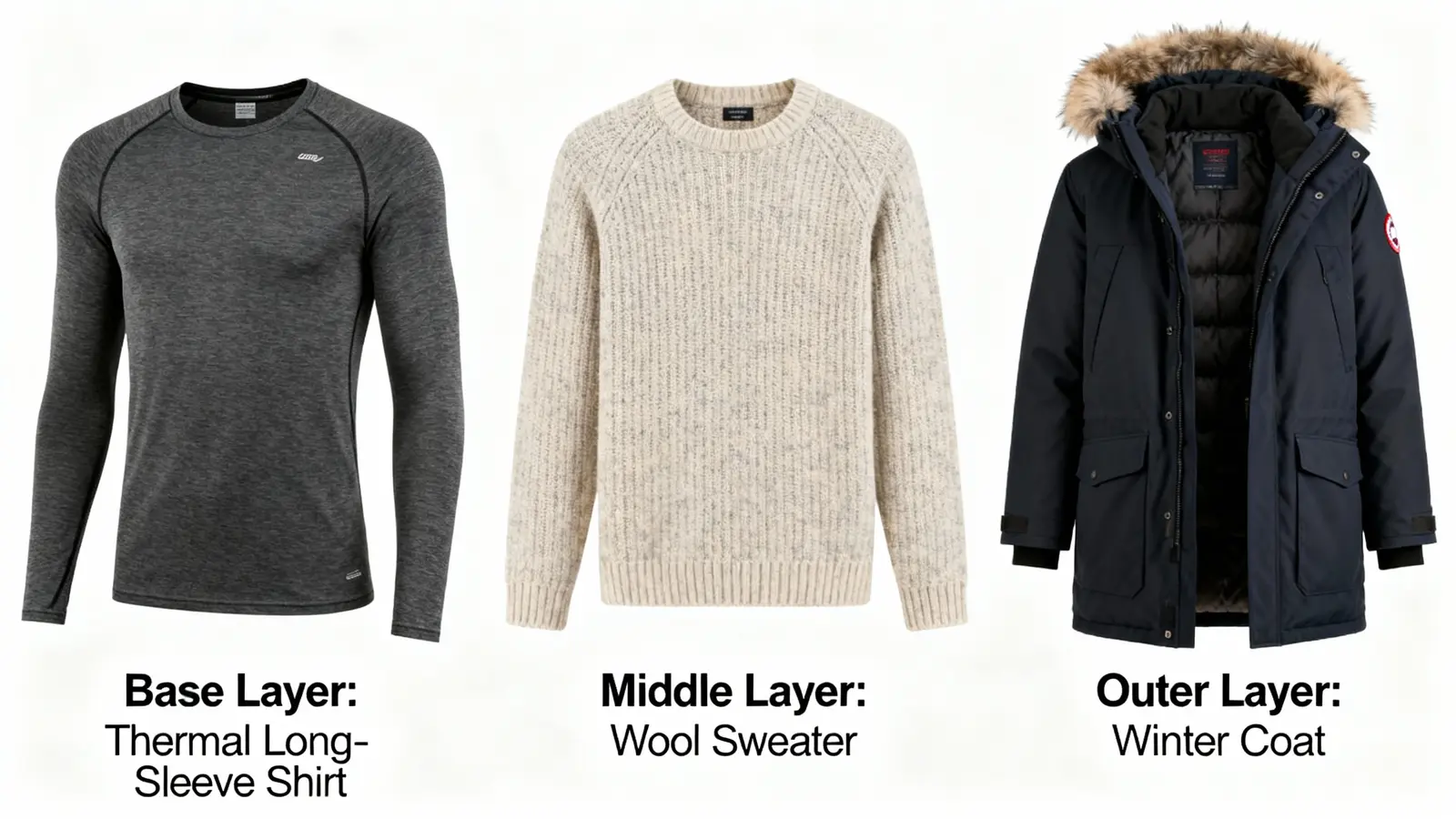
The three-layer system is the gold standard for winter wear. Used by outdoor professionals, athletes, and fashion-conscious individuals, this system keeps you warm, dry, and comfortable in any cold-weather situation.
Layer 1: Base Layer (Moisture Management)
Purpose: Keep your skin dry by wicking moisture away from your body.
Best fabrics:
- Merino wool: Natural, breathable, odor-resistant, warm even when wet
- Synthetic (polyester, polypropylene): Fast-drying, lightweight, affordable
- Silk: Lightweight, smooth, good for mild cold
- Avoid: Cotton (retains moisture, makes you cold)
Fit: Should fit snugly against your skin without being constricting.
Examples:
- Thermal long-sleeve shirt
- Long underwear
- Moisture-wicking t-shirt
- Base layer leggings
When to use: Always, in any cold weather situation. Even on mild days, a good base layer provides a foundation for warmth.
Layer 2: Middle Layer (Insulation)
Purpose: Trap body heat and provide warmth.
Best fabrics:
- Wool: Excellent natural insulation, breathable
- Fleece: Synthetic, lightweight, warm, dries quickly
- Down: Exceptional warmth-to-weight ratio, compressible
- Synthetic insulation: Performs when wet, affordable
Fit: Should fit comfortably over your base layer, allowing air to circulate.
Examples:
- Wool sweater
- Fleece jacket
- Down vest
- Insulated hoodie
- Cardigan
When to use: In moderate to severe cold. You can have multiple middle layers for extreme cold.
Layer 3: Outer Layer (Protection)
Purpose: Block wind, repel water, and provide additional insulation.
Best features:
- Windproof: Blocks air movement
- Water-resistant or waterproof: Repels rain and snow
- Breathable: Allows moisture to escape
- Insulated or shell: Depending on conditions
Examples:
- Winter coat (down, synthetic, or wool)
- Waterproof shell jacket
- Parka
- Trench coat (for milder winter days)
When to use: Always in cold weather. This is your primary protection against the elements.
Layering tips:
- Add or remove layers as conditions change
- Start with fewer layers and add if needed
- Zippers and vents allow temperature regulation
- Don't over-layer—you should be able to move comfortably
Essential Winter Pieces: Building Your Cold-Weather Wardrobe
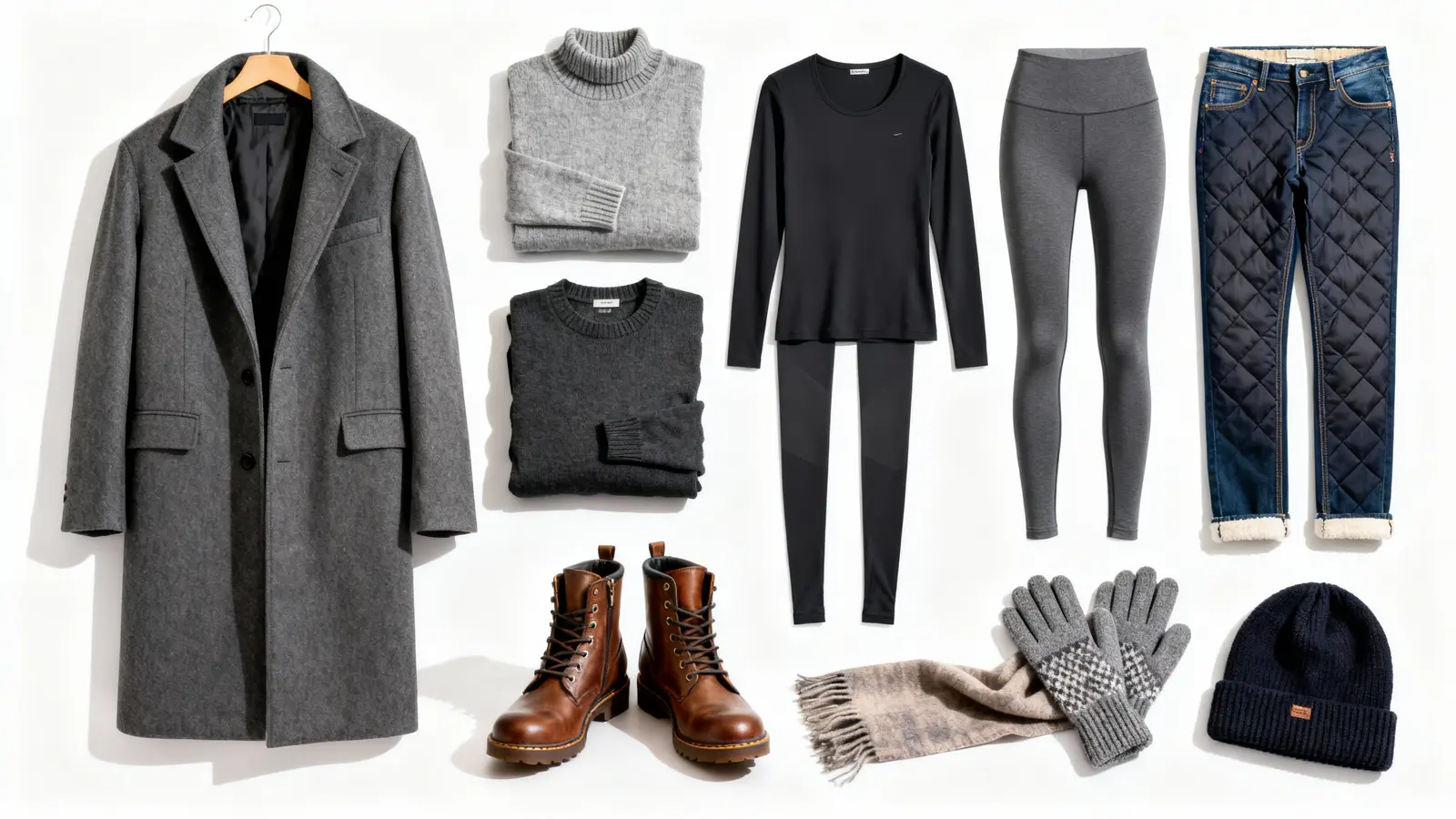
Building a complete winter wardrobe starts with essential pieces that work together. These foundational items form the basis of countless winter outfit combinations.
Outerwear Essentials:
1. Winter Coat:
- Down coat: Lightweight, extremely warm, compressible
- Synthetic insulated coat: Performs when wet, more affordable
- Wool coat: Classic, breathable, stylish
- Parka: Long, warm, weather-resistant
- Features to look for: Hood, pockets, windproof, water-resistant
2. Lightweight Jacket:
- For milder days or as a middle layer
- Denim jacket: Versatile, can be layered
- Leather jacket: Stylish, wind-resistant
- Fleece jacket: Warm, lightweight
3. Rain/Snow Shell:
- Waterproof outer layer for wet conditions
- Can be worn over other layers
- Essential for rainy or snowy days
Sweater and Top Essentials:
1. Wool Sweater:
- Merino wool: Soft, warm, breathable
- Cashmere: Luxurious, extremely warm
- Lambswool: Classic, durable
- Multiple colors: For versatility
2. Fleece:
- Lightweight and warm
- Great for active winter activities
- Layers well under jackets
3. Long-Sleeve Base Layers:
- Thermal shirts: For cold days
- Moisture-wicking: For active days
- Multiple weights: Light, mid, heavy
Bottom Essentials:
1. Insulated Pants:
- For extreme cold or extended outdoor time
- Waterproof options for wet conditions
2. Wool or Fleece-Lined Pants:
- Warmer than regular pants
- Still stylish and versatile
3. Base Layer Leggings:
- Worn under regular pants
- Adds warmth without bulk
Accessory Essentials:
1. Scarf:
- Wool or cashmere: Warm, stylish
- Large enough to wrap multiple times
- Multiple colors for outfit variety
2. Gloves or Mittens:
- Insulated: For cold days
- Touchscreen compatible: For modern life
- Waterproof: For wet conditions
3. Hat or Beanie:
- Wool or fleece: Warm, comfortable
- Covers ears: Essential in cold wind
4. Boots:
- Insulated: For cold days
- Waterproof: For wet conditions
- Good traction: For icy surfaces
5. Socks:
- Wool or synthetic: Warm, moisture-wicking
- Multiple pairs: For very cold days
Winter Wear for Different Activities
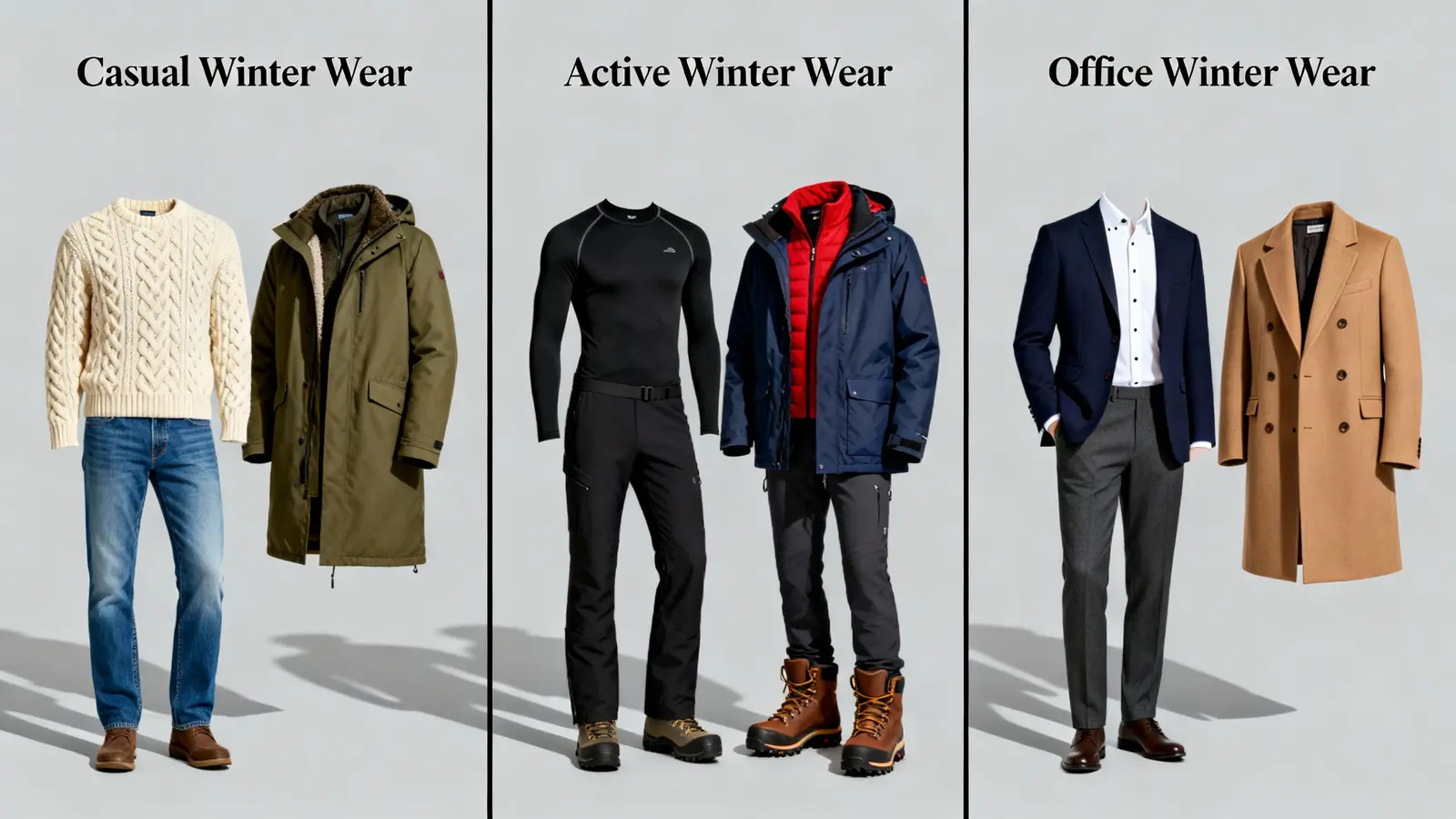
Different winter activities require different clothing strategies. What works for a casual walk won't work for skiing, and office wear needs different considerations than outdoor activities.
Casual Winter Wear:
For everyday activities like running errands, meeting friends, or casual outings:
Women's casual winter outfit:
- Base layer: Thermal long-sleeve or moisture-wicking shirt
- Middle layer: Wool sweater or fleece
- Outer layer: Stylish winter coat or parka
- Bottom: Jeans or warm pants
- Accessories: Scarf, gloves, hat, warm boots
- Style tip: Choose a coat in a color that complements your wardrobe
Men's casual winter outfit:
- Base layer: Thermal shirt or long-sleeve base layer
- Middle layer: Wool sweater or fleece jacket
- Outer layer: Winter coat or parka
- Bottom: Jeans or chinos
- Accessories: Scarf, gloves, hat, boots
- Style tip: Layer a denim or leather jacket under your coat for style
Active Winter Wear:
For outdoor activities like hiking, skiing, or winter sports:
Key considerations:
- Moisture management: You'll sweat, so wicking is crucial
- Layering flexibility: Add/remove layers as activity level changes
- Protection: Windproof and waterproof outer layer
- Mobility: Clothes shouldn't restrict movement
Active winter outfit:
- Base layer: Moisture-wicking thermal
- Middle layer: Fleece or light down vest
- Outer layer: Waterproof, breathable shell
- Bottom: Insulated, water-resistant pants
- Accessories: Technical gloves, hat, warm socks, boots
- Style tip: Technical gear can be stylish—choose pieces in colors you like
Office Winter Wear:
For professional settings where you need to look polished:
Women's office winter outfit:
- Base layer: Lightweight thermal or silk base layer
- Middle layer: Wool blazer or cardigan
- Outer layer: Trench coat or wool coat
- Bottom: Wool pants or warm tights under skirt
- Accessories: Professional scarf, gloves, boots
- Style tip: Keep outerwear professional—classic cuts and colors
Men's office winter outfit:
- Base layer: Lightweight thermal shirt
- Middle layer: Wool sweater or vest
- Outer layer: Wool coat or trench coat
- Bottom: Wool pants or chinos
- Accessories: Professional scarf, gloves, dress boots
- Style tip: Layer a blazer under your coat for a polished look
Evening Winter Wear:
For social events where you want to look stylish:
Key considerations:
- Style over function: May prioritize appearance
- Layering strategy: Can remove coat indoors
- Accessories: Important for completing the look
Evening winter outfit:
- Base layer: Lightweight, stylish base layer
- Middle layer: Elegant sweater or blazer
- Outer layer: Stylish coat (wool, cashmere, or designer)
- Bottom: Dress pants or warm tights
- Accessories: Elegant scarf, gloves, dress boots
- Style tip: Choose a statement coat that works as part of your outfit
Winter Fabric Guide: What Works Best
Understanding winter fabrics helps you make better choices. Different fabrics have different properties, and choosing the right ones for your needs ensures comfort and style.
Natural Fibers:
Wool:
- Properties: Excellent insulation, breathable, naturally moisture-wicking, odor-resistant
- Best for: Sweaters, coats, base layers (merino), accessories
- Types: Merino (soft, fine), Cashmere (luxurious), Lambswool (durable)
- Care: Hand wash or dry clean, depending on type
- Pros: Natural, sustainable, performs when wet
- Cons: Can be itchy (except merino), requires care
Down:
- Properties: Exceptional warmth-to-weight ratio, compressible, lightweight
- Best for: Coats, vests, sleeping bags
- Fill power: Higher = warmer (600-900+ fill power)
- Care: Machine washable (with care), air dry
- Pros: Lightweight, very warm, compressible
- Cons: Loses insulation when wet, can be expensive
Silk:
- Properties: Lightweight, smooth, natural insulation
- Best for: Base layers, luxury items
- Care: Hand wash, delicate cycle
- Pros: Lightweight, smooth, natural
- Cons: Less durable, requires care, expensive
Synthetic Fibers:
Polyester/Fleece:
- Properties: Lightweight, warm, dries quickly, affordable
- Best for: Middle layers, activewear, budget options
- Care: Machine washable, easy care
- Pros: Affordable, easy care, performs when wet
- Cons: Can retain odors, less breathable than wool
Synthetic Insulation (Primaloft, Thinsulate):
- Properties: Performs when wet, lightweight, compressible
- Best for: Coats, jackets, when down isn't suitable
- Care: Machine washable
- Pros: Works when wet, affordable, ethical alternative to down
- Cons: Slightly heavier than down, may not last as long
Nylon/Polyester Shell:
- Properties: Windproof, water-resistant, breathable
- Best for: Outer layers, rain protection
- Care: Machine washable, may need re-treatment
- Pros: Excellent protection, lightweight
- Cons: Can be less breathable, may need maintenance
Fabric Combinations:
Best combinations:
- Merino base + Wool middle + Down outer: Maximum warmth
- Synthetic base + Fleece middle + Shell outer: Active, wet conditions
- Silk base + Wool middle + Wool coat: Classic, stylish
- Thermal base + Down vest + Parka: Versatile, adjustable
Color and Style: Looking Good in Winter
Winter doesn't have to mean dark, drab colors. While classic winter colors like black, gray, and navy are always stylish, you can also incorporate color and style into your winter wardrobe.
Classic Winter Colors:
Black:
- Versatile: Goes with everything
- Slimming: Flattering on most people
- Timeless: Never goes out of style
- Best for: Coats, pants, boots, accessories
Gray:
- Neutral: Easy to combine
- Modern: Contemporary feel
- Versatile: Works in any setting
- Best for: Sweaters, coats, pants
Navy:
- Classic: Timeless elegance
- Professional: Great for office
- Versatile: Pairs with many colors
- Best for: Coats, blazers, pants
Beige/Camel:
- Elegant: Sophisticated look
- Warm: Complements skin tones
- Versatile: Works with many colors
- Best for: Coats, sweaters, accessories
Adding Color:
Accent colors can brighten winter outfits:
- Red: Bold, confident, energizing
- Burgundy: Rich, sophisticated, warm
- Emerald green: Fresh, modern, eye-catching
- Royal blue: Classic, confident, versatile
- Mustard yellow: Trendy, warm, cheerful
How to add color:
- Scarves: Easy way to add color
- Sweaters: Statement piece
- Gloves: Small but impactful
- Boots: Functional and stylish
- Accessories: Hats, bags, jewelry
Style Tips:
Fit matters: Even in winter, clothes should fit well. Bulky doesn't mean oversized—choose pieces that fit your body.
Proportions: Balance heavier pieces with lighter ones. If you're wearing a bulky coat, keep other layers more fitted.
Texture: Mix textures for visual interest—wool, leather, knit, smooth fabrics.
Details: Buttons, zippers, pockets, and other details add style to functional pieces.
Winter Accessories: The Finishing Touches
Accessories are crucial for winter wear—they're both functional and stylish. The right accessories complete your outfit and keep you warm.
Scarves:
Types:
- Wool scarves: Warm, classic, versatile
- Cashmere scarves: Luxurious, soft, warm
- Infinity scarves: Easy to wear, no ends to manage
- Blanket scarves: Large, cozy, statement piece
How to wear:
- Classic wrap: Once around the neck
- Double wrap: Twice for extra warmth
- Drape style: Loose, elegant
- Knot style: Tied for a polished look
Gloves:
Types:
- Leather gloves: Classic, stylish, warm
- Wool gloves: Warm, comfortable, affordable
- Touchscreen gloves: Modern, convenient
- Mittens: Warmer than gloves, less dexterity
Features to consider:
- Insulation: For cold days
- Waterproof: For wet conditions
- Touchscreen compatible: For phone use
- Grip: For holding things securely
Hats:
Types:
- Beanies: Casual, warm, versatile
- Wool caps: Classic, warm, stylish
- Trapper hats: Very warm, covers ears
- Berets: Stylish, less warm but fashionable
Considerations:
- Covers ears: Important in cold wind
- Fits well: Shouldn't be too tight or loose
- Material: Wool or fleece for warmth
- Style: Choose based on your overall look
Boots:
Types:
- Ankle boots: Versatile, stylish, warm
- Knee-high boots: Very warm, stylish
- Snow boots: Functional, warm, waterproof
- Dress boots: Professional, warm, stylish
Features:
- Insulation: For cold days
- Waterproof: For wet conditions
- Traction: For icy surfaces
- Style: Should complement your outfits
Socks:
Types:
- Wool socks: Warm, moisture-wicking
- Thermal socks: Extra warm
- Compression socks: For circulation
- Merino wool: Best performance
Tips:
- Layer socks: For extreme cold
- Change socks: If they get wet
- Right thickness: For your boots
Kids Winter Wear: Keeping Children Warm and Comfortable
Children have different winter wear needs than adults. They're often more active, may not communicate when they're cold, and need clothes that allow movement and play.
Key considerations for kids:
Layering for kids:
- Base layer: Moisture-wicking (they'll be active)
- Middle layer: Warm but not bulky (allows movement)
- Outer layer: Waterproof and durable (they'll play in snow)
Fit:
- Not too tight: Restricts movement
- Not too loose: Can get caught, less warm
- Room to grow: But not so much it's unsafe
Safety:
- Bright colors: For visibility
- Reflective elements: For low-light conditions
- No drawstrings: Safety hazard
- Proper footwear: Prevents slips and falls
Kids winter outfit essentials:
- Insulated coat: Warm, waterproof, durable
- Snow pants: For playing in snow
- Warm boots: Insulated, waterproof, good traction
- Gloves or mittens: Warm, waterproof, easy to put on
- Hat: Covers ears, stays on
- Scarf or neck warmer: Warm, safe (no long ends)
Using AI for kids winter wear:
- Size prediction: Kids grow fast—AI can help predict sizing
- Outfit planning: See how pieces work together
- Wardrobe optimization: Make the most of what you have
Using AI Technology for Winter Outfit Planning
Modern AI technology makes winter outfit planning easier than ever. Klodsy and similar platforms can help you create perfect winter outfits by analyzing your wardrobe and weather conditions.
How AI helps with winter wear:
1. Wardrobe Analysis:
- Identifies winter pieces in your wardrobe
- Suggests combinations that work together
- Highlights gaps in your winter wardrobe
- Recommends pieces to add
2. Weather Integration:
- Considers temperature for appropriate layering
- Accounts for wind and precipitation
- Suggests adjustments for different times of day
- Plans for indoor/outdoor transitions
3. Layering Suggestions:
- Recommends base layers for conditions
- Suggests middle layers for warmth
- Advises outer layers for protection
- Creates complete outfits with all layers
4. Virtual Try-On:
- See how pieces look together before buying
- Test different combinations without purchasing
- Check fit and style before committing
- Compare options side-by-side
5. Style Personalization:
- Learns your preferences over time
- Suggests styles that match your taste
- Considers your activities and needs
- Adapts to your lifestyle
Real-world example:
"I used to struggle with winter outfits—either I was freezing or I looked like I was wearing a sleeping bag. Klodsy helped me understand layering and showed me how different pieces work together. Now I have winter outfits that are both warm and stylish, and I can see how they look before I even buy the pieces." — Michael T., Software Engineer, Chicago
Common Winter Wear Mistakes and How to Avoid Them
Many people make the same winter wear mistakes year after year. Learning these common errors helps you avoid them and stay warm and stylish.
Mistake 1: Wearing Cotton as a Base Layer
The problem: Cotton absorbs moisture and holds it against your skin, making you feel cold and clammy.
The solution: Use moisture-wicking materials like merino wool or synthetic fabrics for base layers. Save cotton for outer layers or mild conditions.
Mistake 2: Over-Layering
The problem: Too many layers can make you sweat, which then makes you cold. You also lose mobility and look bulky.
The solution: Use the three-layer system properly. Choose the right thickness for each layer based on conditions. You should be able to move comfortably.
Mistake 3: Ignoring Your Extremities
The problem: Focusing on your torso but neglecting hands, feet, and head leads to overall discomfort.
The solution: Invest in quality gloves, warm socks, and a good hat. These small items make a huge difference in comfort.
Mistake 4: Not Adjusting for Activity Level
The problem: Dressing the same for sitting in an office vs. walking outside leads to discomfort.
The solution: Dress in layers you can adjust. Remove layers when active, add them when stationary. Consider your day's activities when planning outfits.
Mistake 5: Choosing Style Over Function
The problem: Picking pieces that look good but don't actually keep you warm.
The solution: Balance is key. Choose pieces that are both functional and stylish. Modern winter wear offers both—you don't have to sacrifice one for the other.
Mistake 6: Not Considering Indoor Temperatures
The problem: Dressing for outside but then being too hot indoors.
The solution: Layer strategically. Choose pieces you can remove indoors. Consider your destination's temperature when planning.
Winter Wear Trends 2025
Winter fashion in 2025 combines functionality with cutting-edge style. This year's trends focus on sustainable materials, technical innovation, and timeless elegance.
Sustainable Winter Fashion:
- Recycled materials: Down alternatives, recycled polyester
- Ethical sourcing: Responsible wool, sustainable production
- Long-lasting pieces: Quality over quantity
- Repairable design: Clothes that last
Technical Innovation:
- Smart fabrics: Temperature-regulating materials
- Advanced insulation: Lighter, warmer options
- Improved breathability: Stay warm without sweating
- Better waterproofing: More effective protection
Timeless Elegance:
- Classic cuts: Coats and jackets that never go out of style
- Neutral colors: Versatile, long-lasting choices
- Quality materials: Investment pieces that last
- Refined details: Subtle but impactful design elements
Color Trends:
- Rich burgundy: Sophisticated, warm
- Deep forest green: Natural, calming
- Warm camel: Elegant, versatile
- Classic navy: Timeless, professional
Style Trends:
- Oversized coats: Comfortable, modern
- Puffer vests: Versatile layering piece
- Wool everything: Sweaters, coats, accessories
- Technical luxury: High-end performance wear
Building Your Winter Wardrobe: Investment Strategy
Building a complete winter wardrobe is an investment. Here's how to approach it strategically to get the most value.
Priority 1: Outerwear (Highest Investment)
Why: Your coat is your primary protection and most visible piece.
Investment strategy:
- One excellent coat is better than three mediocre ones
- Choose versatile: Color and style that works with your wardrobe
- Consider quality: Will last multiple seasons
- Budget: 40-50% of winter wardrobe budget
Priority 2: Base Layers (Moderate Investment)
Why: Foundation of your layering system, used frequently.
Investment strategy:
- Multiple pieces: You'll need several
- Quality matters: Better performance, longer lasting
- Versatility: Choose pieces that work in different conditions
- Budget: 20-25% of winter wardrobe budget
Priority 3: Middle Layers (Moderate Investment)
Why: Provide warmth and style, used frequently.
Investment strategy:
- Mix of options: Different weights and styles
- Quality and quantity: Balance both
- Versatility: Pieces that layer well
- Budget: 20-25% of winter wardrobe budget
Priority 4: Accessories (Lower Investment)
Why: Complete outfits, used frequently, can be replaced more easily.
Investment strategy:
- Quality basics: Good scarf, gloves, hat
- Variety: Multiple options for different looks
- Function: Choose pieces that actually work
- Budget: 10-15% of winter wardrobe budget
Budget Allocation Example:
Total winter wardrobe budget: $1,000
- Coat: $400-500 (one excellent piece)
- Base layers: $200-250 (multiple pieces)
- Middle layers: $200-250 (sweaters, fleeces)
- Accessories: $100-150 (scarf, gloves, hat, socks)
This strategy ensures you have quality pieces that last and work together.
Winter Wear Care and Maintenance
Proper care extends the life of your winter wear and maintains performance. Here's how to care for different types of winter clothing.
Wool Care:
Washing:
- Check label: Some wool is machine washable, some requires dry cleaning
- Cold water: Always use cold water
- Gentle detergent: Wool-specific or mild detergent
- Lay flat to dry: Prevents stretching and shrinking
Storage:
- Clean before storing: Prevents moths and odors
- Fold, don't hang: Prevents stretching
- Breathable container: Prevents moisture buildup
- Cedar or lavender: Natural moth deterrents
Down Care:
Washing:
- Machine washable: Use front-loading machine, gentle cycle
- Special detergent: Down-specific detergent
- Dry thoroughly: Use dryer with tennis balls to fluff
- Low heat: Prevents damage to down
Storage:
- Clean and dry: Essential before storing
- Loose storage: Don't compress unnecessarily
- Breathable bag: Allows air circulation
- Avoid compression: Can damage down clusters
Synthetic Care:
Washing:
- Machine washable: Usually easy care
- Follow label: Check specific instructions
- Avoid fabric softener: Can reduce performance
- Air dry or low heat: Prevents damage
Storage:
- Clean before storing: Prevents odors
- Fold or hang: Depending on piece
- Avoid direct sunlight: Can fade colors
- Dry storage: Prevents mildew
Waterproof Treatment:
When to re-treat:
- Water no longer beads: Needs re-treatment
- After washing: Some treatments wash out
- Seasonally: Before winter season
How to re-treat:
- Spray-on treatments: Easy to apply
- Wash-in treatments: Last longer
- Follow instructions: Each product is different
Conclusion: Master Winter Wear, Master Cold Weather
Winter wear doesn't have to be complicated. With the right knowledge, quality pieces, and modern technology, you can stay warm and stylish all winter long.
Key takeaways:
- Layer properly: Base, middle, outer layers
- Choose right fabrics: Wool, down, synthetics for different needs
- Invest wisely: Quality outerwear is worth it
- Accessorize: Small items make a big difference
- Use technology: AI can help plan perfect outfits
- Care for pieces: Proper maintenance extends life
The three-layer system is your foundation. Master it, and you can adapt to any cold-weather situation. Combine it with quality pieces, smart accessories, and modern technology, and you'll never have to choose between warmth and style again.
Ready to master winter wear?
Ready for the season ahead? Explore our Spring Outfits 2026: Seasonal Style Guide & Trends to plan your transition from winter layers to spring style.
Related Articles
What to Wear Ice Skating: Cute & Warm Outfit Ideas
What to wear ice skating for indoor and outdoor rinks. Layering tips, cute date outfits, best fabrics, and what to avoid so you stay warm and move freely.
What to Wear Skiing: Complete Ski Outfit Guide 2026
Learn what to wear skiing with our complete guide. Discover ski layering systems, best materials, gear for all conditions, and what to avoid. Plan your perfect ski outfit.
Frequently Asked Questions
Everything you need to know about this topic
Layering is key for winter wear. Start with a base layer (thermal or moisture-wicking fabric), add a middle layer (sweater or fleece), and finish with an outer layer (coat or jacket). Choose fabrics like wool, down, or synthetic insulation. Klodsy can help you visualize how different winter pieces work together before you buy.