
Minimalist Style Guide: How to Dress With Intention
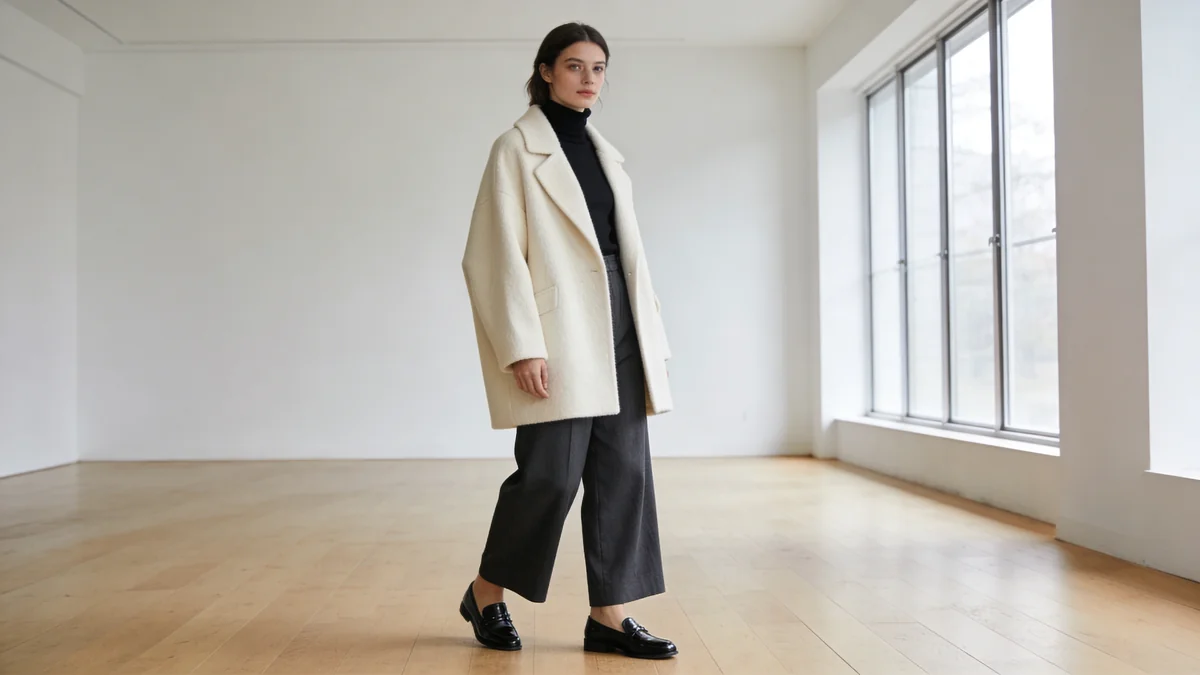
Minimalist Style Is Not About Owning Less — It Is About Looking Intentional
Minimalist style is the most misunderstood aesthetic in fashion. Most people confuse it with owning fewer clothes, wearing only black, or dressing without personality. None of that is accurate. Minimalist fashion is a deliberate design philosophy — one that uses clean silhouettes, restrained color palettes, and quality materials to create outfits that communicate confidence without clutter.
The distinction matters. A capsule wardrobe is a wardrobe strategy about quantity — owning 30 pieces that generate 100 outfits. Minimalist style is a visual language about aesthetics — how those pieces look, feel, and interact. You could build a capsule wardrobe entirely from maximalist prints. You could also own 200 pieces that all embody minimalist principles. The two concepts overlap, but they are not the same thing.
According to Trendalytics trend forecasting data, minimalist fashion is projected to grow 8-10% year-over-year through 2026, driven by Gen Z's preference for quality over quantity and the continued rise of quiet luxury. Brands like COS, Toteme, Arket, and The Row continue to report steady growth, signaling sustained demand for understated elegance even as maximalist trends dominate social media feeds.
"Minimalism isn't boring, it is about being precise," says Sophia Roe, Danish stylist and creative director featured in Vogue Scandinavia. That precision — knowing exactly what to include and what to leave out — is what separates someone who looks minimalist from someone who simply looks plain.
This guide covers the principles, palettes, silhouettes, and outfit formulas that define minimalist fashion in 2026, whether your aesthetic leans Scandinavian clean, Japanese architectural, or quiet luxury refined.
The Design Principles Behind Minimalist Fashion
Minimalist style follows a set of visual rules that distinguish it from other aesthetics. Understanding these principles is more useful than any shopping list because they allow you to evaluate any piece of clothing through a minimalist lens.
Principle 1: Clean Lines Over Ornamentation
Every minimalist garment prioritizes structure over decoration. Seams are precise. Hems are clean. Details are functional rather than decorative — a well-placed dart, a hidden button placket, a seamless pocket. Where maximalist fashion adds ruffles, embroidery, or hardware, minimalist fashion subtracts until only the essential shape remains.
Jil Sander, known as the "Queen of Clean" and one of the most influential minimalist designers in fashion history, built an entire design empire on this principle. Her work demonstrated that a perfectly cut blazer needs nothing else — no logo, no embellishment, no trend-driven detail. The cut itself is the statement.
Principle 2: Fabric as the Focal Point
When you remove pattern and embellishment, fabric quality becomes immediately visible. A minimalist white t-shirt in heavy organic cotton reads entirely differently from the same silhouette in thin, semi-transparent jersey. This is why minimalist fashion tends to cost more per piece — the fabric has nowhere to hide.
Key fabric markers of minimalist style include:
- Structured cotton and linen that hold their shape after washing
- Merino wool and cashmere knits with tight, even gauge
- Silk and silk-blend blouses with visible drape and weight
- Japanese denim with clean, raw selvedge finishes
- Technical fabrics with matte finishes and architectural drape
According to a 2025 Lyst Year in Fashion report, searches for "quality basics" and "investment pieces" increased 34% year-over-year, indicating consumers are prioritizing material quality over trend novelty — a core minimalist value.
Principle 3: Proportion as Expression
Without pattern or color contrast to create visual interest, minimalist outfits rely on proportion play. The interplay between oversized and fitted, cropped and elongated, structured and relaxed — these proportional contrasts are how minimalist dressers express individuality.
Proportion formulas that define minimalist style:
| Top Proportion | Bottom Proportion | Effect |
|---|---|---|
| Oversized blazer | Slim trouser | Architectural authority |
| Fitted knit | Wide-leg pant | Balanced elegance |
| Cropped boxy top | High-waisted trouser | Clean waistline definition |
| Relaxed shirt | Tapered pant | Effortless sophistication |
| Structured coat | Straight-leg jean | Column silhouette |
Principle 4: Intentional Restraint
The hardest minimalist principle to master is knowing when to stop. One necklace, not three. One color accent, not four. A single-texture bag rather than a bag with buckles, studs, and tassels. Phoebe Philo, the former creative director of Celine and widely regarded as the architect of modern minimalist luxury, captured this philosophy with her design ethos: "Clothes for women who live real lives." Her collections consistently proved that restraint communicates more confidence than excess.
The Minimalist Color Palette: Building Your Foundation
Color is where minimalist style becomes personal. While the aesthetic is often associated with an all-black uniform, the reality is far more nuanced. Minimalist color palettes are intentionally limited — typically 5-7 colors — but the specific colors you choose should reflect your skin tone, climate, and personality.
The Three Minimalist Palette Families
Cool Minimalist Palette: Best for cool undertones (pink, blue, or red beneath the skin surface)
| Role | Colors | Examples |
|---|---|---|
| Core neutrals | Black, charcoal, navy | Trousers, blazers, coats |
| Light neutrals | White, light gray, icy blue | Shirts, knits, dresses |
| Accent | Burgundy or forest green | One statement layer or accessory |
Warm Minimalist Palette: Best for warm undertones (yellow, golden, or peachy beneath the skin)
| Role | Colors | Examples |
|---|---|---|
| Core neutrals | Dark chocolate, espresso, olive | Trousers, blazers, coats |
| Light neutrals | Cream, sand, oatmeal | Shirts, knits, dresses |
| Accent | Terracotta or deep gold | One statement layer or accessory |
Neutral Minimalist Palette: Works for neutral undertones or those who want maximum versatility
| Role | Colors | Examples |
|---|---|---|
| Core neutrals | Black, navy, charcoal | Trousers, blazers, coats |
| Light neutrals | White, cream, taupe | Shirts, knits, dresses |
| Accent | Camel or muted sage | One statement layer or accessory |
Discovering your undertone before building a minimalist wardrobe saves significant time and money. An AI color analysis can identify your seasonal type and recommend specific shades that harmonize with your natural coloring within minutes.
The 70-20-10 Color Rule
A reliable formula for minimalist outfit color distribution:
- 70% core neutrals — your darkest, most grounding shades
- 20% light neutrals — your softest, lightest tones
- 10% accent — one deliberate pop of your chosen accent color
This ratio keeps outfits visually quiet while preventing the monotony that makes people think minimalism is boring. The accent color is not a loud print or neon hue — it is a muted, sophisticated tone that adds warmth or depth without disrupting the overall restraint.
Minimalist Wardrobe Essentials: The 15 Pieces That Define the Aesthetic
While minimalist style is not about rigid lists, certain garment types recur across every interpretation of the aesthetic. These 15 pieces form the visual vocabulary of minimalist fashion.
Tops (5 Pieces)
1. The Perfect White T-Shirt Heavy cotton, crew or boat neck, no visible branding. This single piece appears in more minimalist outfits than any other garment. Fit should be relaxed but not oversized — the silhouette should suggest ease, not sloppiness.
2. The Black Crewneck Knit Fine-gauge merino or cashmere in a clean crewneck. No cable knit, no ribbing, no visible texture patterns. The simplicity makes it appropriate for smart casual settings through weekend wear.
3. The Oversized Button-Down Shirt White or pale blue, in a crisp cotton or linen blend. Worn tucked into trousers, half-tucked into jeans, open over a tank, or belted as a dress. The oversized fit is critical — it creates the relaxed architectural drape that defines minimalist shirting.
4. The Fitted Turtleneck Black, charcoal, or cream in merino wool. The turtleneck is the most architecturally minimalist neckline — it creates a clean, unbroken line from chin to waist that serves as the foundation for layered minimalist outfits.
5. The Silk or Satin Blouse In one of your palette neutrals, with minimal detailing. A single breast pocket or a concealed placket is acceptable. Anything more disrupts the clean surface.
Bottoms (4 Pieces)
6. Tailored Wide-Leg Trousers The signature minimalist bottom. High-waisted, full-length, in a structured wool blend or heavyweight cotton. Black, charcoal, or cream. These transform any basic top into a polished minimalist outfit and transition seamlessly from office environments to evening events.
7. Straight-Leg Jeans Dark indigo or clean black, with no distressing, no fading, and no decorative stitching. The minimalist approach to denim prioritizes a clean, architectural leg line over trend-driven cuts. A mid-rise to high-rise waist maintains the elongated silhouette that minimalist style favors.
8. The Midi Skirt A-line or pencil in a structured fabric. Black or camel. Length hits mid-calf for the clean, elongated proportion that minimalist style demands. Pair with a tucked knit for an outfit that works across seasons.
9. Relaxed Tapered Trousers In linen (summer) or wool blend (winter). Lighter color than your core tailored trousers — think sand, oatmeal, or light gray. These provide the tonal contrast needed to prevent a minimalist wardrobe from reading as a uniform.
Layers and Outerwear (3 Pieces)
10. The Structured Blazer Single-breasted, minimal buttons, no pattern. Black or navy. The blazer is the minimalist's most powerful layering tool — it elevates a white t-shirt and jeans into a deliberate outfit statement. Fit should be slightly relaxed through the shoulders for a modern, unfussy silhouette.
11. The Long Coat Knee-length or longer, in wool or wool-blend. Camel, black, or charcoal. This single piece defines the minimalist aesthetic more than almost any other — a long, clean coat over simple pieces beneath creates the architectural column silhouette that Scandinavian minimalist fashion is built on. Brands like Toteme, COS, and Max Mara have made the long tailored coat a cornerstone of the aesthetic.
12. The Knit Cardigan Fine gauge, longline or cropped, in a neutral that complements your blazer color. Worn open over a fitted top, it creates the layered depth that prevents minimalist outfits from looking flat without adding visual noise.
Footwear and Accessories (3 Pieces)
13. Clean Leather Loafers Black or tan, with no hardware or tassels. The loafer is the minimalist shoe — structured enough for professional settings, comfortable enough for daily wear, and clean enough to disappear into any outfit.
14. Architectural Leather Bag One bag in a structured, geometric shape. No visible logos, no dangling charms, no excessive hardware. The quality of the leather and the precision of the construction are the only design elements. Black or a warm neutral that complements your palette.
15. One Signature Jewelry Piece A single gold or silver piece — a chain, a cuff, or a pair of hoops — that you wear consistently. Minimalist style treats jewelry as a personal signature rather than an outfit-specific accessory. Choose one metal tone and commit to it across your wardrobe.
Minimalist Outfit Formulas: 5 Combinations That Always Work
Formulas eliminate decision fatigue while keeping you within the minimalist aesthetic. Each of these combinations uses the essential pieces above and can be adapted across seasons with simple swaps.
Formula 1: The Column
Pieces: Fitted turtleneck + wide-leg trousers + long coat + loafers Color approach: Monochromatic or tonal (all black, or cream-to-camel gradient) Why it works: Creates one unbroken vertical line from shoulder to floor. This is the signature minimalist silhouette — elongating, architectural, and effortlessly powerful. Season swap: Replace the coat with the structured blazer for spring and summer.
Formula 2: The Contrast
Pieces: White oversized shirt + black straight-leg jeans + blazer + clean sneakers Color approach: High-contrast black and white Why it works: Black and white is the most fundamentally minimalist color combination. The oversized shirt against slim jeans creates the proportion play that gives minimalist outfits their visual tension. Season swap: Lose the blazer in summer; add the long coat in winter.
Formula 3: The Texture Mix
Pieces: Silk blouse + wool wide-leg trousers + knit cardigan + leather loafers Color approach: Tonal within your chosen palette family (e.g., cream silk + oatmeal wool + sand knit) Why it works: When colors are similar, texture becomes the source of visual interest. The interplay of silk sheen, wool matte, and knit softness creates depth without breaking minimalist restraint. This approach is especially effective for all-black outfits where texture variation is essential. Season swap: Switch silk for cotton jersey in summer; add a cashmere layer in winter.
Formula 4: The Relaxed Tailored
Pieces: Perfect white t-shirt + tailored wide-leg trousers + structured blazer + loafers Color approach: White top against dark bottom, blazer matching trousers Why it works: Combines the most casual piece (t-shirt) with the most structured piece (blazer) to create the tension between relaxed and polished that defines modern minimalism. This formula works for creative workplaces, dinners, and weekend outings equally well. Season swap: Replace the blazer with the long coat in winter; remove the blazer entirely in summer.
Formula 5: The Weekend Minimalist
Pieces: Crewneck knit + straight-leg jeans + clean sneakers Color approach: Neutral knit (cream, gray, or camel) with dark denim Why it works: Proves that minimalist style applies to fully casual settings, not just polished occasions. The quality of the knit and the cleanness of the sneakers elevate what could be a generic casual outfit into a deliberate minimalist one. Season swap: Layer the knit cardigan over the crewneck in transitional weather.
Minimalist Style vs. Maximalist Style: Understanding the Spectrum
Google search data shows "minimalist style vs maximalist style" as a rising query, reflecting genuine consumer curiosity about where these aesthetics diverge and whether elements of each can coexist.
The Key Differences
| Element | Minimalist Style | Maximalist Style |
|---|---|---|
| Color palette | 5-7 muted, coordinated colors | Unlimited, bold, contrasting |
| Pattern | Rarely used; solids dominate | Prints, florals, graphics, mixing |
| Silhouette | Clean, architectural, structured | Layered, dramatic, experimental |
| Accessories | One or two quality pieces | Stacked, mixed, abundant |
| Branding | Invisible or absent | Often visible, logo-forward |
| Fabric focus | Texture and weight over print | Pattern and color over texture |
| Philosophy | "What can I remove?" | "What can I add?" |
Where They Meet: The Modern Middle Ground
The fashion industry in 2026 is not purely minimalist or maximalist — it occupies an increasingly interesting middle ground. As Fashion Times reports, the quiet luxury movement has merged minimalism with craftsmanship-forward luxury, creating an aesthetic that is restrained but rich, simple but not austere.
McKinsey's State of Fashion report notes that 60% of Gen Z consumers prioritize sustainability in fashion choices — a value that aligns naturally with minimalist consumption patterns even among consumers who do not identify as minimalists. The practical result is that many people are adopting minimalist principles (fewer purchases, higher quality, longer wear cycles) without necessarily adopting the full minimalist aesthetic.
You do not need to choose one end of the spectrum. Many well-dressed people maintain a minimalist foundation — clean basics, neutral palette, quality fabrics — while incorporating selective maximalist moments through a statement earring, a patterned scarf, or a bold shoe. The key is intentionality either way.
Scandinavian Minimalism vs. Japanese Minimalism vs. Quiet Luxury
Minimalist style is not monolithic. Three distinct interpretations dominate the fashion landscape in 2026, each with its own visual language and cultural roots.
Scandinavian Minimalist Fashion
Origin: Denmark, Sweden, Norway Key brands: COS, Toteme, Acne Studios, Filippa K, Arket Defining characteristics: Warm neutrals, functional fabrics, relaxed tailoring, hygge-influenced comfort
Scandinavian minimalism is the warmest interpretation of the aesthetic. Where other minimalist traditions favor stark contrast, Scandi style embraces cream, oatmeal, soft gray, and camel — a palette drawn from Nordic light and landscape. The silhouettes are relaxed but structured, reflecting the Nordic philosophy that clothes should serve life rather than demand attention.
Jenny Mustard, Swedish minimalist author of Simple Matters: A Scandinavian's Approach to Work, Home, and Style, describes this approach as treating your wardrobe the same way Scandinavian designers treat interiors — every element functional, every aesthetic choice deliberate, nothing included without purpose.
Japanese Architectural Minimalism
Origin: Tokyo, Japan Key brands: Comme des Garcons (early work), Issey Miyake, Yohji Yamamoto, Muji Defining characteristics: Black-dominant palette, experimental proportions, architectural draping, asymmetry within simplicity
Japanese minimalist fashion takes restraint further than its Scandinavian counterpart, often working in an exclusively monochrome palette with dramatically oversized or asymmetric silhouettes. The focus is on the relationship between body and fabric — how cloth moves, falls, and creates shape in motion.
Quiet Luxury Minimalism
Origin: Global luxury market Key brands: The Row, Brunello Cucinelli, Loro Piana, Khaite Defining characteristics: Ultra-premium fabrics, invisible branding, precise tailoring, whisper-quiet color palettes
Quiet luxury represents minimalism at its most refined and expensive. According to Google Trends data tracked by Accio market research, search interest in quiet luxury items remains elevated through 2026, with particular growth in cashmere, unbranded leather goods, and tailored basics. The aesthetic removes every visible marker of luxury — no logos, no obvious branding, no recognizable patterns — and replaces them with fabric quality and construction precision that only the wearer (and other connoisseurs) can identify.
Simon-Kucher's 2025 luxury industry study found that the quiet luxury mindset has accelerated noticeably in the US market, with consumers increasingly defining luxury through material quality and craftsmanship rather than brand visibility.
Common Minimalist Style Mistakes and How to Avoid Them
Mistake 1: Confusing Minimalism With Boring
The problem: Wearing the same silhouette in the same color without variation creates a uniform, not a style.
The fix: Use the proportion and texture principles outlined above. An all-black outfit with a silk top, wool trousers, and leather accessories reads entirely differently from an all-black outfit with a cotton t-shirt, cotton pants, and canvas sneakers. Same color, different story.
Mistake 2: Neglecting Fit
The problem: Minimalist garments with poor fit look cheap and shapeless. When fabric and silhouette are the only design elements, imperfect fit is immediately noticeable.
The fix: Budget for tailoring. According to a 2025 analysis by Fashionista, tailoring a garment typically costs $15-40 and can increase its perceived value by 200-300%. A $30 thrifted blazer tailored to your shoulders and waist will outperform a $300 off-the-rack blazer that does not fit. In minimalist style, fit is not a nice-to-have — it is the entire point.
Mistake 3: Buying Cheap Basics and Calling It Minimalist
The problem: Thin fabrics, loose stitching, and flimsy construction are magnified in minimalist styling because there are no distracting elements to draw the eye elsewhere.
The fix: Invest in fewer, better basics. The cost-per-wear equation favors quality: a $60 t-shirt worn 200 times costs $0.30 per wear, while a $10 t-shirt that pills after 15 washes costs $0.67 per wear. Minimalist wardrobe essentials are designed to be worn repeatedly — they need to withstand that use.
Mistake 4: Ignoring Care and Maintenance
The problem: Wrinkled linen, pilled knits, and scuffed shoes destroy the minimalist aesthetic instantly. With no visual complexity to mask wear-and-tear, every flaw is on display.
The fix: Develop garment care habits that match your investment. Steam instead of iron for delicate fabrics. Use cashmere combs on knits. Clean and condition leather quarterly. Store off-season pieces properly. Garment care is not optional in minimalist fashion — it is maintenance of the aesthetic itself.
Mistake 5: Copying Instead of Adapting
The problem: Replicating a Scandinavian minimalist palette of cream and oatmeal when your skin tone calls for cool jewel tones, or forcing an all-black Japanese-inspired wardrobe when warm earthtones make you glow.
The fix: Apply minimalist principles to YOUR best colors and body proportions. Use your color analysis results to determine which neutrals and accent shades work for you, then build your palette from there. The principles are universal; the specific colors are personal.
How to Transition to Minimalist Style From Any Starting Point
You do not need to overhaul your wardrobe overnight. A gradual, intentional transition produces better results and less waste.
Phase 1: Audit and Identify (Week 1-2)
Pull everything out of your closet and identify pieces that already align with minimalist principles:
- Solid colors in neutrals
- Clean silhouettes without excessive detailing
- Quality fabrics that have held up well
- Pieces that coordinate with many other items
Most people discover they already own 30-40% of a minimalist foundation. The goal is to recognize what you have before buying anything new.
Phase 2: Define Your Palette (Week 2-3)
Choose your 5-7 colors based on:
- Your undertone (cool, warm, or neutral)
- Your climate (warmer palettes for warm climates, darker palettes for cooler ones)
- Your lifestyle (more professional requires more dark neutrals)
- Your preference (there is no wrong answer within the minimalist spectrum)
Phase 3: Strategic Editing (Week 3-4)
Remove pieces that conflict with your chosen palette or violate minimalist principles:
- Loud prints or graphics
- Heavily branded items
- Pieces with excessive hardware, embellishment, or detailing
- Colors that sit outside your defined palette
Do not discard sentimental or high-quality pieces — store them separately. You can revisit this decision later.
Phase 4: Targeted Additions (Month 2-3)
Identify the essential pieces you are missing from the 15-item framework above and acquire them one at a time. Prioritize:
- The piece that creates the most new outfit combinations
- The piece that fills the biggest gap in your current wardrobe
- The piece you will wear most frequently based on your actual lifestyle
RawShot AI's 2026 Fashion Overconsumption Report found that the average person wears only 20-30% of their wardrobe regularly. A minimalist transition done right should reverse that ratio — you should be wearing 80-90% of what you own, regularly.
Using an AI outfit planner like Klodsy can accelerate this process by showing you exactly which existing pieces align with minimalist styling and which new additions would maximize your outfit options.
Minimalist Style Across Seasons: Adapting Without Losing the Aesthetic
Spring Minimalist
Foundation: Light knits, tailored trousers, trench or light coat Palette shift: Move from dark core neutrals toward lighter neutrals (black to charcoal, navy to light gray) Key fabric: Lightweight wool, cotton, linen blends Layering approach: Light cardigan or unstructured blazer over fitted base layers
Summer Minimalist
Foundation: Linen separates, silk tanks, cotton dresses Palette shift: Lightest version of your palette (cream, sand, white, pale gray) Key fabric: Linen, silk, lightweight cotton Layering approach: Minimal — let single pieces carry the outfit. An architectural linen dress or perfectly fitted trousers with a silk tank needs nothing else.
Fall Minimalist
Foundation: Knit layers, structured blazers, ankle boots Palette shift: Return to richer, deeper tones (camel, chocolate, charcoal, burgundy) Key fabric: Merino wool, cashmere, heavier cotton Layering approach: This is minimalism's strongest season. The combination of textures (wool over cotton over silk) creates the depth that makes minimalist outfits sing.
Winter Minimalist
Foundation: Long coat, turtleneck, wide-leg wool trousers Palette shift: Deepest iteration of your palette (black, darkest neutral, cream for contrast) Key fabric: Heavy wool, cashmere, leather Layering approach: The Column formula (turtleneck + wide-leg trouser + long coat) reaches its peak expression here. A single scarf in your accent color adds the only detail needed.
Building a Minimalist Wardrobe With AI
AI fashion tools have become particularly useful for minimalist styling because the aesthetic's rules — color cohesion, proportion balance, versatility scoring — are precisely the kind of analysis that AI excels at.
What AI brings to minimalist wardrobe building:
- Color palette validation: Upload your wardrobe and see whether your pieces actually stay within your defined palette, or if stray colors are breaking the cohesion
- Outfit generation within constraints: Ask for outfit combinations using only your minimalist-approved pieces and see options you had not considered
- Gap analysis: Identify which single addition would create the most new minimalist outfit combinations from your existing wardrobe
- Proportion checking: Virtual try-on shows how different proportion combinations actually look on your body before you commit
The minimalist philosophy of intentional, considered choices applies to technology adoption too. Rather than scrolling through endless inspiration feeds, a tool like Klodsy can show you concrete outfit options from the clothes you already own — helping you dress minimalist with what is in your closet right now.
The Bottom Line: Minimalist Style Is a Framework, Not a Limitation
Minimalist fashion succeeds because it replaces daily uncertainty with a clear visual framework. When your color palette is defined, your silhouettes are understood, and your quality standards are established, getting dressed becomes an act of selection rather than creation. You are choosing from proven options, not inventing from scratch each morning.
The global fashion industry produces 100 billion garments annually, while the average garment is worn only 7 times before disposal, according to the UN Alliance for Sustainable Fashion. Minimalist style offers a personal alternative to this cycle — not through deprivation, but through a clear understanding of what actually looks good on you and why.
Whether you adopt the full Scandinavian palette, the Japanese architectural approach, or the quiet luxury interpretation, the principles remain the same: clean lines, quality materials, intentional color, and the confidence that comes from knowing every piece in your wardrobe earns its place.
Start with one formula. Master it. Then expand.
Related Reading
- Capsule Wardrobe AI Planner: Build a Minimalist Closet — The companion guide to reducing wardrobe quantity while maximizing outfit options
- AI Color Analysis: Find Your Perfect Color Palette — Identify the specific neutrals and accent shades that work for your coloring
- Smart Casual Outfit Ideas: What to Wear for Any Occasion — How minimalist pieces translate into smart casual dressing
- Black Outfit Ideas: How to Style All Black Looks — Master the monochrome approach with texture and proportion techniques
- Office Outfit Ideas: What to Wear to Work — Apply minimalist principles to professional dressing
Related Articles
What to Wear Golfing: Dress Code Guide for Every Course
What to wear golfing for women and men, from public courses to country clubs. Golf dress codes, outfit formulas, tournament attire, and seasonal tips.
Street Style Outfits: Your Complete Guide for 2026
Master street style outfits with layering formulas, sneaker pairings, and 2026 streetwear trends. Practical urban outfit ideas for beginners and beyond.
Vintage Clothing Style Guide: How to Wear Retro
Master vintage clothing style with era-by-era outfit formulas. Learn how to mix retro and modern pieces, shop thrift stores, and build a vintage wardrobe that works.
Frequently Asked Questions
Everything you need to know about this topic
Minimalist style is a fashion aesthetic built on clean lines, neutral color palettes, quality fabrics, and intentional simplicity. Unlike capsule wardrobes which focus on reducing quantity, minimalist style is about a specific visual language — structured silhouettes, restrained details, and pieces that let fabric and fit speak louder than logos or embellishment.