
Capsule Wardrobe AI Planner: Build a Minimalist Closet
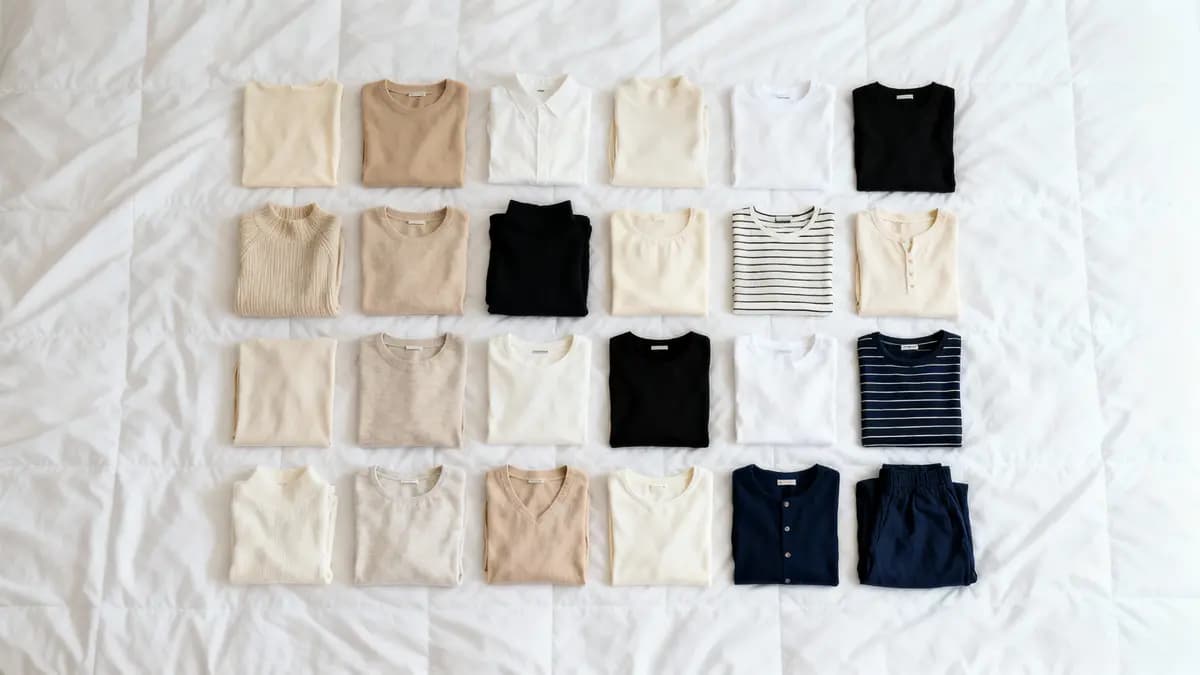
The Paradox of the 120-Item Closet: More Clothes, Fewer Outfits
The average American owns 120 clothing items but wears only 20% of them regularly. That means 96 pieces sit untouched while their owners stare at stuffed closets declaring they have nothing to wear. This is not a storage problem. It is a curation problem.
Here is the mathematics that changed how I think about wardrobes: a well-curated 30-piece capsule wardrobe can generate over 100 unique outfit combinations. Meanwhile, a 120-piece random collection might produce only 15-20 outfits that actually work because nothing coordinates.
The difference is intentionality. Most wardrobes grow by accumulation: sales, impulses, gifts, trends. A capsule wardrobe grows by design: each piece selected for maximum versatility and coordination with everything else you own.
Why 2026 is the year for capsule wardrobes:
- AI can now calculate exact outfit combinations from your clothes
- Apps track what you actually wear versus what you think you wear
- Virtual try-on lets you test combinations before committing
- Sustainability awareness has made intentional consumption desirable
- Decision fatigue research shows fewer choices improve daily life
"I went from 200+ items to 45. My morning routine dropped from 25 minutes to 4. I thought I would miss the variety. I don't. I have more outfit options now than I ever had before because everything actually works together." — Jennifer M., Teacher
The Science of Wardrobe Mathematics: Why Capsules Create More Options
Understanding the math behind capsule wardrobes reveals why less truly becomes more.
The Combination Calculation
Formula for outfit potential: Tops × Bottoms × Layers × Shoes = Total Combinations
Example: Typical 120-item wardrobe:
- 40 tops (but only 10 coordinate broadly)
- 25 bottoms (but only 6 match most tops)
- 30 layers (but only 8 work with multiple outfits)
- 20 shoes (but only 4 are versatile)
Effective combinations: 10 × 6 × 8 × 4 = 1,920 theoretical, but realistically 30-50 actual wearable outfits due to style clashes, season mismatches, and formality conflicts.
Example: Well-built 30-item capsule:
- 10 tops (all coordinate with all bottoms)
- 5 bottoms (all work with all tops)
- 5 layers (all complement base pieces)
- 5 shoes (covering all formality levels)
Effective combinations: 10 × 5 × 5 × 5 = 1,250 combinations, with 90%+ actually wearable.
The Coordination Factor
Random wardrobes suffer from the orphan piece problem: items that only work with one or two other things. AI analysis reveals that typical closets contain:
| Piece Category | Average Items | Items Used Regularly | Orphan Pieces |
|---|---|---|---|
| Tops | 35-45 | 8-12 | 15-25 |
| Bottoms | 15-25 | 4-7 | 8-12 |
| Dresses | 8-15 | 2-4 | 5-10 |
| Outerwear | 10-15 | 3-5 | 5-8 |
| Shoes | 15-25 | 4-6 | 8-15 |
The capsule difference: Zero orphan pieces. Every item works with at least 5 other items in the wardrobe, creating exponential combination potential.
How AI Revolutionizes Capsule Wardrobe Building
Traditional capsule advice relies on subjective guidance: "Keep what sparks joy" or "Choose versatile neutrals." AI brings objectivity and precision to the process.
What AI Capsule Planners Actually Calculate
1. Versatility Scoring Every piece receives a score based on:
- Number of items it pairs with successfully
- Occasions it can serve (casual through formal)
- Seasons it works in
- Color compatibility with existing pieces
- Style coherence with your wardrobe's aesthetic
Scoring example:
| Item | Pairs With | Occasions | Seasons | Color Match | Style | Total Score |
|---|---|---|---|---|---|---|
| White t-shirt | 18 items | 4 types | 4 | 95% | 100% | 98/100 |
| Black jeans | 15 items | 3 types | 3 | 90% | 95% | 92/100 |
| Statement print top | 3 items | 1 type | 2 | 40% | 60% | 35/100 |
AI identifies high-performers and flags low-scorers for potential removal.
2. Gap Analysis AI examines your wardrobe and identifies missing pieces that would dramatically increase outfit potential:
"Adding a navy blazer would create 23 new outfit combinations" "A white button-down would unlock 18 professional outfit options" "Neutral ankle boots would extend 12 outfits into fall/winter"
3. Redundancy Detection When you own five similar black tops, AI shows which ones create the most combinations. You can confidently donate the others without losing outfit variety.
4. Outfit Mathematics AI calculates every possible combination from your items, showing exact numbers rather than vague potential.
The AI Capsule Building Process
Phase 1: Complete Wardrobe Digitization
- Photograph every clothing item
- Upload to AI wardrobe app
- AI auto-categorizes by type, color, style
- Review and correct categorizations
Time required: 2-4 hours for full wardrobe
Phase 2: Analysis and Scoring
- AI runs versatility analysis
- Each piece receives scores
- Category distribution revealed
- Color palette mapped
- Style coherence assessed
Phase 3: Strategic Editing
- Remove lowest-scoring pieces
- Identify category imbalances
- Flag orphan pieces
- Keep proven high-performers
Phase 4: Gap Identification
- AI suggests specific missing pieces
- Recommendations include ideal colors
- Style matches to existing wardrobe
- Estimated combination increase per addition

The 30-Piece Capsule Wardrobe Blueprint
Here is a proven structure that AI analysis consistently validates as high-performing:
Foundation Layer: 13 Pieces
Tops (7 pieces):
| Type | Color Strategy | Versatility Role |
|---|---|---|
| 2 neutral basics | White + black/navy | Universal base |
| 2 light tops | Cream, soft gray, blush | Elevated casual |
| 3 accent color tops | Your palette colors | Personality pieces |
Bottoms (4 pieces):
| Type | Color | Versatility Role |
|---|---|---|
| Classic jeans | Dark indigo or black | Casual anchor |
| Neutral trouser | Navy, gray, or camel | Professional base |
| Casual pant | Chinos or relaxed fit | Weekend versatility |
| Alternative bottom | Skirt or alternate style | Variety option |
Dresses (2 pieces):
| Type | Style | Versatility Role |
|---|---|---|
| Casual day dress | Simple silhouette | Easy summer option |
| Dress-up dress | Elevated fabric/cut | Events and dates |
Layering Layer: 7 Pieces
Knits (3 pieces):
- Lightweight cardigan (neutral)
- Pullover sweater (your best color)
- Casual sweatshirt or relaxed knit
Structure (4 pieces):
- Blazer (navy or neutral)
- Denim or casual jacket
- Weather-appropriate coat
- Transitional light jacket
Completing Layer: 10 Pieces
Shoes (5 pairs):
| Type | Style | Occasions Covered |
|---|---|---|
| White sneakers | Clean, minimal | Casual daily |
| Neutral flats/loafers | Leather or suede | Work to weekend |
| Ankle boots | Black or brown | Fall through spring |
| Sandals | Simple design | Summer |
| Dress shoes | Heels or oxfords | Professional/formal |
Accessories (5 pieces):
- Everyday bag
- Evening/small bag
- Versatile belt
- Scarf or wrap
- Signature jewelry piece
The Math in Action
Base combinations:
- 7 tops × 4 bottoms = 28 combinations
- Add 2 dresses = 30 base outfits
- Layer with 7 options = 210 variations
- Multiply by 5 shoe options = 1,050 distinct looks
Reality check: Not all combinations make sense, but AI validates that this 30-piece capsule produces 100+ genuinely wearable, stylistically coherent outfits.
Building Your Capsule: The Step-by-Step Method
Step 1: Define Your Parameters Before Editing
Lifestyle audit questions:
- What percentage of your week requires professional dress?
- How often do you need casual versus dressy options?
- What climate do you live in (single season or four)?
- Do you have specific dress codes for work or activities?
Your capsule should reflect reality:
| Lifestyle Type | Work % | Casual % | Dressy % |
|---|---|---|---|
| Corporate office | 60% | 30% | 10% |
| Remote work | 20% | 70% | 10% |
| Active lifestyle | 10% | 75% | 15% |
| Student | 15% | 75% | 10% |
| Parent (young kids) | 10% | 80% | 10% |
Color palette selection: Choose before editing, not after:
- 3-4 neutral bases (black, navy, gray, white, cream, camel)
- 2-3 accent colors (aligned with your color analysis)
- All pieces should work within this palette
Step 2: Digitize and Analyze
Photography requirements:
- Good lighting (natural daylight ideal)
- Consistent background
- Full item visible
- Front view minimum, back if distinctive
Upload and categorize: Use an AI wardrobe app to:
- Auto-categorize items
- Analyze color distribution
- Score versatility
- Identify patterns and gaps
Key metrics to examine:
- Total items per category
- Versatility scores for each piece
- Color palette adherence
- Occasion coverage gaps
Step 3: The Three-Pass Edit
First pass: Remove obvious items
- Damaged or worn out pieces
- Items that no longer fit
- Things you have not worn in 2+ years
- Pieces you actively dislike
Second pass: Apply versatility scores
- Keep all items scoring 70+
- Question items scoring 50-69
- Remove items scoring below 50
- Exception: high-sentiment pieces (evaluate separately)
Third pass: Balance categories
- Check against capsule blueprint numbers
- Remove excess in overloaded categories
- Note gaps in underserved categories
Step 4: Strategic Gap-Filling
AI gap recommendations prioritize:
- Pieces that multiply combination options most
- Colors that bridge existing items
- Styles that serve unmet occasions
Smart shopping principles:
- Buy only what fills documented gaps
- Stay within defined color palette
- Prioritize versatility over trendiness
- Test combinations virtually before purchasing
Seasonal Capsule Strategy: Managing Climate Transitions
Most climates require wardrobe adaptation. Here is how to maintain capsule principles across seasons.
The Core + Seasonal Model
Year-round core (15-20 pieces): Items that work across seasons with layering:
- Most tops
- Transitional bottoms (jeans, neutral trousers)
- Versatile shoes (loafers, ankle boots)
- Key accessories
Seasonal additions (10-15 pieces): Items that swap in and out:
- Heavy or light outerwear
- Season-specific fabrics
- Weather-appropriate shoes
- Climate-specific accessories
Seasonal Transition Guide
Spring rotation (March-May):
- Add: Light jacket, rain-appropriate outerwear, transitional layers
- Remove: Heavy coat, thick sweaters, winter boots
- Keep active: Most core pieces work
Summer rotation (June-August):
- Add: Linen pieces, shorts, sandals, sun protection
- Remove: Heavy knits, boots, most layers
- Keep active: Light tops, casual bottoms, minimal layers
Fall rotation (September-November):
- Add: Heavier knits, boots, layering pieces
- Remove: Shorts, sandals, summer-specific items
- Keep active: Most core pieces return
Winter rotation (December-February):
- Add: Heavy coat, winter boots, warm accessories
- Remove: Summer items completely
- Keep active: Core tops/bottoms with heavy layers
Storage System for Off-Season Items
Recommended approach:
- Active closet contains only current-season capsule
- Off-season items stored separately
- Clear labeling by season
- Vacuum bags for bulky items
- Review condition before each rotation
Benefit: Your daily closet maintains capsule simplicity regardless of seasonal inventory growth.
Common Capsule Mistakes and AI-Powered Prevention
Mistake 1: Too Many Statement Pieces
The problem: Unique, bold items do not mix and match. A dramatic printed blouse might only work with one pair of pants.
The math: A closet with 50% statement pieces versus 50% basics produces far fewer combinations than 80% basics with 20% statement pieces.
AI prevention: Versatility scoring immediately flags statement pieces as low-combination contributors. You see the math before building around them.
The solution: Limit statement pieces to 15-20% of capsule. Use accessories for variety instead.
Mistake 2: Color Chaos
The problem: Pieces purchased independently create a rainbow that refuses to coordinate.
The math: A capsule with 10 different color families produces fewer working combinations than one with 4-5 coordinated colors.
AI prevention: Color analysis shows when items clash with your wardrobe majority. Gap recommendations suggest colors that bridge existing pieces.
The solution: Define your 3-4 neutrals and 2-3 accents before any editing or shopping.
Mistake 3: Category Imbalance
The problem: Twenty tops and four bottoms limits you to 80 combinations maximum.
AI prevention: Category distribution analysis shows imbalances immediately. If you have top-heavy distribution, AI recommends bottom additions first.
The solution: Follow blueprint ratios. More tops than bottoms is fine, but extreme imbalances destroy combination potential.
Mistake 4: Building for Aspiration, Not Reality
The problem: Creating a capsule for the life you wish you had (business formal) instead of the one you live (remote work casual).
AI prevention: Wear tracking reveals your actual needs over time. AI builds recommendations around usage patterns, not stated preferences.
The solution: Be brutally honest about lifestyle percentages. Your capsule should serve your actual weekly needs.
Mistake 5: Over-Editing
The problem: Aggressive purging leaves gaps that require immediate new purchases, defeating sustainability goals.
AI prevention: Combination analysis shows exactly what you lose by removing each piece. If removing five tops cuts your combinations by 60%, you know to keep more.
The solution: Edit in stages. Remove the obvious first, live with the result, then refine based on experience.
The 30-Day Capsule Transformation Challenge
Build your capsule wardrobe systematically over one month:
Week 1: Foundation (Days 1-7)
Day 1-2: Complete wardrobe photography
- Set up photo station
- Photograph all items
- Estimate 2-4 hours for full wardrobe
Day 3: Upload and initial AI analysis
- Let AI categorize and score
- Review for accuracy
- Note initial findings
Day 4-5: Define your parameters
- Complete lifestyle audit
- Choose color palette
- Set target piece count per category
Day 6-7: First pass edit
- Remove obvious items (damaged, ill-fitting, unworn)
- Set aside for donation
- Note category counts
Week 1 Goal: Clear picture of current state plus defined targets
Week 2: Analysis (Days 8-14)
Day 8-9: Deep-dive AI analysis
- Review versatility scores
- Identify top performers
- Flag lowest scorers
- Map color distribution
Day 10-11: Second pass edit
- Remove low-scoring items
- Question mid-range items
- Keep high scorers
Day 12-13: Gap identification
- Note missing categories
- Identify color gaps
- List occasion gaps
Day 14: Create shopping list
- Prioritize by combination potential
- Define specific requirements
- Set budget limits
Week 2 Goal: Edited wardrobe plus strategic shopping list
Week 3: Implementation (Days 15-21)
Day 15-17: Strategic shopping
- Shop for gap-fillers only
- Test virtually before buying
- Stay within color palette
Day 18-19: Integration
- Add new pieces to wardrobe
- Photograph additions
- Update AI wardrobe
Day 20-21: Outfit creation
- Create 15-20 outfits from capsule
- Document with photos
- Test combinations
Week 3 Goal: Complete capsule wardrobe in place
Week 4: Optimization (Days 22-30)
Day 22-24: Live with capsule
- Wear only capsule items
- Note what works
- Identify remaining gaps
Day 25-27: Refinement
- Adjust any pieces that do not perform
- Make final additions if needed
- Finalize organization system
Day 28-30: System establishment
- Set quarterly review calendar
- Enable outfit tracking
- Plan seasonal rotation
Week 4 Goal: Functioning capsule system for daily use
Expected Results After 30 Days
- Wardrobe reduced to 30-40 quality pieces
- 100+ documented outfit combinations
- Daily getting-dressed time under 5 minutes
- Clear understanding of what works and why
- System for maintaining capsule long-term
- 40-60% of original wardrobe donated or sold
"Day 30 I counted: 32 pieces creating 112 outfits I actually like. My old 180-piece wardrobe? I was wearing the same 12 combinations on repeat. This math makes no sense until you experience it." — Marcus T., Consultant
Maintaining Your Capsule: The Long-Term System
The One-In-One-Out Rule
For every item added, one item leaves. This prevents gradual closet creep.
AI enforcement: Wardrobe apps track total item count and alert when you exceed target. Some suggest which existing item to replace based on redundancy with new additions.
Exceptions:
- Replacement for worn-out identical item (net zero)
- Filling documented gap (planned addition)
- Seasonal rotation (different inventory, same total)
Quarterly Review Protocol
Every three months, audit your capsule:
Questions to answer:
- Which items did I wear most?
- Which items went unworn?
- What outfits did I want but could not create?
- What tempted me to shop outside the capsule?
AI-powered review: Wear tracking provides objective data. See actual usage versus perceived usage.
Adjustment actions:
- Retire consistently unworn pieces
- Note recurring gap complaints for next quarter
- Celebrate items that exceeded expectations
Replacement Strategy
Items wear out. Plan for replacement before pieces become unwearable.
Wear tracking indicators:
- Basics approaching 50+ wears: start watching for wear
- Items showing pilling, fading, stretched: plan replacement
- Seasonal items after 3-4 seasons: evaluate condition
Replacement approach:
- Replace with similar, not different
- Maintain capsule balance
- Test virtually before committing
Capsule Adaptations for Different Lifestyles
The Remote Worker Capsule
Focus: Comfort that looks intentional on video calls
Adjustments:
- 70% elevated casual, 30% proper professional
- Emphasis on waist-up polish
- Comfortable bottoms acceptable
- More knits, fewer structured pieces
Blueprint modification:
- 3 video-call-appropriate tops (structured, interesting)
- 4 comfortable basics
- 2 "real clothes" items for in-person meetings
- Rest follows standard formula
The Corporate Professional Capsule
Focus: Business appropriate with weekend capability
Adjustments:
- 60% professional pieces
- 30% smart casual (work-to-weekend)
- 10% weekend only
Blueprint modification:
- 2 suits or suit separates
- 4 professional tops (blouses, button-downs)
- 3 casual tops
- Structured bag that works for laptop
The Active Lifestyle Capsule
Focus: Movement-friendly pieces that do not sacrifice style
Adjustments:
- Prioritize stretch and breathable fabrics
- More sneakers and flats
- Wrinkle-resistant for travel
- Layering for temperature regulation
Blueprint modification:
- Technical fabrics in classic silhouettes
- Athleisure pieces that dress up
- Convertible or multi-function items
The Parent Capsule
Focus: Durability, washability, movement
Adjustments:
- Machine-washable everything
- Stain-hiding colors and patterns
- Comfortable for active play
- Easy nursing/carrying access if needed
Blueprint modification:
- Prioritize dark neutrals and prints
- Comfortable flats default
- More casual than standard
- Forgiving fits
The Bottom Line: Why Capsule Wardrobes Deliver
Capsule wardrobes succeed because they apply constraints that enable rather than restrict:
What constraints enable:
- Faster decisions (fewer options to consider)
- Better cohesion (everything works together)
- Higher quality (fewer pieces at higher investment)
- Clearer style (intentional aesthetic emerges)
- Less waste (every piece gets worn)
The investment required:
- Initial: 4-8 hours for full capsule build
- Ongoing: 10 seconds to log outfits daily
- Quarterly: 30 minutes for review
- Annual: 2-3 hours for seasonal adjustments
The return:
- 15+ minutes saved daily on decisions
- 40-60% wardrobe reduction
- 200-300% increase in usable combinations
- Confidence in every outfit choice
- Financial savings from intentional purchasing
The goal is not minimalism for its own sake. The goal is a wardrobe that actually works, every day, without thought or stress.
AI makes the capsule approach achievable for everyone. The math is calculated for you. The gaps are identified automatically. The combinations are verified before you commit.
Ready to build your perfect capsule wardrobe?
Start Building Your Capsule with Klodsy
Related Reading
- AI Wardrobe App 2026: Build Your Smart Digital Closet - Complete guide to digitizing your wardrobe
- AI Color Analysis: Find Your Perfect Color Palette - Discover your ideal colors before building your capsule
- How to Get Outfit Ideas from the Clothes You Already Own - Maximize your existing wardrobe
- AI Outfit Planner: Create Stylings With Your Own Clothes - Deep dive into AI outfit creation
- Office Outfit Ideas: What to Wear to Work - Build a professional work wardrobe
Related Articles
AI Shopping Assistant: How to Reduce Fashion Returns in 2026
Stop returning clothes with AI shopping assistants. Learn how AI predicts fit, matches your style, and helps you buy right the first time, saving money and reducing waste.
AI Wardrobe App 2026: Build Your Smart Digital Closet
Learn how to digitize your wardrobe with 2026 AI technology. Build a smart digital closet that tracks cost-per-wear, suggests daily outfits, and transforms how you dress.
Sustainable Children's Fashion: Eco-Friendly Kids Clothes
Discover how to choose sustainable and eco-friendly children's clothes. Learn about organic fabrics, ethical manufacturing, and how to build an eco-conscious kids' wardrobe that's both stylish and environmentally responsible.
Frequently Asked Questions
Everything you need to know about this topic
A capsule wardrobe is a curated collection of versatile, interchangeable pieces that create multiple outfits. Most capsule wardrobes contain 25-40 items per season, excluding accessories, underwear, and workout clothes. The goal is maximum outfit variety from minimum pieces.