
AI Wardrobe App 2026: Build Your Smart Digital Closet
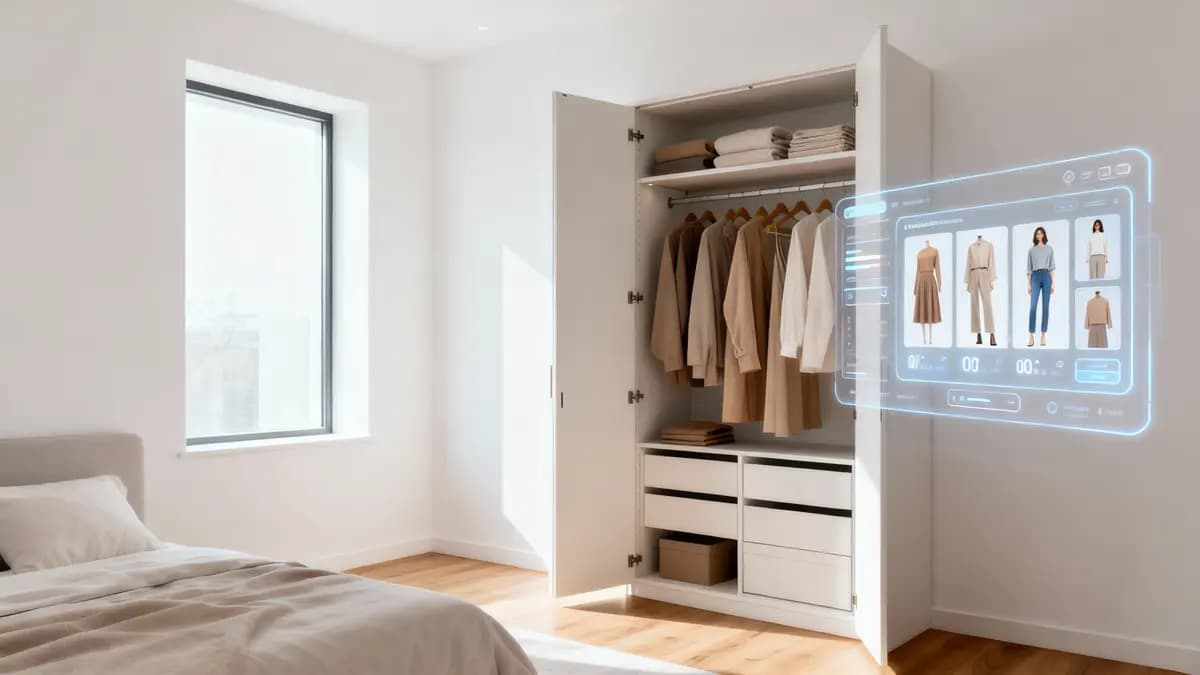
The 120-Item Closet Problem: Why You Need an AI Wardrobe App in 2026
The average person owns 120 clothing items but wears only 24 regularly. That means 80% of your wardrobe sits unused, representing thousands of dollars in forgotten value. The solution is not buying more clothes. The solution is a smart digital closet powered by 2026 AI technology.
An AI wardrobe app transforms how you interact with your clothes. Instead of staring at a cluttered closet wondering what to wear, you open an app that knows every item you own, suggests outfits based on your day, and tracks exactly how much value you get from each piece.
What a digital closet app delivers in 2026:
- Complete visual inventory of every item you own
- AI-powered daily outfit suggestions based on weather and calendar
- Cost-per-wear tracking that reveals your best and worst purchases
- Outfit history showing what you wore and when
- Smart recommendations for what to buy (and what to skip)
This is not about becoming more obsessive about clothes. It is about spending less mental energy on getting dressed while looking better every day.
"I photographed my entire wardrobe in one weekend. Now my phone shows me three outfit options every morning based on my calendar and the weather. I have not been late to work since." — James R., Financial Analyst
How AI Wardrobe Technology Works in 2026
The AI wardrobe apps of 2026 are fundamentally different from the basic closet inventory apps of previous years. They combine four core technologies into a seamless experience:
Computer Vision: Seeing Your Clothes Like a Stylist
When you photograph a garment, AI does not just see an image. It analyzes:
Garment attributes detected:
- Item type (shirt, pants, dress, jacket, etc.)
- Primary and secondary colors
- Pattern type (solid, striped, floral, geometric)
- Fabric texture (cotton, silk, denim, leather)
- Fit category (fitted, relaxed, oversized)
- Style classification (casual, formal, sporty, bohemian)
Accuracy in 2026: Computer vision now achieves 97% accuracy in garment classification, up from 89% in 2024. This means the AI correctly identifies almost every item you upload without manual correction.
Practical impact: You photograph a navy blazer once. The AI knows it is formal outerwear, navy blue, solid pattern, wool texture, fitted cut, professional style. It will never suggest pairing it with gym shorts.
Machine Learning: Understanding Your Style DNA
The real power of 2026 AI wardrobe apps is how they learn your personal style through every interaction:
What the AI tracks:
- Which outfit suggestions you accept vs. reject
- What you actually wear (if you log outfits)
- Time of day and occasion patterns
- Color preferences and comfort zones
- Style evolution over time
Learning timeline:
- Week 1: 65% accuracy (baseline suggestions)
- Month 1: 78% accuracy (learning your patterns)
- Month 3: 88% accuracy (understanding your style)
- Month 6+: 94% accuracy (better than most human stylists)
Real example: After two weeks, the app notices you never wear yellow. It stops suggesting yellow pieces. It notices you always choose structured pieces for work. It prioritizes those on weekday mornings.
Natural Language Processing: Ask Your Closet Questions
2026 AI wardrobe apps understand natural language queries:
Example queries:
- "What should I wear to a casual Friday meeting?"
- "Show me outfits using my blue blazer"
- "What goes with these new white sneakers?"
- "I have a date tonight, suggest something confident but relaxed"
The AI interprets context, mood, and occasion from plain English, then searches your digital wardrobe for matching combinations.
Virtual Try-On: See Before You Wear
The most significant advancement in 2026 is realistic virtual try-on integrated into wardrobe apps:
How it works:
- Upload a photo of yourself (or use your saved body profile)
- Select any outfit combination from your digital closet
- AI renders you wearing those exact pieces
- See how proportions, colors, and fits work together
Accuracy: 2026 virtual try-on achieves 95% realistic rendering, showing accurate proportions and how fabrics drape on your body type.
Time saved: Instead of physically trying three outfits (15+ minutes), you virtually preview them in 30 seconds.
Step-by-Step: How to Digitize Your Wardrobe With AI
Building a smart digital closet requires an upfront investment of time, but the process is straightforward. Here is exactly how to do it:
Phase 1: The Photography Session (2-4 Hours)
Equipment needed:
- Smartphone with decent camera (any phone from last 5 years works)
- Plain background (white wall, door, or hanging sheet)
- Natural lighting or bright lamp
- Hangers for hanging items
Photography technique:
For hanging items (shirts, blazers, dresses):
- Hang item on plain background
- Smooth out wrinkles
- Photograph front view (include full item, collar to hem)
- Optional: photograph back if distinctive
For folded items (sweaters, t-shirts):
- Lay flat on plain surface
- Arrange neatly (arms visible, symmetric)
- Photograph from directly above
For shoes and accessories:
- Place on plain background
- Photograph at slight angle to show dimension
- Include both shoes in frame
Time estimates by wardrobe size:
- 50 items: 1-1.5 hours
- 100 items: 2-3 hours
- 150+ items: 3-4 hours
Pro tip: Play a podcast or music. The time passes quickly when you batch the work.
Phase 2: Upload and AI Processing (30-60 Minutes)
Once photos are taken, uploading to your AI wardrobe app is simple:
Upload process:
- Open the app and select "Add Items"
- Select multiple photos from your camera roll
- Wait for AI to process and categorize
- Review and correct any misclassifications
What the AI does automatically:
- Removes background from photos
- Identifies item type and category
- Detects primary and secondary colors
- Assigns style attributes
- Groups similar items together
Manual review: Check 10-15% of items for accuracy. Most corrections involve borderline cases like "is this a blouse or a shirt" rather than major errors.
Phase 3: Wardrobe Organization (15-30 Minutes)
After upload, organize your digital closet for maximum usefulness:
Recommended categories:
- Tops: T-shirts, blouses, shirts, sweaters, tanks
- Bottoms: Pants, jeans, shorts, skirts
- Dresses/Jumpsuits: One-piece items
- Outerwear: Jackets, coats, blazers, cardigans
- Shoes: By type (sneakers, boots, heels, flats)
- Accessories: Bags, belts, scarves, jewelry
Optional tags:
- Season (summer only, winter only, year-round)
- Occasion (work, casual, formal, workout)
- Condition (new, good, needs repair, donate soon)
Phase 4: Activate AI Features
With your wardrobe digitized, enable the smart features:
Daily outfit suggestions:
- Connect your calendar for occasion-aware recommendations
- Enable weather integration for temperature-appropriate outfits
- Set your morning routine time for notifications
Outfit tracking:
- Log what you wear each day (takes 10 seconds)
- Build outfit history for pattern analysis
- Enable cost-per-wear calculations
Smart analysis:
- Run wardrobe audit to find unused items
- Generate capsule wardrobe suggestions
- Identify gaps and duplicates
The Power of Wardrobe Tracking: Cost-Per-Wear and Beyond
Once your digital closet is active, tracking reveals insights that transform your relationship with clothes:
Cost-Per-Wear: The True Value Metric
Formula: Purchase price divided by number of times worn
Example analysis from a real wardrobe:
| Item | Price | Times Worn | Cost-Per-Wear |
|---|---|---|---|
| White t-shirt | $25 | 52 | $0.48 |
| Black jeans | $89 | 78 | $1.14 |
| Cashmere sweater | $195 | 45 | $4.33 |
| Statement dress | $180 | 3 | $60.00 |
| Leather jacket | $350 | 89 | $3.93 |
| Trendy top | $45 | 2 | $22.50 |
What this reveals:
- The $350 leather jacket is one of the best values in the wardrobe
- The $45 trendy top was essentially a waste of money
- The $180 dress needs more occasions or should be sold
- Basics deliver the best cost-per-wear consistently
Decision impact: Before buying, ask "How many times will I realistically wear this?" If the projected cost-per-wear exceeds $5-10, reconsider.
Outfit History: Never Repeat Accidentally
AI wardrobe apps maintain complete outfit history:
What you can see:
- Every outfit worn in the past week, month, year
- Which items appear most frequently
- Outfit combinations you have never tried
- Patterns in your dressing habits
Practical uses:
- Avoid wearing the same outfit to consecutive meetings with the same people
- Rediscover combinations you loved but forgot
- Identify items that never make it into actual outfits
Wardrobe Analytics: Understanding Your Style
After 30-60 days of tracking, AI generates powerful analytics:
Color analysis:
- Your most-worn colors
- Colors you own but never wear
- Color gaps in your wardrobe
Style analysis:
- Ratio of casual to formal pieces
- Seasonal balance
- Versatility scores for each item
Usage patterns:
- Average times worn per item
- Percentage of wardrobe used regularly
- Items not worn in 6+ months (candidates for donation)
Typical findings:
- Users discover 40-60% of their wardrobe goes unworn
- 15-25 items account for 80% of daily outfit choices
- Many "similar but not identical" duplicates exist
AI Daily Outfit Suggestions: How Smart Styling Works

The headline feature of 2026 AI wardrobe apps is intelligent daily outfit suggestions:
How Daily Suggestions Are Generated
Data inputs:
- Your calendar (meetings, events, activities)
- Weather forecast (temperature, precipitation, humidity)
- Your style preferences (learned over time)
- Outfit history (avoid recent repeats)
- Clean/dirty status (if tracked)
AI processing:
- Filters wardrobe to weather-appropriate items
- Matches formality to calendar activities
- Generates 3-5 outfit combinations
- Ranks by predicted preference match
- Displays with virtual try-on previews
Example morning:
- Calendar shows: 9 AM team meeting, 1 PM client lunch, 6 PM dinner with friends
- Weather: 68F, partly cloudy, no rain
- AI suggestion: Navy blazer, white button-down, dark jeans, brown loafers
- Reasoning: Professional enough for client lunch, relaxed enough for dinner
Outfit Formulas Generated by AI
After analyzing thousands of wardrobes, AI identifies reliable outfit formulas:
The Elevated Casual Formula:
- Fitted solid-color t-shirt or blouse
- Dark jeans or tailored chinos
- Structured jacket or blazer
- Clean sneakers or loafers
The Polished Professional Formula:
- Button-down shirt or silk blouse
- Tailored pants or pencil skirt
- Blazer or structured cardigan
- Closed-toe professional shoes
The Weekend Relaxed Formula:
- Soft sweater or casual knit
- Comfortable jeans or relaxed pants
- Casual jacket or vest
- Sneakers or flat boots
The Evening Out Formula:
- Statement top or sleek blouse
- Dark tailored pants or elegant skirt
- Elevated accessories (jewelry, belt)
- Dress shoes or heels
AI learns which formulas you prefer and prioritizes those in suggestions.
Occasion-Specific Intelligence
2026 AI understands context nuances:
"Job interview" triggers:
- Conservative colors (navy, gray, black)
- Polished, professional pieces
- Minimal accessories
- Confidence-boosting combinations
"First date" triggers:
- Your most flattering pieces
- Colors that suit your complexion
- Comfortable but stylish options
- Approachable, authentic style
"Conference presentation" triggers:
- Authority-projecting combinations
- Contrast for visual impact
- Comfortable for standing/walking
- Professional but memorable
Common Mistakes When Digitizing Your Wardrobe
Avoid these pitfalls when building your smart digital closet:
Mistake 1: Photographing Items Poorly
The problem: Blurry photos, inconsistent backgrounds, or partial images make AI categorization difficult and reduce outfit suggestion quality.
The solution:
- Use natural lighting or bright, consistent artificial light
- Keep the same background for all photos
- Capture the full item clearly
- Retake any blurry or dark photos
Mistake 2: Skipping Items You Rarely Wear
The problem: Leaving out rarely-worn items means AI cannot suggest new combinations that might make those pieces useful.
The solution:
- Include everything, even items you have not worn in months
- AI might find combinations you never considered
- Items with zero wear after 6 months of tracking become clear donation candidates
Mistake 3: Not Logging Actual Outfits
The problem: Without outfit logging, AI cannot learn your real preferences or calculate accurate cost-per-wear.
The solution:
- Spend 10 seconds each morning logging your outfit
- Most apps make this as simple as tapping the items you are wearing
- Consistency matters more than perfection
Mistake 4: Ignoring AI Suggestions That Feel Unfamiliar
The problem: Dismissing all unexpected suggestions means missing opportunities to discover new combinations.
The solution:
- Try at least 2-3 unfamiliar AI suggestions per week
- Give honest feedback (love, like, dislike)
- AI learns from your reactions and improves
Mistake 5: Treating It as a One-Time Setup
The problem: Building a digital closet and then ignoring it wastes the setup effort.
The solution:
- Add new purchases immediately
- Remove donated or discarded items
- Check analytics monthly
- Review and update seasonal pieces
Building a Capsule Wardrobe With AI Analysis
One of the most powerful applications of AI wardrobe apps is building an optimized capsule wardrobe:
What AI Reveals About Your Wardrobe
After tracking your wardrobe for 30+ days, AI identifies:
High-performers: Items worn frequently that combine with many other pieces
Underperformers: Items rarely or never worn despite being available
Versatility champions: Pieces that appear in 10+ different outfit combinations
Orphans: Items that do not combine well with anything else you own
The AI Capsule Process
Step 1: Identify your core 30-40 pieces
- AI ranks every item by versatility and wear frequency
- Top performers form the foundation
- Identify gaps (missing essentials)
Step 2: Analyze combination potential
- AI calculates outfit combinations from core pieces
- Target: 100+ unique outfits from 30-40 items
- Identify which additions would multiply options
Step 3: Decide what to remove
- Items with fewer than 2 wears per year are candidates
- Items that do not combine with core pieces
- Duplicates that serve identical functions
Step 4: Fill strategic gaps
- AI suggests specific item types to add
- Focus on pieces that multiply combinations
- Avoid trendy items with limited versatility
Typical result: Users reduce wardrobes by 40-60% while increasing outfit options by 200-300%.
The 30-Day Smart Closet Challenge
Transform your relationship with your wardrobe in one month:
Week 1: Setup (Days 1-7)
Day 1-2: Photograph all clothing items (2-4 hours total)
Day 3: Upload to AI app and review categorization
Day 4-5: Organize categories and add any missing tags
Day 6-7: Enable daily suggestions and calendar integration
Goal: Complete digital wardrobe with AI ready to suggest outfits
Week 2: Discovery (Days 8-14)
Daily: Log your outfit each morning (10 seconds)
Daily: Try at least one AI-suggested outfit
Day 10: Review first analytics (color distribution, item types)
Day 14: Note which AI suggestions worked and which did not
Goal: Start building outfit history and training the AI
Week 3: Optimization (Days 15-21)
Daily: Continue logging outfits
Day 15: Run wardrobe audit report
Day 17: Identify 10 items you have not worn yet
Day 19: Create 3 new outfit combinations using underworn items
Day 21: Review cost-per-wear calculations
Goal: Discover hidden wardrobe potential
Week 4: Integration (Days 22-30)
Daily: AI suggestions should now be noticeably more accurate
Day 22: Plan next week's outfits using AI
Day 25: Identify 5-10 items to donate or sell
Day 28: Review style analytics and pattern insights
Day 30: Assess wardrobe utilization improvement
Goal: AI becomes part of your daily routine
Expected results after 30 days:
- 15+ new outfit combinations discovered
- 85%+ AI suggestion accuracy
- Clear picture of wardrobe value and gaps
- 10-15 minutes saved daily on outfit decisions
The Bottom Line: Why 2026 Is the Year to Build Your Digital Closet
The technology has matured. AI wardrobe apps in 2026 deliver real value that was impossible just two years ago:
What has changed:
- 97% accuracy in item recognition (vs. 85% in 2024)
- 94% prediction accuracy for outfit preferences
- Realistic virtual try-on integrated into daily suggestions
- Seamless calendar and weather integration
- Meaningful analytics that drive better decisions
The practical benefits:
- 10-15 minutes saved every morning
- 20-40% reduction in impulse clothing purchases
- 200-300% increase in wardrobe utilization
- Clear visibility into cost-per-wear and value
- Confidence in daily outfit choices
The investment required:
- 2-4 hours upfront to photograph and upload
- 10 seconds daily to log outfits
- 15 minutes weekly to review suggestions and analytics
The return:
- Hundreds of hours saved annually on outfit decisions
- Thousands of dollars saved on wasted purchases
- Significantly reduced decision fatigue
- A wardrobe that actually works for your life
Building a smart digital closet is no longer a novelty for tech enthusiasts. It is a practical tool that delivers measurable value for anyone who wears clothes and values their time.
Ready to build your smart digital closet?
Start Building Your Digital Wardrobe with Klodsy
Related Reading
- AI Outfit Planner: Create Stylings With Your Own Clothes - Deep dive into how AI creates outfit combinations
- How to Get Outfit Ideas from the Clothes You Already Own - Maximize your existing wardrobe
- AI-Powered Style: How AI Is Changing Fashion Forever - The broader AI fashion revolution
- What to Wear Today - Daily outfit inspiration and decision strategies
Related Articles
Capsule Wardrobe AI Planner: Build a Minimalist Closet
Build a capsule wardrobe with AI. Learn how AI planners help you create a 30-piece minimalist closet that generates 100+ outfits and simplifies getting dressed forever.
AI Outfit Planner: Create Outfit Combinations With Your Own Clothes
How to create outfit combinations with AI? Discover how an outfit planner AI helps you maximize your wardrobe. Create endless outfits from clothes you already own with AI-powered styling.
Frequently Asked Questions
Everything you need to know about this topic
Start by photographing each clothing item against a plain background. Upload photos to an AI wardrobe app like Klodsy, which automatically categorizes items by type, color, and style. The AI then analyzes your wardrobe to suggest outfit combinations and track wear patterns.