
AI Outfit Rating: Get Style Score and Feedback in 2026
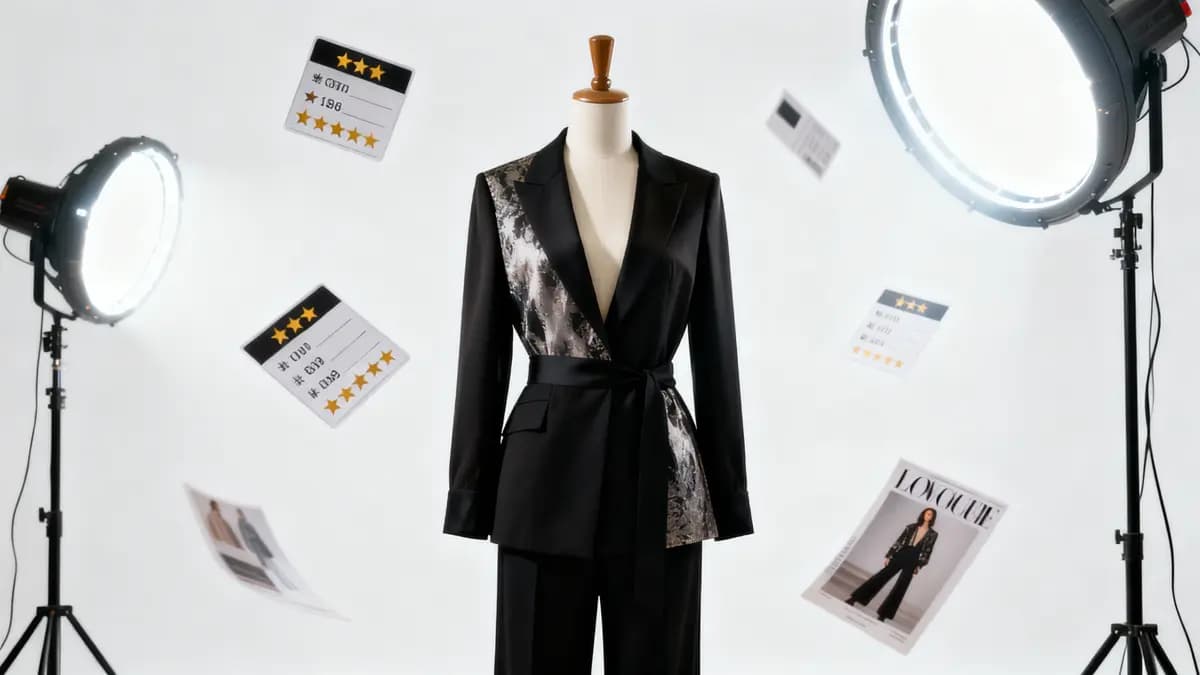
The Brutal Truth: 73% of People Cannot Objectively Evaluate Their Own Outfits
Research in fashion psychology reveals a startling gap: 73% of people significantly misjudge how their outfits appear to others. We see ourselves through lenses of habit, hope, and self-image rather than through objective visual assessment. The mirror shows us what we expect to see, not what we actually look like.
Here is the uncomfortable reality: your friends will not tell you when an outfit misses the mark. Social politeness prevents honest feedback. Meanwhile, strangers form impressions about you in under seven seconds, and clothing is the primary input for those snap judgments.
The fashion industry has known this for decades. That is why professional stylists exist. That is why magazine editors have teams reviewing every editorial shoot. That is why executives hire image consultants. Objective feedback on appearance has historically been available only to those who could afford it.
AI outfit rating democratizes that access.
What AI outfit analysis provides:
- Objective scoring against established fashion principles
- Specific feedback on color, proportion, fit, and coherence
- Actionable suggestions for improvement
- Progress tracking over time
- Honest assessment without social awkwardness
"I thought I dressed well. Then I ran my outfits through AI rating for a month. The patterns were humbling. My color combinations were chaos. My proportions were consistently off. Six months later, my average score went from 62 to 84. People started commenting on how I looked. Not because I followed AI blindly, but because I finally understood what I was doing wrong." — Marcus T., Architect
The Science Behind AI Outfit Analysis
AI does not evaluate outfits through subjective taste. It applies measurable principles that fashion designers, stylists, and visual artists have codified over centuries.
Color Theory in Practice
What AI actually measures:
| Color Relationship | What AI Detects | Scoring Impact |
|---|---|---|
| Complementary colors | Opposite hues creating vibrancy | +15-20 points if intentional |
| Analogous colors | Adjacent hues creating harmony | +10-15 points for cohesion |
| Triadic colors | Three equidistant hues | +15-25 points if balanced |
| Monochromatic | Single hue variations | +12-18 points for sophistication |
| Clashing | Unrelated hues without bridging | -15-25 points |
| Undertone mismatch | Warm/cool conflict | -10-15 points |
The calculation: AI identifies the dominant colors in your outfit using RGB values and maps them to color wheel positions. It then calculates relationships between colors and scores based on established color theory principles.
Example analysis:
- Navy blazer: Cool blue (210 degrees on color wheel)
- White shirt: Neutral
- Khaki pants: Warm beige (45 degrees)
- Brown shoes: Warm brown (30 degrees)
Result: The navy (cool) is isolated from the warm bottom half. AI might flag "Consider navy shoes to balance color temperature" or "Add a cool-toned belt to bridge upper and lower body."
Proportion Mathematics
The visual weight equation: AI calculates the visual weight of each section of your outfit by analyzing:
- Garment volume (tight = less weight, loose = more weight)
- Color brightness (bright = more weight, dark = less weight)
- Pattern complexity (busy = more weight, solid = less weight)
- Texture intensity (rough = more weight, smooth = less weight)
The golden ratio in fashion: Many successful outfits approximate a 2:3 or 3:5 ratio between upper and lower body visual weight. AI measures these proportions.
Proportion scoring factors:
| Ratio | Common Example | Score Impact |
|---|---|---|
| 1:1 (balanced) | Matched volumes | Neutral (0 points) |
| 1:2 (bottom heavy) | Fitted top + full skirt | +8-12 points |
| 2:1 (top heavy) | Oversized top + skinny pants | +8-12 points |
| Undefined | Similar volumes throughout | -5-10 points |
| Extreme imbalance | Dramatic volume difference | -8-15 points unless intentional |
Style Coherence Analysis
What coherence means mathematically: AI categorizes each garment by style attributes (casual/formal, modern/vintage, structured/relaxed, minimalist/maximalist). Coherence scores measure how aligned these attributes are across the outfit.
Attribute mapping example:
| Garment | Formality | Era | Structure | Aesthetic |
|---|---|---|---|---|
| White sneakers | 2/10 | Modern | Soft | Athletic |
| Navy dress pants | 7/10 | Classic | Structured | Professional |
| Gray t-shirt | 3/10 | Modern | Soft | Minimal |
| Blazer | 8/10 | Classic | Structured | Professional |
Coherence calculation: AI flags the formality gap between sneakers (2) and blazer (8). It notes the era consistency (modern/classic mix is common). It identifies structural conflict (soft shoes under structured outfit).
Score impact:
- High coherence (similar attributes): +15-20 points
- Intentional contrast with bridge elements: +10-15 points
- Random mixing without logic: -10-20 points
Fit Assessment Technology
What AI detects in fit:
- Shoulder seam alignment relative to actual shoulders
- Fabric pulling or bunching (indicates poor fit)
- Hem position relative to body landmarks
- Proportion of garment size to body frame
Fit scoring matrix:
| Fit Issue | Visual Signal | Score Impact |
|---|---|---|
| Shoulder alignment off | Seams above/below shoulder | -5-8 points |
| Fabric pulling | Horizontal stress lines | -3-5 points per area |
| Excessive fabric | Sagging, bunching | -3-5 points per area |
| Hem placement | Cuts body at unflattering point | -5-8 points |
| Intentional oversizing | Consistent proportional sizing | Neutral to +5 |
How to Get Accurate AI Outfit Ratings
The quality of AI analysis depends entirely on input quality. Here is how to optimize for accurate feedback.
The Perfect Rating Photo
Phase 1: Environment Setup
Before taking your photo:
- Clear area with neutral background (white, gray, or beige wall)
- Natural daylight or bright, even artificial lighting
- No colored surfaces that might cast color onto your outfit
- Full-length mirror position or camera tripod ready
Phase 2: Lighting Requirements
| Lighting Type | Quality for AI Rating | Notes |
|---|---|---|
| Natural daylight (indirect) | Excellent | Most accurate color representation |
| Bright overcast | Excellent | Even, shadow-free |
| Indoor, multiple sources | Good | Avoid mixed color temperatures |
| Single overhead light | Poor | Creates shadows that obscure fit |
| Backlit (window behind) | Poor | Silhouettes body, loses detail |
| Flash only | Moderate | Can wash out colors |
Phase 3: Positioning
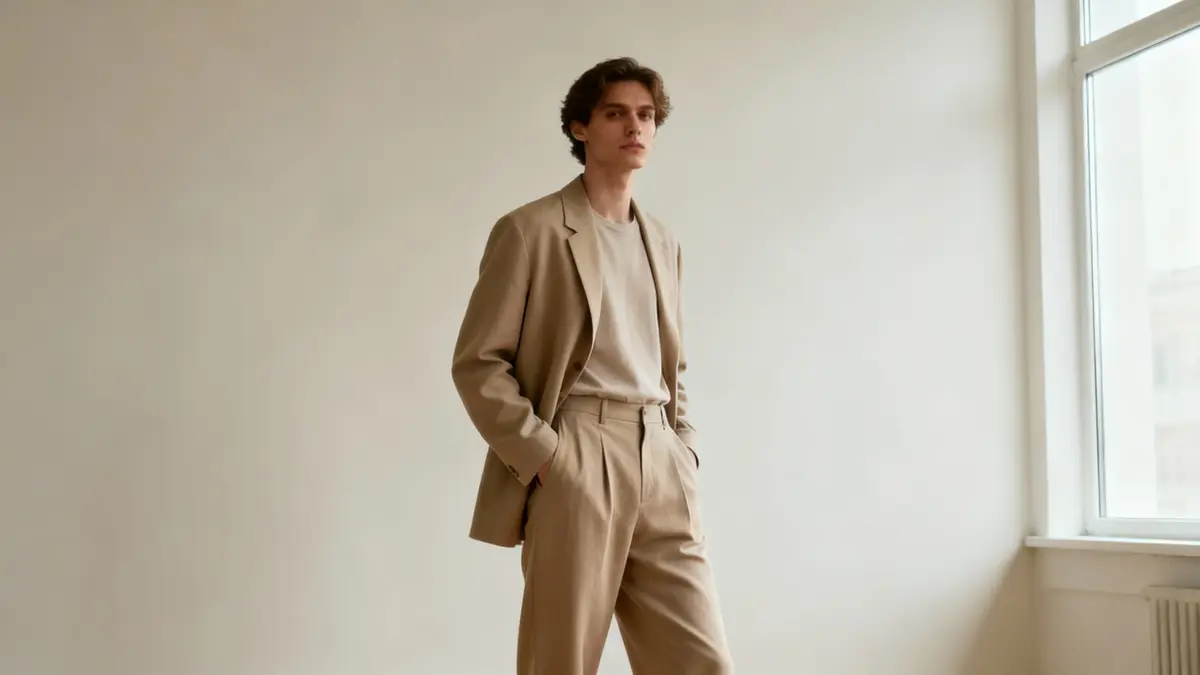
Optimal position for AI analysis:
- Full body visible from head to feet
- Standing straight, facing camera
- Arms relaxed at sides (not crossed or in pockets)
- Feet shoulder-width apart
- Natural, relaxed posture
- Slight angle (15-20 degrees) shows dimension
Phase 4: Photo Checklist
Before submitting:
- All garments visible (including shoes)
- True colors visible (no color cast from environment)
- No shadows obscuring fit details
- No filters or edits applied
- High resolution (not blurry or pixelated)
- Background does not compete with outfit
Context That Improves Analysis
Information to provide:
| Context Type | What to Specify | Why It Matters |
|---|---|---|
| Occasion | Work, casual, date, formal event | Adjusts appropriateness criteria |
| Intent | Professional, creative, relaxed | Changes style coherence expectations |
| Weather | Temperature, conditions | Affects layering appropriateness |
| Venue | Office, restaurant, outdoor | Contextualizes formality |
| Your goals | Stand out, blend in, specific impression | Tailors feedback to purpose |
Example context submission: "Business casual work day, meetings with clients, indoor office, want to appear competent but approachable."
AI uses this to calibrate: formal enough for client meetings, not so formal as to seem unapproachable.
Understanding Your Score: The Complete Breakdown
AI outfit scores are not random numbers. They aggregate multiple sub-scores with specific weights.
Score Component Weights
Typical AI rating breakdown:
| Component | Weight | What It Measures |
|---|---|---|
| Color harmony | 25% | Color relationships and balance |
| Proportion | 20% | Visual weight distribution |
| Fit | 20% | How garments sit on body |
| Style coherence | 20% | Consistency of aesthetic |
| Accessories | 10% | Integration of extras |
| Details | 5% | Polish elements (tucking, rolling, etc.) |
Score Range Interpretation
90-100: Exceptional Execution
- All elements working harmoniously
- Intentional choices evident throughout
- No visible fit or proportion issues
- Colors perfectly coordinated
- Accessories enhance without overwhelming
What this means: You understand fashion principles and applied them skillfully. This outfit works.
80-89: Strong With Minor Issues
- Solid foundation in place
- One or two small refinement opportunities
- Generally cohesive and appropriate
- May have minor color or proportion adjustments available
What this means: Good instincts are showing. Small tweaks could elevate further.
70-79: Good Foundation, Clear Improvement Areas
- Core outfit concept works
- Two or three noticeable issues
- May have proportion imbalance or color conflict
- Fit might be off in one area
What this means: You are on the right track but missing some fundamentals.
60-69: Functional But Missing Elements
- Basic outfit assembly is fine
- Multiple areas need attention
- Colors may not relate to each other
- Proportions likely unbalanced
- May lack overall vision
What this means: The individual pieces might work, but they are not working together.
Below 60: Significant Issues
- Multiple conflicting elements
- Fit problems visible
- No clear color strategy
- Proportions actively unflattering
- Style coherence absent
What this means: Start with fundamentals. Focus on fixing one category at a time.
Translating AI Feedback Into Action
AI provides observations. You need to translate them into wardrobe changes.
Color Feedback Dictionary
| AI Says | What It Means | Action to Take |
|---|---|---|
| "Palette lacks cohesion" | Colors do not relate | Add a neutral to bridge, or swap one piece for related color |
| "High contrast overwhelming" | Too much color energy | Reduce to one statement color, neutralize others |
| "Undertone mismatch" | Warm/cool conflict | Check if pieces share warm or cool undertone |
| "Colors complement well" | Harmonious relationship | Note which pieces for future formula |
| "Consider accent color" | Outfit is too safe | Add one intentional pop of color |
| "Black and navy together" | Classic clash | Replace one with gray, or ensure intentional |
Proportion Feedback Dictionary
| AI Says | What It Means | Action to Take |
|---|---|---|
| "Top heavy visual weight" | Volume concentrated above waist | Try wider pants or narrower top |
| "Hem interrupts line" | Length cuts leg unfavorably | Try longer/shorter or different shoe height |
| "Lacks silhouette definition" | Everything is same volume | Pair fitted with loose pieces |
| "Strong visual balance" | Good weight distribution | Document this formula |
| "Elongating effect" | Visually lengthening | Note what created this (same color, vertical lines) |
Fit Feedback Dictionary
| AI Says | What It Means | Action to Take |
|---|---|---|
| "Shoulder seams misaligned" | Jacket/shirt shoulders wrong for you | Try different size or shoulder style |
| "Fabric stress visible" | Too tight somewhere | Size up or different cut |
| "Excess fabric at waist" | Too loose through torso | Size down or get tailored |
| "Pant break needs adjustment" | Length off for shoe | Hem or try different break style |
| "Excellent fit through torso" | This works | Note brand and size for reference |
Coherence Feedback Dictionary
| AI Says | What It Means | Action to Take |
|---|---|---|
| "Mixed formality levels" | Pieces from different dress codes | Either embrace intentionally or align |
| "Style genres conflict" | Pieces from different aesthetics | Add bridging element or swap one piece |
| "Era mixing without unity" | Vintage and modern clashing | Find common thread or lean into one era |
| "Strong personal style" | Consistent aesthetic through outfit | Your signature is showing, good |
| "Consider unifying element" | Pieces need connection | Add accessory or color that ties together |
Building Your Personal Style Score System
AI ratings are valuable. Your own systematic evaluation is equally important.
The Before-You-Leave Checklist
Run this mental check before walking out the door:
- Mirror test: Step back and blur your eyes. What is the overall impression?
- Color check: Can you identify a color relationship in your outfit?
- Proportion scan: Is there variation in volume (some fitted, some relaxed)?
- Fit inspection: Is anything pulling, sagging, or sitting wrong?
- Coherence question: Do all pieces belong to the same visual story?
- Occasion match: Is this appropriate for where you are going?
- Confidence check: Do you feel good in this?
The After-Wearing Review
Track these after wearing an outfit all day:
| Question | What You Learn |
|---|---|
| Did you feel confident all day? | Whether outfit works emotionally |
| Did you fidget or adjust frequently? | Fit or comfort issues |
| Did you receive any comments? | External perception validation |
| What would you change? | Specific improvement opportunities |
| Would you recreate this outfit? | Worth adding to your formula library |
Creating Your Personal Rules
Based on pattern recognition from AI scores and personal experience:
Example personal rules developed over time:
- "I score 10+ points higher when I wear navy instead of black"
- "Fitted top + wide pants is my consistently highest-scoring formula"
- "My burgundy pieces elevate any neutral outfit"
- "I need to check proportion any time I wear oversized tops"
- "My suede shoes always score higher on coherence than my athletic sneakers"
These personal rules become your styling shorthand.
The 28-Day Style Score Challenge
Systematically improve your outfit scores in four weeks:
Week 1: Baseline Establishment (Days 1-7)
Daily actions:
- Photograph your outfit each morning (takes 30 seconds)
- Submit for AI rating
- Record score without judgment
- Note the primary feedback category
Week 1 tracking sheet:
| Day | Overall Score | Lowest Category | AI Feedback Theme |
|---|---|---|---|
| 1 | ___ | ___ | ___ |
| 2 | ___ | ___ | ___ |
| 3 | ___ | ___ | ___ |
| 4 | ___ | ___ | ___ |
| 5 | ___ | ___ | ___ |
| 6 | ___ | ___ | ___ |
| 7 | ___ | ___ | ___ |
Week 1 Goal: Calculate your average baseline score. Identify your most common weakness.
Week 2: Weakness Deep Dive (Days 8-14)
Identify your primary weakness from Week 1:
- Color: Learn basic color theory, identify your palette
- Proportion: Study silhouette formulas, practice volume balance
- Fit: Assess wardrobe for fit issues, prioritize tailoring
- Coherence: Define your aesthetic, remove outlier pieces
Daily actions:
- Create outfits specifically addressing your weakness
- Rate and compare to baseline
- Document what works
Week 2 Goal: Improve your weakest category by at least 10 points average.
Week 3: Strength Amplification (Days 15-21)
Identify your strengths from Weeks 1-2:
- What consistently scored well?
- What feedback was positive?
- What formulas emerged?
Daily actions:
- Build outfits emphasizing your strengths
- Create 3-5 outfit formulas that work
- Document these formulas photographically
Week 3 Goal: Develop 5 reliable outfit formulas that score 80+.
Week 4: Integration and Experimentation (Days 22-28)
Daily actions:
- Alternate between formula outfits and experiments
- Try one intentional rule-break per day
- Rate everything, compare results
- Decide what to keep experimenting with
Week 4 Goal: Blend AI feedback with personal expression. Find your unique style voice.
Expected Results After 28 Days
- Average score improved 10-20 points
- Primary weakness improved significantly
- 5+ reliable outfit formulas documented
- Clear understanding of what works for you
- Personal rules established based on data
- Confidence increased in outfit decisions
"My Day 1 score was 58. My Day 28 score was 86. More importantly, I understood why. The patterns AI showed me were like having a style translator. I finally spoke the language." — Jennifer L., Marketing Director
When AI Gets It Wrong: Understanding Limitations
AI outfit rating is powerful but imperfect. Knowing when to trust and when to question is essential.
AI Blind Spots
Intentional rule-breaking: AI learns from mainstream fashion. Avant-garde, punk, deconstruction, and other intentional subversions score low because they break rules on purpose.
Cultural context: AI may not understand cultural dress codes, traditional garments, or subcultural signaling that carries meaning beyond visual analysis.
Trend cycles: AI training data may lag trends. What looks dated to the algorithm might be current fashion.
Personal expression: AI cannot evaluate whether an outfit expresses your personality, tells your story, or makes you feel powerful.
When to Override AI
Trust yourself when:
- You are intentionally breaking a rule for effect
- The outfit has personal or cultural significance
- You feel authentically you despite a low score
- You are experimenting with emerging trends
- The specific context AI does not understand
Trust AI when:
- You are learning fundamentals
- You want objective feedback on basics
- You are preparing for important occasions
- You notice patterns in feedback
- You are stuck in style ruts
The Synthesis Approach
The goal is not to score 100 on every outfit. The goal is to understand what you are doing so you can make informed choices.
The formula: AI feedback + personal preference + context = final decision
Example: AI gives a 72 and flags "proportion imbalance" because of your oversized blazer. You know oversized blazers are your signature. You decide to keep the blazer but swap skinny jeans for straight-leg to improve proportion. Result: You addressed the feedback without abandoning your style.
Advanced Outfit Rating Strategies
Once you have the basics down, elevate your approach.
A/B Testing Outfits
The method: Photograph two similar outfits with one variable changed. Rate both. Compare.
Variables to test:
- Same outfit, different shoes
- Same pieces, different top color
- Same colors, different proportions
- With and without an accessory
What you learn: The exact impact of specific choices, quantified.
Building a Style Formula Library
Create documented outfit formulas:
| Formula Name | Pieces | Average Score | Best Occasions |
|---|---|---|---|
| Power Meeting | Navy blazer + white shirt + gray trousers + brown oxfords | 87 | Client meetings |
| Weekend Elevated | Cream knit + dark jeans + white sneakers | 82 | Casual dining |
| Date Night | Black turtleneck + tan trousers + suede boots | 89 | Evening dates |
Benefits:
- Reduces morning decision fatigue
- Guarantees reliable outcomes
- Provides baseline to remix from
Seasonal Score Tracking
Track quarterly:
- Spring average score
- Summer average score
- Fall average score
- Winter average score
What you learn: Whether your wardrobe performs differently by season. If summer scores drop, your summer wardrobe may need attention.
The Bottom Line: Scores as Tools, Not Masters
AI outfit rating is like having a patient, consistent mentor who never gets annoyed by questions. It teaches vocabulary, identifies patterns, and provides feedback no friend would give you.
What AI outfit rating delivers:
- Objectivity humans cannot provide
- Consistent feedback over time
- Pattern recognition across outfits
- Specific improvement guidance
- Progress measurement
What AI outfit rating cannot replace:
- Personal expression and creativity
- Cultural and emotional context
- The feeling of being authentically you
- Intentional rule-breaking as art
- Confidence that comes from within
Use scores to learn. Use scores to catch blind spots. Use scores to track improvement.
But dress for yourself, not for algorithms.
Ready to get honest feedback on your outfits?
Start Rating Your Outfits with Klodsy
Related Reading
- AI Wardrobe App 2026: Build Your Smart Digital Closet - Complete guide to digitizing your wardrobe
- AI Color Analysis: Find Your Perfect Color Palette - Discover your ideal colors
- How to Get Outfit Ideas from the Clothes You Already Own - Maximize your existing wardrobe
- Best AI Stylist Apps 2026: Complete Comparison - Compare top AI fashion apps
Related Articles
AI Color Analysis: Find Your Perfect Color Palette in 2026
Discover your ideal color palette with AI color analysis. Learn how AI determines your skin undertone, seasonal type, and best colors for clothes, makeup, and accessories.
AI-Powered Style: How AI Is Changing Fashion Forever
Discover how AI is revolutionizing personal style with smart outfit recommendations, virtual try-ons, and personalized fashion advice. The future of fashion is here.
Frequently Asked Questions
Everything you need to know about this topic
AI analyzes outfit photos against fashion principles including color harmony, proportion balance, style coherence, and occasion appropriateness. It examines how pieces work together, identifies what succeeds and what clashes, and provides a score along with specific improvement suggestions.